




Why staining is crucial in flow decay studies.
The authors evaluated the potential of direct filtration for multiple biopharmaceutical candidates. This article is Part 2 of the study.

The authors present a methodology to assess the contribution of individual filters to overall capacity of the direct filtration train, and elucidate how capacity is affected by characteristics of the cell culture broth and process parameters.

SUS aids biopharma manufacturers to overcome the rigidity of more traditional stainless-steel technologies.

Why staining is crucial in flow decay studies.
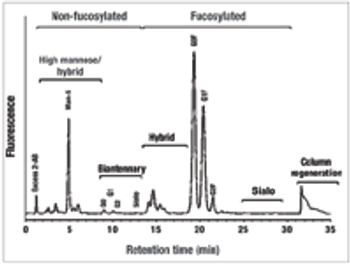
Select the best approach to determine critical quality attributes.
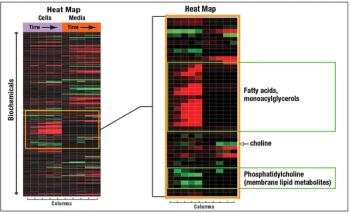
Through metabolomics, the metabolic underpinnings of cellular changes can be rapidly pinpointed, directing process development scientists to key areas for cell culture optimization.
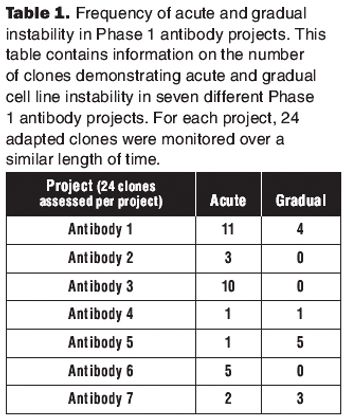
By considering stability as part of the cell line selection and cell banking paradigm, we can ensure that instability problems are not observed during clinical or commercial manufacturing.
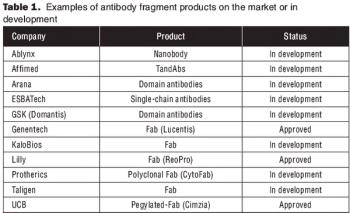
Microbial systems such as E. Coli and yeasts are most effective for producing antibody fragments.
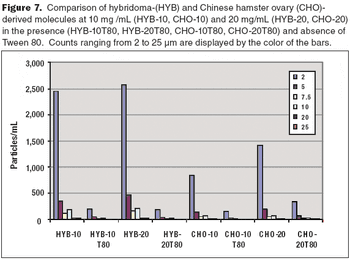
How to maintain product stability and prevent particulates.
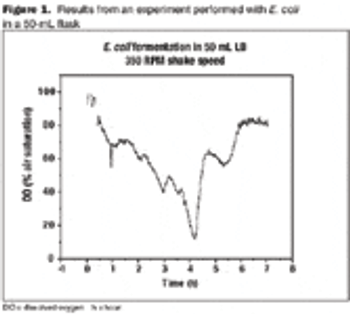
A prove-free system monitors accurately at very small scale.

Biodefense start-up companies have an abundance of options when seeking funding.
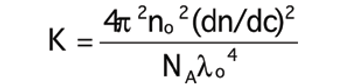
Can increase in ionic strength result in higher viscosity?
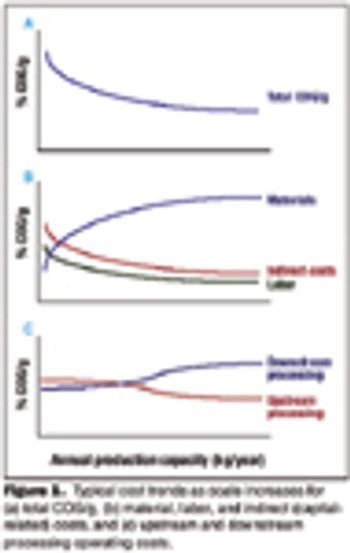
The future of therapeutic MAbs lies in the development of economically feasible downstream processes.
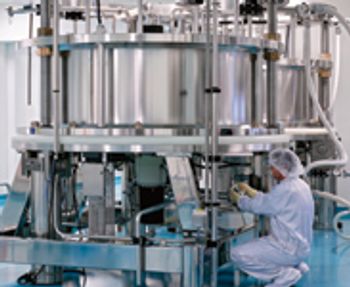
Altering the order of operations, using new resins, and increasing dynamic binding capacity can obviate the need for major facilty changes.

A purification scheme to maximize the efficiency of the purification process and product purity while minimizing the development time for early-phase therapeutic antibodies.
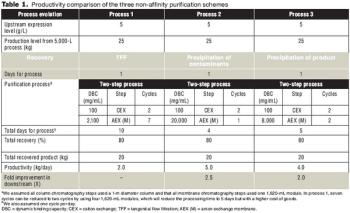
In three non-affinity purification processes based on cation exchange capture with high binding capacity, applying a host cell protein exclusion strategy enabled robust scale up and better economics.
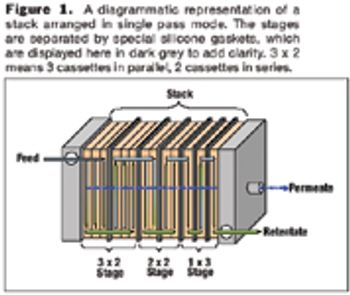
New techniques can greatly improve the MAb purification process.
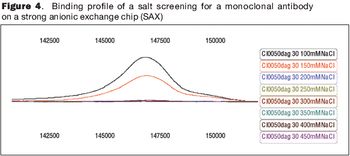
The future of therapeutic MAbs lies in the development of economically feasible downstream processes.

Robust packing procedures can improve process performance and increase resin lifetime.

A close-up look at Pfizer's biotherapeutics plant in Shanbally, Ireland.
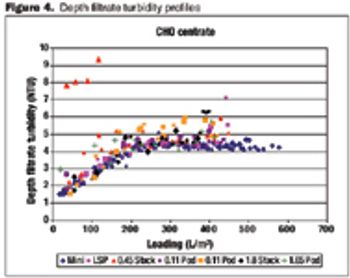
Data on the performance and variability of different formats.
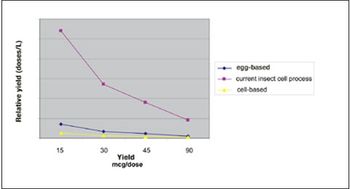
With virus-based production, vaccines can be available in 10-12 weeks.
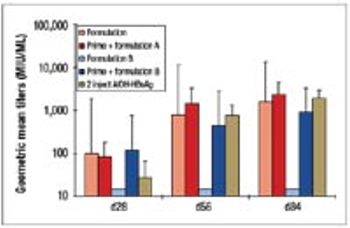
The disadvantages of the traditional vaccine regime (prime plus boost) have spurred the development of single-shot vaccines. This article describes the development and manufacture of a prototype single-shot vaccine that uses microspheres made from cross-linked modified dextran polymers for controlled release of the antigen.
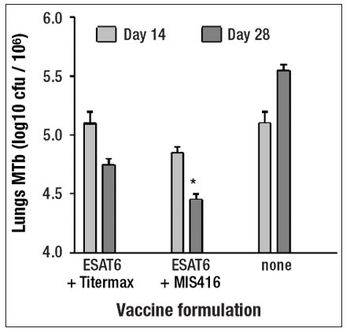
This article discusses the potential of MIS416 adjuvant, a vaccine adjuvant and immunogen co-delivery system, to provide adequate immunostimulation to overcome host factors that may limit the success of therapeutic vaccines.
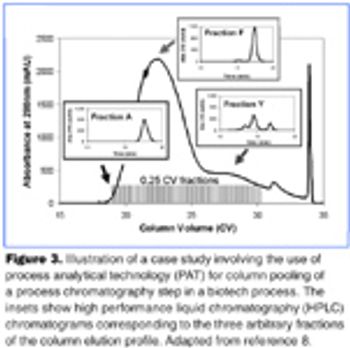
Understanding the relationship between the process and CQAs.


The development of a skilled labor force is essential for an expanding biopharmaceutical industry.