

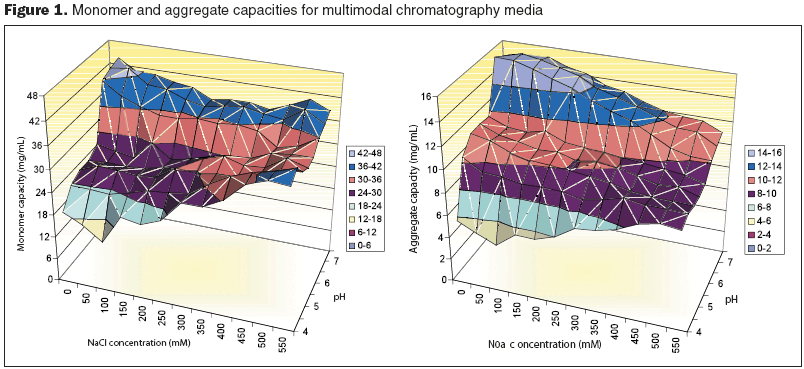
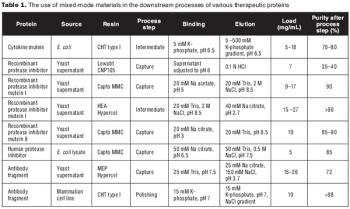
Salt-tolerant adsorption and unique selectivity are the major advantages of mixed-mode materials over single-mode resins.

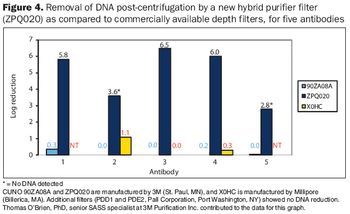
The authors evaluated the potential of direct filtration for multiple biopharmaceutical candidates. This article is Part 2 of the study.
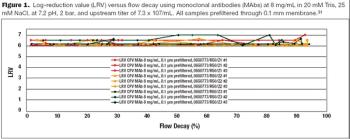
The authors present a methodology to assess the contribution of individual filters to overall capacity of the direct filtration train, and elucidate how capacity is affected by characteristics of the cell culture broth and process parameters.

SUS aids biopharma manufacturers to overcome the rigidity of more traditional stainless-steel technologies.
Salt-tolerant adsorption and unique selectivity are the major advantages of mixed-mode materials over single-mode resins.
This alternative purification method to chromatography is readily scalable and fits a fully disposable downstream process.
To speed up the downstream process, you must get the right data, in the right amount, at the right time. Here's how.
New technologies and adaptations of existing technologies can improve platform processes.
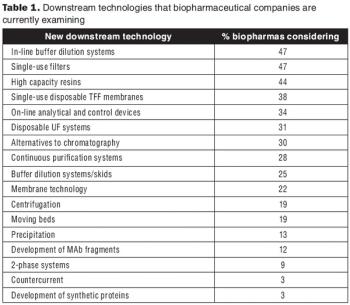
The new technologies being developed to improve downstream systems go beyond traditional chromatography.
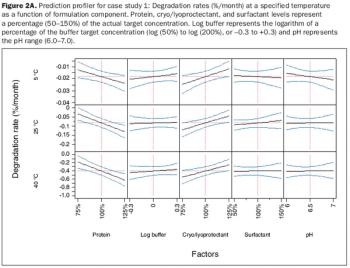
Design of experiments is a valuable tool for identifying aspects of a formulation that are critical to product quality.
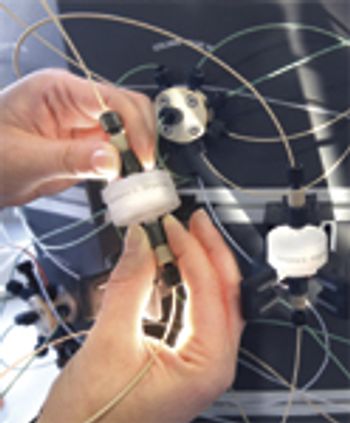
Membrane chromatography ensures purity at high flow rates.
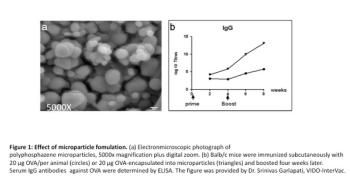
This article presents ongoing research at VIDO-InterVac for the development of safer and more effective adjuvants. These include adjuvants that stimulate innate immunity in the body and combination adjuvants.
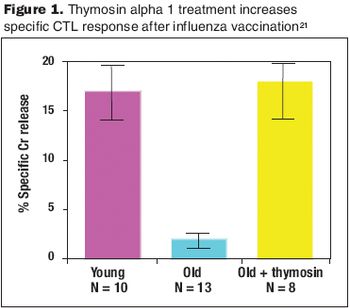
Clinical studies have shown that treatment with thymosin alpha 1 increases response to vaccination.
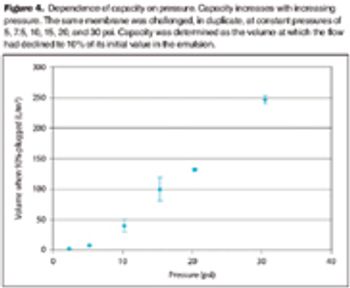
The viscosity of oily emulsions can reduce filter capacity and bacterial retention.
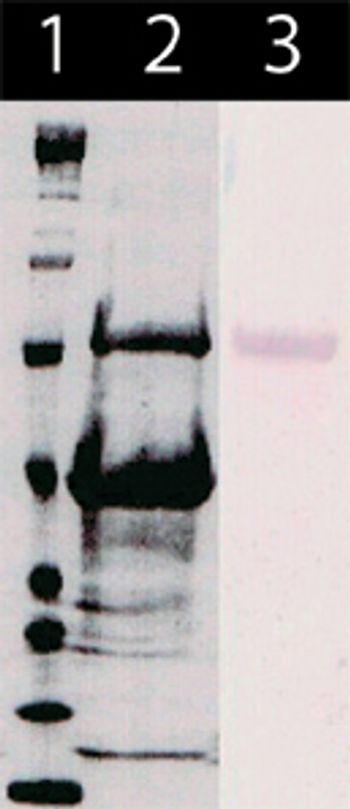
Recombinant vector technologies can improve the yield and lower the cost of egg-based influenza vaccine production.
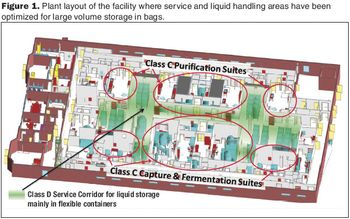
A case study compares capital costs, operating expenses, and NPV for a new MAb plant.
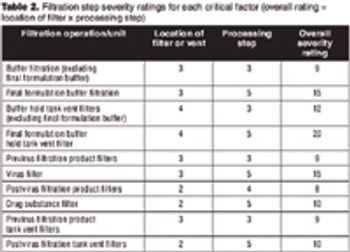
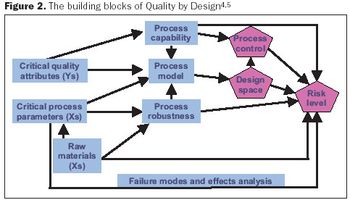
Conducting a FMEA analysis is a good first step in a risk-based approach for determining the need for a filter integrity test.
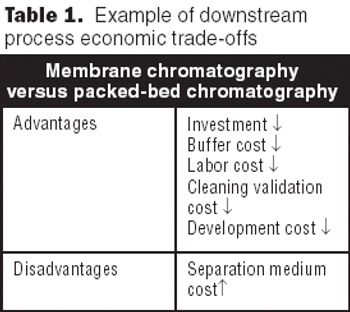
The future of therapeutic MAbs lies in the development of economically feasible downstream processes.
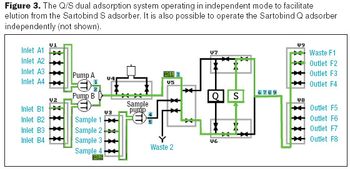
A membrane adsorber in retention mode can be used efficiently in a commercial antibody manufacturing process.
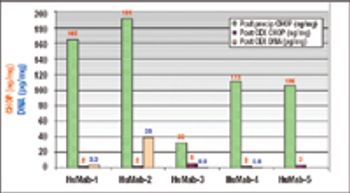
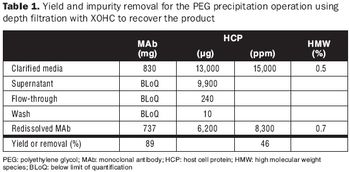
Precipitation prior to capture chromatography offers a simple, robust, and economical method to remove CHO host cell proteins and DNA.
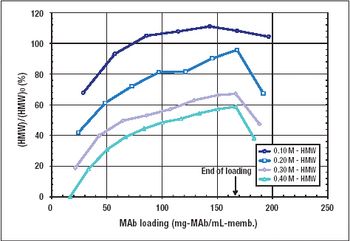
This alternative to column chromatography is suitable for flow-through as well as bind-and-elute purification operations.
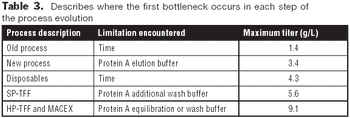
New techniques can overcome bottlenecks in existing facilities.
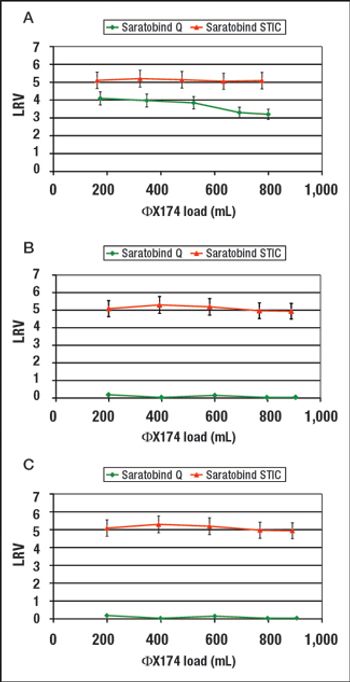
STIC allows polishing to be carried out without an interstitial dilution step, which reduces process time and avoids additional buffer preparation and hold steps.
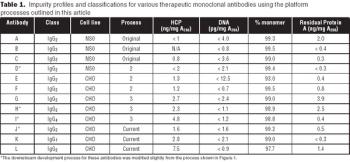
A purification scheme to maximize the efficiency of the purification process and product purity while minimizing the development time for early-phase therapeutic antibodies.
How to implement a risk-based approach to eliminate viruses using orthogonal technologies.

The industry and government must collaborate to develop robust technologies and quicker, more flexible manufacturing approaches for vaccine development.
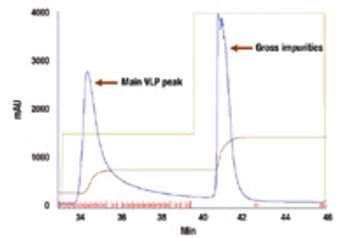
New technologies such as virus-like particles are promising weapons in the battle against pandemic influenza.
Ten biopharmaceuticals gained marketing authorization in the US or EU in 2008, although only four were new approvals.
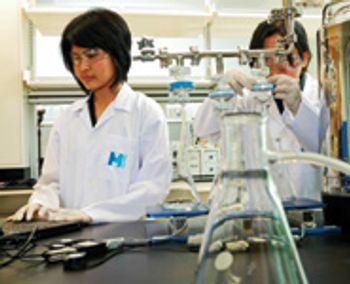
Membrane-based TFF technology can ease scale-up and provide a higher recovery percentage compared to conventional purification methods.