






Manufacturing, Biologics
Latest News
Advertisement
Latest Videos



Advertisement
More News

Bristol Myers Squibb's GPRC5D-Directed CAR T Cell Therapy Meets Primary Endpoint in Multiple Myeloma
Bristol Myers Squibb reported positive topline phase 2 results for arlocabtagene autoleucel, a potential first-in-class GPRC5D-directed CAR T cell therapy, in patients with quadruple-class exposed relapsed and refractory multiple myeloma who had already received a prior BCMA-targeted therapy.

Cipla's US subsidiary secured exclusive rights to commercialize QL2107, Qilu Pharmaceutical's phase 3 biosimilar candidate to Keytruda, ahead of the reference biologic's anticipated 2028 patent expiration.

Medicus Pharma secured worldwide rights to PF-08046031 (CD228V), an antibody-drug conjugate targeting melanotransferrin that Pfizer discontinued earlier this year following its $43 billion Seagen acquisition, in a co-development and license agreement that could pay Pfizer more than $1 billion in milestones.
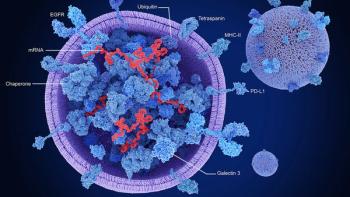
Under the 5-year manufacturing deal, NurExone will access Made Scientific's Princeton, NJ, GMP facility to speed regenerative exosome therapies toward clinical trials.

Bristol Myers Squibb has selected Houston's Generation Park for a new $2.3 billion multi-modal manufacturing campus capable of producing small molecules, biologics, and antibody-drug conjugates, adding to a growing wave of large-scale US pharmaceutical manufacturing investment.

The facility aims to scale global biologics supply, supporting patient access to advanced therapies as manufacturing capacity becomes a bottleneck in drug delivery.

Veraxa Biotech has advanced its bispecific antibody-drug conjugate program VXA-222 into its next development phase after OmniAb completed discovery work under their May 2025 collaboration, creating a dual-antigen "AND-gate" candidate designed to improve precision in solid tumor treatment.

A Phase 1 trial of DYP688, a first-in-class antibody-drug conjugate targeting the Gq/11 pathway, showed disease control in more than 80% of patients with metastatic uveal melanoma and was well tolerated, according to findings published in Nature Medicine, even after Novartis halted the drug's development.

A new peer-reviewed publication in Clinical Cancer Research details preclinical data for Pheast Therapeutics' PHST001, an anti-CD24 monoclonal antibody, showing anti-tumor activity across six solid tumor types and enhanced effects when combined with chemotherapy, radiotherapy, and antibody-drug conjugates.

The European Medicines Agency has granted orphan designation to Atsena Therapeutics' ATSN-101 and ATSN-201, AAV gene therapies for Leber congenital amaurosis 1 and X-linked retinoschisis, as both programs advance toward pivotal Phase 3 trials.

MilliporeSigma's Sebastián Arana outlines why flexible, platform-based manufacturing and workforce training are now table stakes for competitive biomanufacturers.

Scholar Rock’s apitegromab is awaiting a US manufacturing facility resolution, which may impact the therapy’s European review, for which clinical assessment has been completed.

The FDA has approved Padcev, a Nectin-4-directed antibody-drug conjugate, plus Keytruda as neoadjuvant and adjuvant treatment for muscle-invasive bladder cancer regardless of cisplatin eligibility, based on Phase III EV-304 data showing a 47% reduction in recurrence risk.
Teva Pharmaceuticals has entered a global licensing agreement with Polpharma Biologics for exclusive commercialization rights to a proposed biosimilar of Ocrevus (ocrelizumab), the CD20-targeted monoclonal antibody used to treat relapsing and primary progressive multiple sclerosis.

The annual gathering in San Diego showcased the industry's pivot toward complex molecules, flexible manufacturing, and human-based drug discovery — while candid conversations about capital access, deal strategy, and preclinical predictability reflected a sector navigating pressure with optimism.

Kenai Therapeutics has completed enrollment in the Phase 1b/2a REPLACE trial of RNDP-001, an allogeneic iPSC-derived dopaminergic neuron replacement therapy for idiopathic Parkinson's disease, with safety and preliminary efficacy data expected in 2027 — representing a significant step toward a potential disease-modifying cell therapy for a condition affecting more than 10 million people worldwide.

92Bio, Inc. has dosed the first patient in a Phase 1 trial of NTB-928, a fully human bispecific T-cell engager targeting FOLR1 and CD3, designed to selectively kill FOLR1-overexpressing ovarian cancer cells while sparing normal tissue — addressing a key limitation of prior FOLR1-directed therapies in platinum-resistant ovarian cancer.
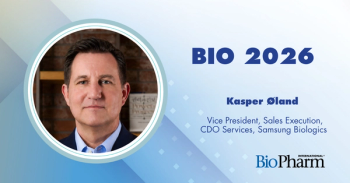
Speaking at BIO 2026, Kasper Øland, Samsung Biologics' vice president of sales execution, emphasizes how complex molecules now exceed 55% of the company’s pipeline as biotechs demand faster, more flexible CDMO partnerships.

At BIO International Convention 2026, Sara-Jane Demy discusses improving biotech investment, renewed NIH support for emerging companies, and why capital access remains one of the industry's biggest priorities.

The European Investment Bank-backed investment establishes a new single-use GMP facility with which Icosagen can support complex protein therapeutics from early discovery through phase 1/2 clinical manufacturing.

MilliporeSigma Global Head of Process Solutions Sebastián Arana outlines why manufacturing flexibility, not just capacity, is now the strategic priority for biomanufacturers at BIO 2026.
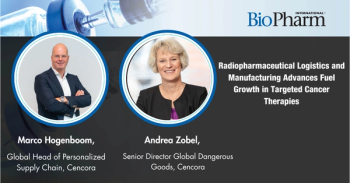
During an interview with BioPharm International, Cencora experts Andrea Zobel, senior manager of dangerous goods, and Marco Hogenboom, senior director of specialty logistics, highlighted the unique regulatory, logistical, and educational challenges associated with delivering radiopharmaceutical therapies to patients worldwide.
Andrea Zobel and Marco Hogenboom of Cencora World Courier discuss how advances in radiopharmaceutical manufacturing, cancer biology, and specialty logistics are enabling the expansion of targeted radiopharmaceutical therapies into larger patient populations and broader oncology indications.

According to Eli Lilly and Company, the extended dosing interval reduces maintenance injections to as few as 6 per year without required topical corticosteroids.

Point-of-care manufacturing could expand personalized medicine by enabling faster, decentralized drug production, though quality and regulatory hurdles remain.
Advertisement
Advertisement
Trending on BioPharm International
1
Fresenius and WuXi Biologics Sign Exclusive Agreement Covering Up to 37 Biosimilar Candidates
2
FDA Grants Accelerated Approval to Inovio DNA Immunotherapy for RRP
3
FDA Accepts uniQure’s Huntington’s Disease Gene Therapy BLA for Priority Review
4
Samsung Biologics Secures 97.66% of PolyPeptide Shares in Tender Offer
5