

BIIE CEO Dr Stephen Wilson explains why Basel's condensed innovation ecosystem was chosen for the institute’s translational research mission.
BIIE CEO Dr Stephen Wilson explains why Basel's condensed innovation ecosystem was chosen for the institute’s translational research mission.
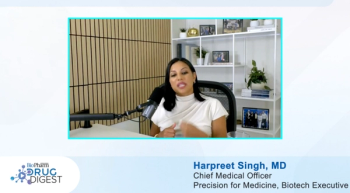
Experts Harpreet Singh and Steven Quay discuss FDA expedited regulatory pathways for biologics, including Fast Track, Breakthrough Therapy, RMAT, Real-Time Oncology Review, and the National Priority Voucher Pilot Program, and explain how these mechanisms can accelerate development without lowering evidentiary standards.

Mayo Clinic’s Dr Keith L. Knutson and CellxLife’s Dr. von Hofe discuss why cancer vaccines may succeed where checkpoint inhibitors fall short in 60 to 70% of patients.
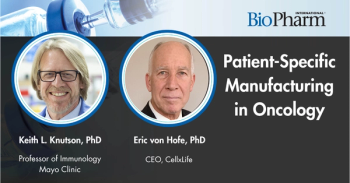
Dr Eric von Hofe of CellxLife and Dr Keith L. Knutson of Mayo Clinic explain why manufacturing speed and cost will determine the scalability of personalized cancer vaccines.
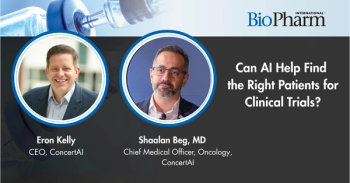
AI tools that extract information from unstructured medical records could help oncology practices identify eligible clinical trial patients, surface care gaps, and compare treatment outcomes across real-world cohorts, according to Shaalan Beg and Eron Kelly of ConcertAI.
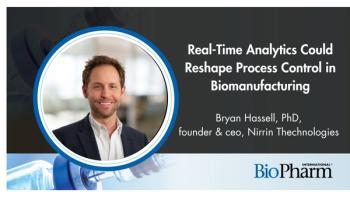
Real-time process analytics and digital manufacturing systems could generate the reliable data needed for artificial intelligence to deliver more predictive insights in biopharmaceutical manufacturing, according to Bryan Hassell, founder and CEO of Nirrin Technologies.
CellxLife CEO Dr Eric von Hofe and Mayo Clinic immunology professor Dr Keith L. Knutson explain how dendritic cell vaccines generate long-term immune memory to prevent cancer recurrence.
Cellex Life CEO Dr Eric von Hofe and Professor of Immunology at Mayo Clinic, Dr Keith L. Knutson, explain why individualized tumor profiling, not off-the-shelf targeting, is key to effective personalized cancer vaccines.
Dr Steve Harr, Sana Biotechnology's CEO, identifies scalability, commercialization, and reimbursement as the defining hurdles for curative islet cell therapy in type 1 diabetes.
Laurent Levy, founder and CEO of Nanobiotix, explains how a physics-based approach to drug delivery could complement existing therapeutic platforms by improving particle behavior in the body while avoiding added complexity.
Dr Steve Harr of Sana Biotechnology describes how converging islet transplant science makes a single-treatment cure for type 1 diabetes without immunosuppression an inevitable outcome.
ConcertAI executives discussed how the company's integration of CancerLinQ has expanded the platform beyond quality reporting, using artificial intelligence to deliver faster clinical insights, improve trial matching, and support oncology practices with real-time data.
Sana Biotechnology's CEO, Dr Steve Harr, weighs in on how CRISPR-edited donor islet cells have survived 14 months without immunosuppression in a type 1 diabetes patient.
In an interview with BioPharm International, Stephanie Fradette, head of Biogen’s Rare Neurology Development Unit, discussed FDA Breakthrough Therapy designation for salanersen and early Phase 1b data evaluating the therapy in individuals with spinal muscular atrophy who had suboptimal responses following gene therapy.
Laurent Levy, founder and CEO of Nanobiotix, discusses why physics-based therapeutics could complement traditional biology-driven drug development and explains how the company's NanoPrimer platform is designed to improve delivery of complex medicines.
Collaboration between suppliers and developers, as well as viral vector manufacturing simplification, are becoming critical to CGT's commercial future, says Brandon Pence of FUJIFILM Biosciences.
Brandon Pence, FUJIFILM Biosciences' president and chief operating officer, identifies cell consistency and viral vector capsid fill ratios as the 2 most critical unresolved hurdles in CGT manufacturing scale-up.
As biopharmaceutical manufacturing becomes increasingly automated, real-time analytical data is poised to transform how manufacturers monitor processes, make decisions, and optimize production. Bryan Hassell, founder and CEO of Nirrin Technologies, discusses why trusted, continuous measurements will be essential to the next generation of digital biomanufacturing.
Generare CEO Guillaume Vandenesch explains that genomics and synthetic biology are positioning natural molecule discovery as a leading small molecule modality for the 21st century.
Nirrin Technologies founder and CEO Bryan Hassell discusses how simplifying protein quantitation could improve method transferability, support automation, and reduce bottlenecks across biologics development and manufacturing.
At BIO 2026, Thermo Fisher Scientific's Paul Jorjorian highlighted late-stage raw material switches as being among the most disruptive and underestimated risks in biopharma development.
Oncolytics Biotech CEO Jared Kelly warns that investor demand for near-term tumor response data is blocking funding for trials with proven overall survival benefits.
Updated clinical findings for brenetafusp highlight how T-cell receptor bispecific therapies may overcome key mechanisms of checkpoint inhibitor resistance while expanding immunotherapy to a broader range of solid tumors.
Speaking at BIO 2026, Novartis Contract Manufacturing's Carrie Bracco explains how capacity pressures and biotech flexibility needs are reshaping CMO partnerships.
As part of BioPharm International's continuing coverage from the BIO International Convention 2026, Sara Jane Demy, CEO of Demy-Colton, discusses how artificial intelligence, global collaboration, and renewed investment could help improve drug development success rates and accelerate innovation.
As part of BioPharm International's continuing coverage from the BIO International Convention 2026, Sara Jane Demy discusses signs of renewed investment activity and why inclusive scientific leadership remains essential to advancing drug development.
BIO 2026 highlighted biotech's resurgence through M&A dealmaking, CDMO diversification, and renewed investor confidence in biopharma development.
Speaking at BIO 2026, Kasper Øland, Samsung Biologics' vice president of sales execution, emphasizes how complex molecules now exceed 55% of the company’s pipeline as biotechs demand faster, more flexible CDMO partnerships.
At BIO International Convention 2026, Sara-Jane Demy discusses improving biotech investment, renewed NIH support for emerging companies, and why capital access remains one of the industry's biggest priorities.
From his presentation at BIO 2026, Infinimune CEO Dr Wyatt McDonnell makes the case for how human-derived antibodies and human-trained AI models eliminate species translation failure and compress time to IND.