


Sebastian Andersen, CEO and founder of ClarityNorth Partners, discusses 2026 biopharma dealmaking, including M&A trends, oncology deal activity, Lilly’s acquisition strategy, and how transaction structure can help companies manage risk.
Sebastian Andersen, CEO and founder of ClarityNorth Partners, discusses 2026 biopharma dealmaking, including M&A trends, oncology deal activity, Lilly’s acquisition strategy, and how transaction structure can help companies manage risk.

Nucleai has announced an ongoing translational research collaboration with Gilead Sciences applying AI-powered tissue analytics to support Gilead's global antibody-drug conjugate clinical development programs, generating candidate spatial biomarkers across multiple oncology indications.

SynaptixBio says rare disease biotech investment is increasing in the US following renewal of the FDA's Priority Review Voucher program, while UK-based rare disease companies continue to lack an equivalent incentive and remain dependent on public markets, private investment, or acquisition to secure capital.

Johnson & Johnson has entered a collaboration and equity investment agreement with Sail Biomedicines to advance in vivo CAR-T therapies for immune-mediated diseases, securing an exclusive option to acquire the company for $2.58 billion.

Carrie Bracco, head of business development, US, Novartis Contract Manufacturing, explains why manufacturing flexibility is becoming as important as capacity for emerging biotechnology companies navigating biopharmaceutical development and contract manufacturing decisions.

FT839, Fate Therapeutics' off-the-shelf, iPSC-derived CAR T-cell candidate co-targeting CD19 and CD38, has received FDA IND clearance and will advance into a phase 1/2 basket trial designed to treat multiple autoimmune diseases without conditioning chemotherapy.

Chemomab Therapeutics and Scipher Medicine will merge to advance nebokitug, a first-in-class anti-CCL24 monoclonal antibody, into a precision medicine Phase 2 trial in rheumatoid arthritis guided by Scipher's PrismRA test and AI Network Medicine platform.

Abu Dhabi is expanding its role in global biopharmaceutical manufacturing through strategic investments, advanced infrastructure, and international partnerships designed to accelerate biologics production, innovation, and supply chain resilience.
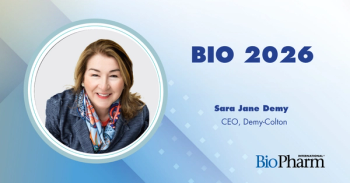
As part of BioPharm International's continuing coverage from the BIO International Convention 2026, Sara Jane Demy, CEO of Demy-Colton, discusses how artificial intelligence, global collaboration, and renewed investment could help improve drug development success rates and accelerate innovation.
As part of BioPharm International's continuing coverage from the BIO International Convention 2026, Sara Jane Demy discusses signs of renewed investment activity and why inclusive scientific leadership remains essential to advancing drug development.

The annual gathering in San Diego showcased the industry's pivot toward complex molecules, flexible manufacturing, and human-based drug discovery — while candid conversations about capital access, deal strategy, and preclinical predictability reflected a sector navigating pressure with optimism.

ADC Therapeutics has completed enrollment of 100 patients in the Phase 1b LOTIS-7 trial evaluating loncastuximab tesirine-lpyl plus the bispecific antibody glofitamab in relapsed/refractory diffuse large B-cell lymphoma, with full data expected in Q4 2026 following earlier results showing an 89.8% overall response rate.

New York-based biotech enters Nasdaq through JATT II merger, betting IL-13 × IL-18 dual blockade can break the efficacy ceiling in I&I

Jeff Talbot of Roseman University of Health Sciences discusses how Las Vegas is positioning itself as a growing life sciences hub by offering cost-effective laboratory space, access to capital, and a flexible environment for biotech startups and emerging companies.
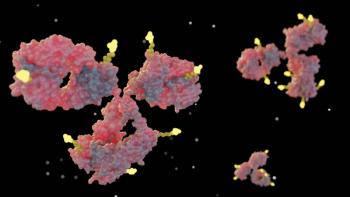
China's National Medical Products Administration has approved izalontamab brengitecan (iza-bren) for recurrent or metastatic nasopharyngeal carcinoma, making it the first bispecific antibody-drug conjugate to receive regulatory approval anywhere in the world.

AbbVie has entered a definitive agreement to acquire Apogee Therapeutics for $10.9 billion, adding zumilokibart, a subcutaneous half-life extended IL-13 monoclonal antibody in Phase 3 development for atopic dermatitis, asthma, and eosinophilic esophagitis.

Newly launched Bionyra Pharma has raised $165 million in Series A financing and secured exclusive global rights to two TL1A-targeting biologics from China's TrueLab Biopharmaceutical — an anti-TL1A monoclonal antibody and a TL1A×IL-23p19 bispecific antibody — in a deal worth up to $985 million, positioning the company to compete in an IBD drug class already drawing attention from Merck, Roche, and the Sanofi/Teva partnership.

The FDA's Vaccines and Related Biological Products Advisory Committee voted unanimously on June 18, 2026 that the benefits of mFLUSIVA (mRNA-1010) outweigh its risks for adults 50 and older, positioning Moderna for a potential approval by August 5 that would make the vaccine the first mRNA-based seasonal influenza product licensed in the US.

LG AI Research and D&D Pharmatech have launched a collaboration aimed at developing next-generation oral peptide therapeutics by combining artificial intelligence-driven molecular design with peptide formulation and development expertise.

Jazz Pharmaceuticals and AbCellera have entered a research collaboration to discover and develop next-generation multispecific T-cell engaging antibodies for gastrointestinal cancers and other solid tumors, with the agreement potentially valued at up to $792 million per program.

New one-year data from MBX Biosciences show sustained efficacy, improved kidney and bone markers, and continued calcium control with once-weekly canvuparatide in chronic hypoparathyroidism, supporting advancement into phase 3 development.
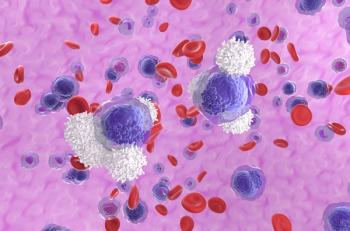
New data presented at EHA 2026 showed promising efficacy and manageable safety for Imviva Biotech's investigational allogeneic CAR-T therapy CTD402 in pediatric and adult patients with relapsed or refractory T-cell acute lymphoblastic leukemia and lymphoblastic lymphoma.

Immunome has dosed the first patient in a Phase 1 clinical trial evaluating IM-1617, a potential first-in-class antibody-drug conjugate incorporating the company's proprietary HC74 topoisomerase I inhibitor payload. The study will assess safety and preliminary anti-tumor activity in patients with advanced solid tumors.

Kyowa Kirin will present new clinical and real-world evidence on mogamulizumab at the World Congress of Cutaneous Lymphomas, including patient-reported outcomes, comparative effectiveness analyses, biomarker findings, and treatment utilization data in relapsed or refractory mycosis fungoides and Sézary syndrome.

Sanofi has discontinued the Phase 3 MOBILIZE trial of riliprubart in treatment-refractory chronic inflammatory demyelinating polyneuropathy after an interim analysis found the study was unlikely to demonstrate sufficient efficacy. No new safety concerns were identified, and the company is evaluating the future of other ongoing riliprubart studies.

Eli Lilly reported Phase 3 data showing its oral GLP-1 receptor agonist Foundayo (orforglipron) achieved greater reductions in A1C and body weight than oral semaglutide in the first head-to-head trial of two oral GLP-1 therapies for type 2 diabetes.

City Therapeutics has secured $99.5 million in Series B financing to advance its next-generation RNA interference platform and pipeline, including its Phase 1 Factor XI-targeting candidate for thromboembolic diseases and a planned clinical-stage program for Stargardt disease.

Johnson & Johnson has agreed to acquire Firefly Bio in a $1 billion cash deal, gaining access to the company's Firelink degrader antibody conjugate platform for KRAS-driven cancers. The acquisition strengthens J&J's oncology pipeline and reflects continued industry interest in targeted protein degradation approaches for difficult-to-treat solid tumors.

The FDA has expanded the indication for Pfizer's Hympavzi to include pediatric patients ages 6 to 11 years and people with hemophilia A or B who have inhibitors. The approval makes Hympavzi the first subcutaneous non-factor therapy available for children ages 6 to 11 years with hemophilia B.

A Journal of Pancreatology review underscores renewed interest in TIGIT, but clinical evidence remains mixed across solid tumors.