





Manufacturing
Latest News
Advertisement
Review of SUT Adoption in Biopharma Manufacturing
The evolution of therapeutic modalities drives the adoption of single-use technologies.
Moving Biosimilars Forward in a Hesitant Market
Despite a growing number of biosimilar approvals, market uptake remains a challenge.

Automating the Future of Fill/Finish
Given the criticality of fill/finish processes, it is clear that automation is the next technological step.

Latest Videos





Advertisement
More News

Laru-zova helped 31% of high-dose patients gain 15+ letters of vision, representing the first pivotal trial to succeed in treating XLRP.

Athenecia Faggins of Minaris Advanced Therapies discusses raw material qualification, supplier management, testing, and risk control for advanced therapy manufacturing.

Panelists from FDA, Genentech, and Minaris discussed raw material risk, supplier oversight, and at-risk release strategies for advanced therapies at the PDA/FDA Joint Regulatory Conference.

Sanofi's Dr Jack Prior detailed a data maturity framework for biologics manufacturing, while FDA and Gilead panelists debated risk-based AI validation.

FDA's consumer safety officer, Jason Chancey, detailed real inspection findings, such as taped gaskets and delayed retesting, behind sterile facility deficiencies.
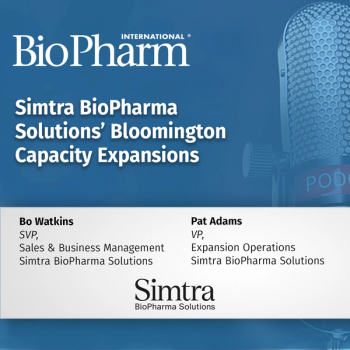
In this exclusive podcast, Bo Watkins (SVP, Sales & Business Management) and Pat Adams (VP, Expansion Operations) of Simtra BioPharma Solutions discuss the company's major manufacturing expansion in Bloomington, Indiana. The conversation covers the new Building H facility and the Park Campus development, and how these investments are designed to expand US sterile injectable and high-potency manufacturing capacity. They also detail the practical benefits for customers, the digital capabilities supporting the buildout, and what the expansion means for Simtra's Bloomington workforce and community.

Insilico's Longevity Vaccines use circular mRNA to arm T cells against aging's earliest culprit cells, starting with immune rejuvenation.

Tambotatug pelitecan (Tam-Peli), a B7-H3-targeted antibody-drug conjugate, is the second of at least three B7-H3-targeted ADCs to post positive late-stage data in relapsed small-cell lung cancer this year.

Four cell therapy developers have pulled back from ex vivo manufacturing in the past month — ArsenalBio, TScan Therapeutics, and Cellectis all pivoted to in vivo approaches, while Bristol Myers Squibb terminated its manufacturing partnership with automation specialist Cellares after determining its platform couldn't meet requirements for commercial Breyanzi production, triggering layoffs.

Phio's PH-762 posted a 70% response rate in skin cancer, supporting its FDA briefing package for a planned phase 2b trial.

Samsung Biologics signed a $262 million contract manufacturing agreement with an undisclosed European pharmaceutical company, extending production commitments through 2033 and lifting the CDMO's cumulative contract value past $21.9 billion.

With 15 patients now dosed in its pivotal EMERALD trial, Resolution will build on the 70% 4-year transplant-free survival seen with RTX001 in earlier data.

CordenPharma is expanding its Caponago, Italy site with a €80 million multi-year investment and new aseptic fill-finish lines, aiming to reach 500 million sterile injectable units of annual capacity to meet rising demand across peptide, biologic, LNP, and oligonucleotide-based drug products.

Single-partner platforms promise to replace fragmented prescription hubs with one connected, data-driven journey for manufacturers and patients alike.

Solstice Oncology launched with a $225 million Series A financing to advance porustobart, a second-generation, Fc-enhanced CTLA-4 antibody licensed from Harbour BioMed, into neoadjuvant Phase 2 testing for microsatellite-stable colon cancer.

Encoded Therapeutics closed a $275 million Series F financing to fund pivotal and expansion studies of ETX101, an AAV9-mediated gene regulation therapy for SCN1A-positive Dravet syndrome, alongside commercial-scale buildout of the company's in-house GMP manufacturing.

Amgen and AstraZeneca announced that the Phase 3 DeLLphi-305 trial met its primary endpoint, with Imdelltra (tarlatamab) plus Imfinzi (durvalumab) significantly improving overall survival versus durvalumab alone as first-line maintenance therapy for extensive-stage small cell lung cancer — the first phase 3 study of a bispecific T-cell engager to show a survival benefit in this earlier-line setting.
Del-desiran missed its primary endpoint in a phase 3 DM1 trial, though secondary measures showed signs of clinical activity.

Aptar Pharma's Nanopharm business will lead inhaled formulation development and device assessment for ACT-101, Aceso Therapeutics' antisense oligonucleotide candidate designed to correct CFTR protein function in cystic fibrosis patients carrying the F508del mutation.

BrainChild Bio's BCB-276 extended survival to 19.8 months from diagnosis in phase 1, backing its $116 million-funded pivotal DIPG trial.

Bristol Myers Squibb's GPRC5D-Directed CAR T Cell Therapy Meets Primary Endpoint in Multiple Myeloma
Bristol Myers Squibb reported positive topline phase 2 results for arlocabtagene autoleucel, a potential first-in-class GPRC5D-directed CAR T cell therapy, in patients with quadruple-class exposed relapsed and refractory multiple myeloma who had already received a prior BCMA-targeted therapy.

9MW1911 cut severe COPD exacerbations by up to 100% at the highest dose, supporting Mabwell's push toward phase 3 development.

Cipla's US subsidiary secured exclusive rights to commercialize QL2107, Qilu Pharmaceutical's phase 3 biosimilar candidate to Keytruda, ahead of the reference biologic's anticipated 2028 patent expiration.

Medicus Pharma secured worldwide rights to PF-08046031 (CD228V), an antibody-drug conjugate targeting melanotransferrin that Pfizer discontinued earlier this year following its $43 billion Seagen acquisition, in a co-development and license agreement that could pay Pfizer more than $1 billion in milestones.

GMP cleanroom differential pressure control prevents FDA 483 citations and contamination failures through HVAC design and validation.
Advertisement
Advertisement