




Outsourcing
Latest News
Advertisement
Taking Full Advantage of Service Providers
There are considerations companies may want to consider before seeking out a service provider.

Addressing PK/PD Study Design Early in Development
Strategizing a PK/PD study approach in early phase development facilitates a successful clinical progression.

Tech Transfer and Regulatory Compliance
Demand for efficient tech transfer, as well as compliant on-time delivery, is rising.

Latest Videos






Shorts

1:15
How AI and 'Lane Assist' are Transforming Cancer Care
a month ago
by
Emily Schoenthaler(+2 more)
Advertisement
More News

mAbxience and Sandoz are targeting a $5.7 billion market with a proposed emicizumab biosimilar for hemophilia A.

In this exclusive podcast, Bo Watkins (SVP, Sales & Business Management) and Pat Adams (VP, Expansion Operations) of Simtra BioPharma Solutions discuss the company's major manufacturing expansion in Bloomington, Indiana. The conversation covers the new Building H facility and the Park Campus development, and how these investments are designed to expand US sterile injectable and high-potency manufacturing capacity. They also detail the practical benefits for customers, the digital capabilities supporting the buildout, and what the expansion means for Simtra's Bloomington workforce and community.

Four cell therapy developers have pulled back from ex vivo manufacturing in the past month — ArsenalBio, TScan Therapeutics, and Cellectis all pivoted to in vivo approaches, while Bristol Myers Squibb terminated its manufacturing partnership with automation specialist Cellares after determining its platform couldn't meet requirements for commercial Breyanzi production, triggering layoffs.

Samsung Biologics signed a $262 million contract manufacturing agreement with an undisclosed European pharmaceutical company, extending production commitments through 2033 and lifting the CDMO's cumulative contract value past $21.9 billion.

Genprex moves its diabetes gene therapy toward the clinic, tapping a CGMP CDMO after preclinical models reversed hyperglycemia in mice.

Outsourced cell and gene therapy manufacturing is set to grow nearly 6-fold by 2035 as biotech pipelines outpace in-house capacity.
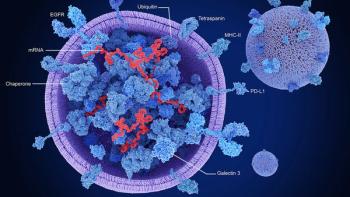
Under the 5-year manufacturing deal, NurExone will access Made Scientific's Princeton, NJ, GMP facility to speed regenerative exosome therapies toward clinical trials.

Under the deal, Lonza will grant Engitix a single-target ADC license for SYNtecan E, GlycoConnect, and HydraSpace to advance ECM-targeted fibrosis and cancer therapies.

At BIO International Convention 2026, Sara-Jane Demy discusses improving biotech investment, renewed NIH support for emerging companies, and why capital access remains one of the industry's biggest priorities.
MilliporeSigma's Sebastian Arana identifies process characterization gaps, tech transfer complexity, and analytical lag as top CGT manufacturing scale-up barriers at BIO 2026.

Speaking from the show floor at BIO 2026, Dr Anil Kane, Thermo Fisher Scientific's global head of technical and scientific affairs, details how AI partnerships are accelerating drug development decisions across the CDMO continuum.
MilliporeSigma Global Head of Process Solutions Sebastián Arana outlines why manufacturing flexibility, not just capacity, is now the strategic priority for biomanufacturers at BIO 2026.

In the second half of an interview at the close of INTERPHEX 2026, Avantor’s Jerry Keybl explains that digital integration and AI-driven analytics enable predictive bioprocess control and can thus improve consistency, scalability, and data-driven manufacturing decisions.

AI and automation may streamline cell and gene therapy manufacturing by reducing labor demands while improving efficiency and supporting scalable production, says Dr. Alan Smith of Charles River Laboratories.

ADC cleaning validation requires risk-based strategies to manage degradation and ensure safe limits for highly potent, dual-modality therapeutics, says Paul Lopolito, STERIS’ director of Technical Services, at INTERPHEX 2026.

Bristol Myers Squibb’s Dr. Manisha Desai, senior vice president of Product Development, notes how strategic bioprocessing alliances accelerate drug development by integrating R&D and manufacturing to scale complex biologics and ensure reliability.
Franco Negron, CEO, Simtra BioPharma Solutions touches on rising demand for biologics and high-potency therapies and how driving early, large-scale investment in injectable manufacturing capacity keeps pace with market growth.

Advanced data strategies and specialist biometrics teams can deliver faster, cleaner insights from Phase I trials and power smarter early drug decisions, says Ben Edwards of Avance Clinical.

Outsourced partners can help innovators make better decisions earlier in development, before uncertainty becomes late-stage risk.

Utilizing contract development and contract research organizations in drug discovery and development may offer benefits for drug formulators.
Avance Clinical’s Ben Edwards explains how biotechs must design Phase I trials for quantitative exposure–response data to meet current FDA guidance and de‑risk Phase II dose selection.

Trust-based CDMO partnerships are becoming essential to accelerate injectable drug development, manage risk, and ensure resilient biopharma supply.

Integrated CDMO networks streamline complex drug development across advanced modalities like ADCs.
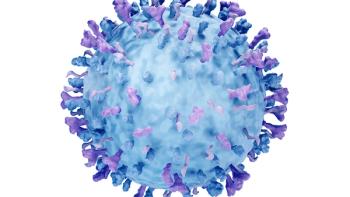
The SK bioscience–Gates MRI agreement highlights how scalable mAbs could broaden infant RSV prevention beyond high-income markets.

Industry experts discuss the standout packaging trends from 2025 that will influence the industry’s future.
Advertisement
Advertisement
Trending on BioPharm International
1
Shilpa CDMO Commits $50 Million to Scale Peptide Capacity in India
2
Policy Leaders Urge Treasury to Narrow Biotech Outbound Investment Rule
3
Lonza to Acquire Merck KGaA’s US CDMO Business, Adding ADC, Viral Vector, and LNP Capacity
4
Spyre’s Anti-TL1A Antibody SPY072 Misses in Psoriatic Arthritis and Axial Spondyloarthritis, Shifts Focus to Hidradenitis Suppurativa
5