


Celgene expands its oncology drug discovery and development portfolio through a new partnership with Sutro.
The evolution of therapeutic modalities drives the adoption of single-use technologies.

Despite a growing number of biosimilar approvals, market uptake remains a challenge.

Given the criticality of fill/finish processes, it is clear that automation is the next technological step.

Celgene expands its oncology drug discovery and development portfolio through a new partnership with Sutro.
The latest Ebola epidemic sheds light on the delicate processes surrounding the manufacture of genetically modified live cells for biopharmaceutical production.
The renovation to Roche's historic office building in Basel, Switzerland will feature sustainable workplaces and a state-of-the-art research center.
The agency recommends that companies developing drugs to treat Ebola apply for orphan drug designation.
A Priority Review voucher Sanofi and Regeneron purchased from BioMarin pharmaceuticals may put their mAb ahead of Amgen's in the market.
Lilly announces the closure of its Guayama, Puerto Rico manufacturing facility amid continued investments at other plants.
Personalized immunotherapy treatments help 90% of acute lymphoblastic leukemia patients achieve remission in a new study.
The Apollo platform can be used throughout a product?s entire lifecycle.

Fed-batch processes were scaled up from traditional bench-scale bioreactors to large-scale single-use systems.
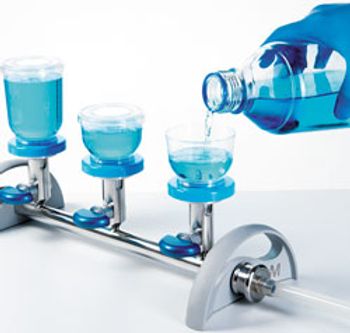
The EZ-Fit Filtration Unit, a ready-to-use, disposable filtration device for bioburden testing from EMD Millipore, the Life Science division of Merck KGaA, increases reliability and streamlines workflows.

Prefilled syringes offer advantages to manufacturers, healthcare professionals, and patients.

Unexpected problems can become opportunities to share knowledge and improve processes.

Demand for new therapies and vaccines spotlights production challenges.
Partnership is awarded for licensing of low-cost vaccine for the treatment of bacterial meningitis.
NIH continues funding for tissue chips to be used in the development of therapeutics.
Regulations, product protection, and cost management are top concerns of supply chain decision makers.
GPhA throws its support behind a bill to prohibit companies from using REMS practices to deter competition.
A dynamic market, industry consolidation, and demand fluctuations lead to a mixed picture of pricing results.
Representatives of contract service organizations discuss technology trends with BioPharm International.

Experts discuss the future of modular manufacturing and the challenges that biopharma manufacturers face in facility design
PSC Investments announces the acquisition of a high potency, sterile fill/finish pharmaceutical manufacturing facility.
Attendees at the Bio-Process Systems Alliance annual summit discuss the benefits of single-use technology in biopharmaceutical manufacturing.
Cubist Pharmaceuticals voluntarily recalls certain lots of CUBICIN 500 mg in 10 mL single-use vials because of the presence of particulate matter.

Single-domain antibodies are emerging as credible alternatives due to their target specificity, high affinity, and cost-effective recombinant production.

Defining best biopharmaceutical practices is necessary to ensure the safety of the supply chain.