



Manufacturing
Latest News
Advertisement
Review of SUT Adoption in Biopharma Manufacturing
The evolution of therapeutic modalities drives the adoption of single-use technologies.

Moving Biosimilars Forward in a Hesitant Market
Despite a growing number of biosimilar approvals, market uptake remains a challenge.
Automating the Future of Fill/Finish
Given the criticality of fill/finish processes, it is clear that automation is the next technological step.

Advertisement

Suppliers, manufacturers, and governments must work together to plan how best to develop and deploy disposable systems for emergency response.

Do we really have to choose between saving money and saving time?
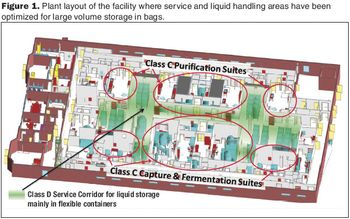
A case study compares capital costs, operating expenses, and NPV for a new MAb plant.
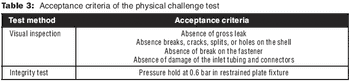
A case study assesses freezing time and physical robustness under stress.
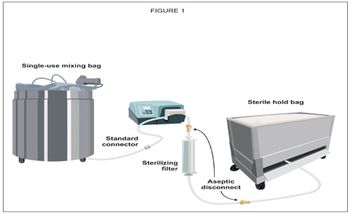
Single-use connections can help drug manufacturers maximize efficiency in every step of the manufacturing process.
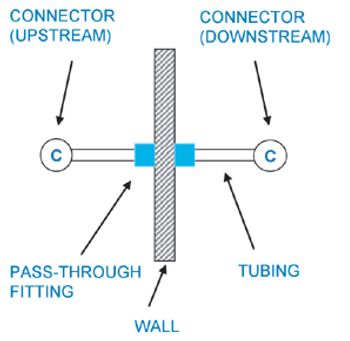
Many factors must be considered when choosing a sterile connector for a given process.
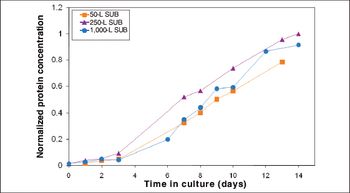
Process performance was comparable across all scales, and fiber optic sensors appeared interchangeable with conventional probes.
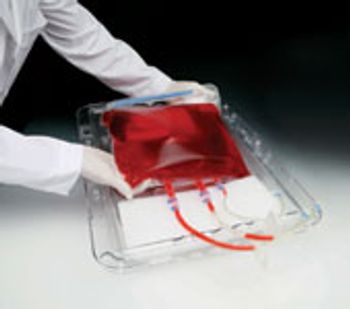
Genentech's evaluation of single-use technologies for bulk freeze-thaw, storage, and transportation.

An enterprise-wide quality management initiative is required to maintain supplier quality without sacrificing bottom-line objectives.
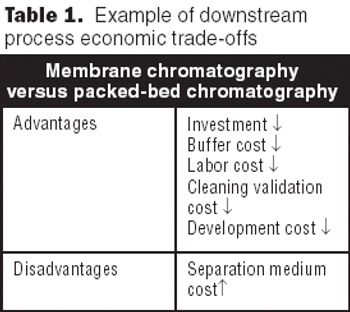
The future of therapeutic MAbs lies in the development of economically feasible downstream processes.
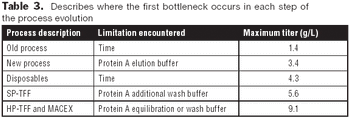
New techniques can overcome bottlenecks in existing facilities.
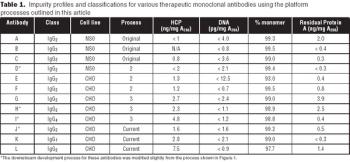
A purification scheme to maximize the efficiency of the purification process and product purity while minimizing the development time for early-phase therapeutic antibodies.

The industry and government must collaborate to develop robust technologies and quicker, more flexible manufacturing approaches for vaccine development.
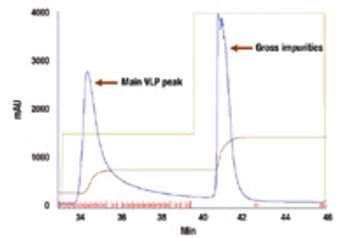
New technologies such as virus-like particles are promising weapons in the battle against pandemic influenza.
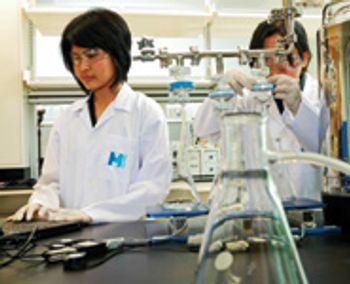
Membrane-based TFF technology can ease scale-up and provide a higher recovery percentage compared to conventional purification methods.
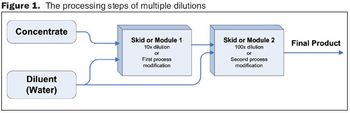
Automated in-line dilution can help solve capacity, financial, and quality concerns that biopharmaceutical manufacturing plants may be facing.

It is now possible to combine antigens with specific adjuvant systems to create more effective vaccines.

Small changes can have a big effect further downstream in your manufacturing processes.
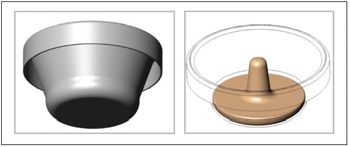
Needle-free vaccine delivery platforms can solve the problems of stockpiling, cold-chain management, and pandemic preparedness.
To assess current trends in single-use bioprocessing equipment, BioPharm International turned to John Boehm, bioprocessing business unit manager, Colder Products Company; Mandar Dixit, head of product management?filtration technologies, Sartorius Stedim Biotech; Geoff Hodge, managing director of process technology Xcellerex, Inc.; Günter Jagschies, senior director of strategic customer relations, life sciences, biotechnologies, GE Healthcare; Mani Krishnan, director of product management, Mobius single-use technologies, Millipore Corporation; and Jerry Martin, senior vice president of scientific affairs, Pall Life Sciences, and board chairman and technology chair at BPSA.
To assess current trends in laboratory equipment, BioPharm International turned to Francis Bach, North American sales director, Asahi Kasei TechniKrom, Inc.; Erika Lapinskas, PhD, product manager, Sartorius Stedim Biotech; Jeffrey R. Mazzeo, PhD, biopharmaceutical business director, Waters Corporation; Amber Ratcliff, product manager, analytical sensors, Hamilton Company; and Josh Silverstone, marketing director, Millipore Corp.
To assess current trends in information technology, automation, and process control, BioPharm International turned to Rick E. Cooley, market development manager?process analytics, Dionex Corporation, and James Erickson, president and chief executive officer, Blue Mountain Quality Resources, Inc.
To assess current trends in cleanrooms and engineering & facilities, BioPharm International turned to Parrish Galliher, founder and chief technology officer, Xcellerex, Inc.; Jim Maslowski, owner, PDC Aseptic Filling Systems; Morgan Polen, vice president, application technology, Lighthouse Worldwide Solutions; and Benoît Verjans, commercial director, Aseptic Technologies.
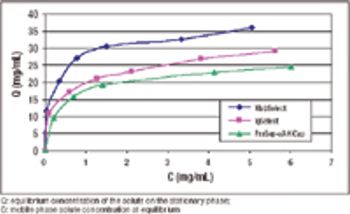
A stable alternative to Protein A chromatography.
Advertisement
Advertisement
Trending on BioPharm International
1
Merck and Kelun’s Sac-TMT Extends Survival by Nearly 7 Months in Pretreated Endometrial Cancer
2
BMS Reports Death in Phase 1 Zolacabtagene Autoleucel MS Study
3
The BioPharm Brief: Survival Gains, a Modest ADC Win, and CAR-T in Multiple Sclerosis
4
BioNTech’s HER2 ADC Hits Phase 3 Goal, but Companies See Limited Benefit
5