
Pall has agreed to be acquired by Danaher for $127.20 per share.
The evolution of therapeutic modalities drives the adoption of single-use technologies.
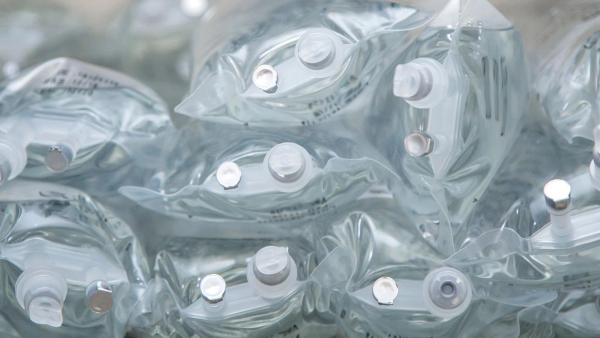
Despite a growing number of biosimilar approvals, market uptake remains a challenge.

Given the criticality of fill/finish processes, it is clear that automation is the next technological step.
Pall has agreed to be acquired by Danaher for $127.20 per share.
Pluristem Therapeutics announces that Japan’s Pharmaceuticals and Medical Devices Agency agreed with its methods for the manufacture of PLX-PAD cells.
A vaccine patch may eliminate the need for traditional means of vaccine distribution, according to an article in NPR.
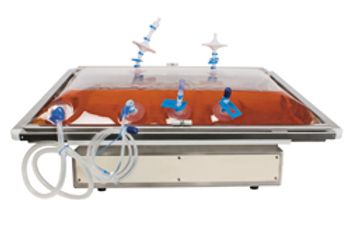
Meissner’s single-use biocontainer, FlexGro, is designed for use with rocker-style bioreactors.
Higher cell densities, greater demand for high-performance viral clearance, and desire for large-scale single-use technologies are driving development of filtration technologies.
Choosing the optimal protein expression vector depends on strain, promoter, and a number of other factors.

Manufacturer supply chain needs are changing in response to widening product temperature ranges.

The costs and benefits of integrating modular concepts for on-demand bioprocessing are explored.
Integrating advances in facility design can meet differing and emerging bioprocessing needs.
The biopharma industry has had some successes but still needs to work on operational issues.
Prequalified manufacturing suites could benefit from a new business model, say some industry executives.
The agency has released draft guidance on providing regulatory submissions in regards to promotional labeling and advertising materials.
GSK notifies CDC and FDA that it is recalling the remaining doses of its 2014–2015 flu vaccine, Flulaval Quadrivalent Thimerosal-free Pre-Filled Syringes, due to decreased potency.
Agency teams work together to encourage manufacturers to seek approval for previously unapproved drugs.
Baxter voluntarily recalls select lots of IV solutions due to possible particulate matter.
Facilities in China, Ireland, Germany, and the United States have been recognized by ISPE in the 2015 Facility of the Year Awards program.
GlaxoSmithKline announces global vaccines research and design facility to be based in Rockville, MD, USA.
NIH announced positive safety results from the vaccine, VSV-ZEBOV, and found that all patients in the study experienced a strong antibody response.
This article presents first-hand perspectives from industry users to suppliers of single-use sensors.
The author explores various biocontainers-both old and new-in the single-use space.


Making the switch from batch to continuous manufacturing requires a thorough understanding of the process.
Ethylene vinyl acetate (EVA) drug-release technologies are explored.

Second-generation needle-free injection systems will make parenteral drug administration more convenient, efficient, and safe.
As an affiliate member, TraceLink brings serialization expertise to the Pharma & Biopharma Outsourcing Association.