



Development
Latest News
Advertisement
Research into Cold Cancers Heating Up
Accurately targeted immunotherapies through reliable neoantigen recognition enable personalized medicine development.

Proprietary Cell-Line Development for High-Titer AAV Manufacturing
Proprietary cell lines offer opportunities for achieving high AAV titers.

Bracing for a Future Wave of Advanced Therapies
In the ATMP space, CGTs are hitting their stride with unprecedented approvals in the past year alone.

Latest Videos
Advertisement
More News

Inovio reports that Voceryq spared 27% of adults with recurrent respiratory papillomatosis from surgery for 12 months in a 26-patient efficacy group.

Three case studies show how automated Raman plate reading can triage samples before chromatography in bioprocess development.

This year’s AAPS PharmSci 360 highlighted AI transparency, computer modeling in formulation, oral peptide delivery, and new business models.
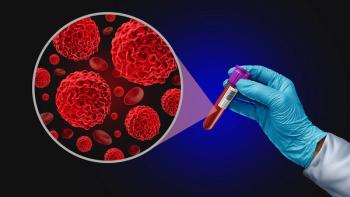
ADC trials are moving from binary antigen testing to quantitative, multiparameter biomarker models that better predict efficacy and toxicity.
Industry experts discuss how reshoring, fill/finish capacity, and cold chain technology are shaping a more resilient biopharma supply chain.

Lonza's Visp expansion adds 3 multiproduct suites at up to 1200 L plus 500-L single-use capacity to scale commercial ADC production from 2028.

The first-in-class molecule, licensed to Dianthus as DNTH212 outside Greater China, is designed to block type 1 interferon production and BAFF/APRIL-driven B-cell activity with a single drug.

HM15421/GC1134A could become the first subcutaneous enzyme replacement therapy for Fabry disease, with BioMarin paying $70 million upfront.

DAX-044 aims to confine IL-12 activity to tumors and avoid the toxicity that has limited IL-12 therapy, with phase 1 testing expected in 2027.

Updated phase 2 IOV-LUN-202 data show Iovance’s TIL cell therapy lifileucel produced a 24.6% response rate in previously treated non-squamous metastatic NSCLC, rising to 52.0% in KRAS and HER2 wild-type patients, as the company launches a biomarker-enriched registrational cohort.

The proposed FDA guidance would let sponsors add patient-specific gene editing variants to approved BLAs via in vitro data, with comments due November 27, 2026.
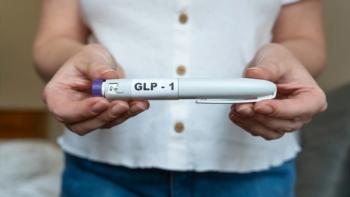
In the 80-week phase 3 TRANSCEND-T2D-2 trial in adults with type 2 diabetes, Eli Lilly’s GIP/GLP-1/glucagon triple agonist retatrutide lowered A1C by 2.2% and body weight by up to 20.9%, compared with 1.8% and 9.4% with Ozempic 2 mg.

From Clinical to Commercial: Accelerating ADC Late-Stage Development With Technology Innovation and an Integrated Platform
ByWuXi XDC
Webcasts
Webinar Date/Time: Thu, Nov 19, 2026 11:00 AM EST

Webcasts
Webinar Date/Time: Wed, Nov 18, 2026 11:00 AM EST

The EGFR×LGR5 bispecific antibody met both primary endpoints, overall survival and objective response rate, at the first interim analysis of LiGeR-HN1 in first-line PD-L1-positive recurrent or metastatic head and neck cancer.
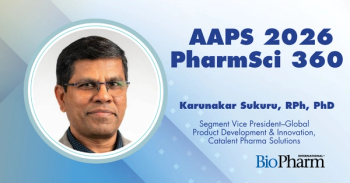
Catalent Pharma Solutions's Dr Karunakar Sukuru explains how peptide potency, dose, and patient needs guide the choice between softgel and sublingual dosage forms.

Long-term phase 2 data presented at ESMO 2026 show 3SBio’s tivunatamig plus chemotherapy extended progression-free survival vs tislelizumab plus chemotherapy in squamous and non-squamous NSCLC.

All 9 patients treated with BB-301 gene therapy met formal response criteria for improved swallowing in an ongoing OPMD trial.

Etentamig cut the risk of progression or death by 60% vs standard therapies in the phase 3 CERVINO trial of triple-class exposed myeloma.

At AAPS PharmSci 360, Thermo Fisher Scientific scientists described how predictive modeling guides technology selection for poorly soluble drugs, and outlined plans to bring solvent-free KinetiSol technology to commercial scale in 2027.
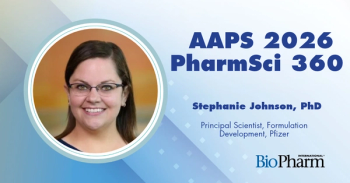
Speaking at AAPS PharmSci 360, Dr Stephanie Johnson, a principal formulation scientist at Pfizer, details how platform formulations save time before commitment, shift risk downstream, and what AI tools need to earn trust.

Phase 1b data at ESMO 2026 show the TCR-based T-cell engager produced durable responses in PRAME-high melanoma, with 91% of patients alive at one year in the recommended dose range.

In two small phase 1b trials, the half-life-extended bispecific antibody improved skin disease and reduced airway inflammation. Aclaris will move next into a Phase 2b trial in eosinophilic esophagitis.

Risvutatug rezetecan extended median progression-free survival to 5.5 months vs 1.4 months with chemotherapy in pretreated osteosarcoma.
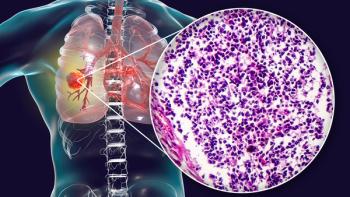
Izalontamab brengitecan extended median progression-free survival to 11.1 months vs 5.7 months with chemotherapy after EGFR TKI failure.
Advertisement
Advertisement
Trending on BioPharm International
1
Valneva and Pfizer's Lyme Disease Vaccine LB6V Moves Toward 2027 Regulatory Decisions
2
CARsgen Reports First Clinical Data for In Vivo CD19/CD20 CAR-T CT1182 in Relapsed B-Cell Lymphoma
3
Novartis' Inclisiran Cuts Cardiovascular Events in ORION-4 Trial
4
The BioPharm Brief: A Lyme Vaccine Nears Decisions, a Simpler Start for Briumvi, and Commercial-Scale Bone Growth Protein Manufacturing
5