




Development
Latest News
Advertisement
Research into Cold Cancers Heating Up
Accurately targeted immunotherapies through reliable neoantigen recognition enable personalized medicine development.
Proprietary Cell-Line Development for High-Titer AAV Manufacturing
Proprietary cell lines offer opportunities for achieving high AAV titers.

Bracing for a Future Wave of Advanced Therapies
In the ATMP space, CGTs are hitting their stride with unprecedented approvals in the past year alone.

Latest Videos
Advertisement
More News

SIM0660's dual CD79a/CD19 targeting aims to deepen B-cell depletion, supporting Roche's up-to-$1.53 billion bet on Simcere Zaiming's TCE platform.

AstraZeneca's Enhertu plus pertuzumab cut progression risk 44%, extending PFS past 3 years as the first new 1st-line HER2+ regimen in 10 years.
PharmaEssentia's ropeginterferon alfa-2b-njft (Besremi) cut ET response rates to 43% versus 6% for anagrelide, backing a first-in-decades FDA nod for a new rare blood cancer treatment.

LIlly reports that Taltz plus Zepbound helped 30.6% of psoriasis patients clear skin and lose 10%+ weight at 1 year, versus 4.4% on Taltz alone.
Formosa Pharmaceuticals Files EU Application for Trastuzumab Emtansine Biosimilar TSY-110
Published: | Updated:
TSY-110 could become the first biosimilar rival to Roche's ado-trastuzumab emtansine (Kadcyla), a $2.5 billion HER2 breast cancer therapy.
DualityBio Licenses DUPAC ADC Payload Platform to Genentech in Deal Worth Up to More Than $1 Billion
DualityBio's DUP5 payload shrank tumors resistant to topoisomerase inhibitor ADCs, backing its new $1 billion-plus deal with Genentech.

Mayo Clinic’s Dr Keith L. Knutson and CellxLife’s Dr. von Hofe discuss why cancer vaccines may succeed where checkpoint inhibitors fall short in 60 to 70% of patients.

Varsetatug masetecan (Varseta-M) posted a 32% response rate in colorectal cancer, backing its new FDA fast track designation.

Amgen and AstraZeneca's tezepelumab (Tezspire) eased swallowing and cut esophagus inflammation in a 368-patient trial through week 52.

Webcasts
Webinar Date/Time: Fri, Sep 18, 2026 11:00 AM EDT
FDA's 2025–2026 guidance changes would substantially streamline biosimilar development, including by reducing comparative efficacy and switching-study requirements. Here's what's confirmed, what industry has criticized about the existing pathway, and what's still unresolved.
Biopharma mergers and acquisitions aren’t one-size-fits-all—this FAQ breaks down how deal type shapes premium pricing, deal protection, and IND sponsorship obligations.

Vanda's single-dose antibody was shown to clear severe pustular flares within weeks and is now recognized as a priority treatment across 3 continents.

Genentech is betting up to $2.3 billion on an obesity drug designed to build muscle while cutting fat, addressing a GLP-1 side effect.

The company's first-in-class immune-boosting antibody could become the first approved treatment for a cancer with no existing options.

AbbVie's bispecific antibody posted a 90% response rate in squamous NSCLC, headlining the company's expanding lung cancer pipeline data.
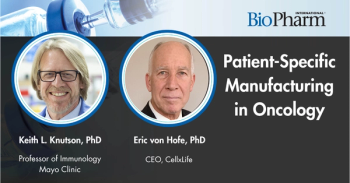
Dr Eric von Hofe of CellxLife and Dr Keith L. Knutson of Mayo Clinic explain why manufacturing speed and cost will determine the scalability of personalized cancer vaccines.

Avexitide cut severe hypoglycemic events 55% in a pivotal PBH trial, positioning it to become the condition's first approved therapy.
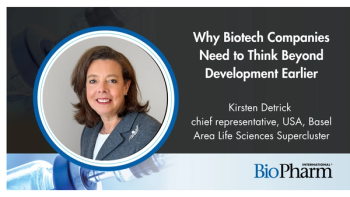
Kirsten Detrick, chief representative, USA, at Basel Area Life Sciences Supercluster, discusses why emerging biopharmaceutical companies should incorporate market access and commercial considerations earlier and how Basel’s concentration of cross-functional talent can support product development and launch.

Regeneron Pharmaceuticals' garetosmab-grts has become the first approved therapy to shrink new bone lesions in FOP, cutting them by up to 94% as it targets the disease's root biology directly.
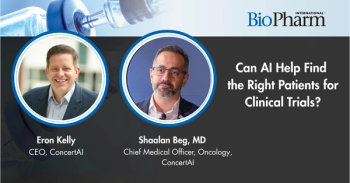
AI tools that extract information from unstructured medical records could help oncology practices identify eligible clinical trial patients, surface care gaps, and compare treatment outcomes across real-world cohorts, according to Shaalan Beg and Eron Kelly of ConcertAI.

The companies are targeting a protein on glioblastoma's treatment-resistant tumor stem cells, which could open a new path past the blood-brain barrier.
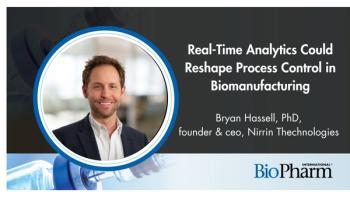
Real-time process analytics and digital manufacturing systems could generate the reliable data needed for artificial intelligence to deliver more predictive insights in biopharmaceutical manufacturing, according to Bryan Hassell, founder and CEO of Nirrin Technologies.

Merck and Moderna's Intismeran Autogene Plus Pembrolizumab Meets Endpoints in Phase 3 Melanoma Trial
Merck and Moderna report that the personalized mRNA plus mAb cancer therapy cleared its first phase 3 hurdle, cutting recurrence risk beyond pembrolizumab alone.
Webcasts
Webinar Date/Time: Tue, Sep 8, 2026 11:00 AM EDT
Advertisement
Advertisement
Trending on BioPharm International
1
BioPharm Brief: Gene Therapy Progress, FDA Approval, and $103M Funding
2
Opus Genetics’ OPGx-LCA5 Gene Therapy Shows Sustained Vision Gains Ahead of Phase 3
3
FDA Approves Roche’s Enspryng as First At-Home Subcutaneous Treatment for Thyroid Eye Disease
4
Estuary Biotherapeutics Launches With $103 Million for ADPKD Gene Therapy
5