




Development
Latest News
Advertisement
Research into Cold Cancers Heating Up
Accurately targeted immunotherapies through reliable neoantigen recognition enable personalized medicine development.
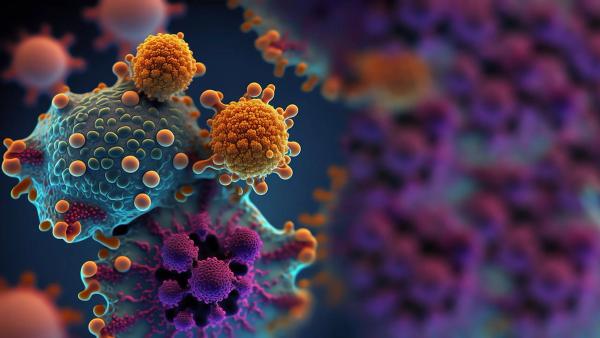
Proprietary Cell-Line Development for High-Titer AAV Manufacturing
Proprietary cell lines offer opportunities for achieving high AAV titers.

Bracing for a Future Wave of Advanced Therapies
In the ATMP space, CGTs are hitting their stride with unprecedented approvals in the past year alone.

Latest Videos
Advertisement
More News
Sanofi is paying Regeneron up to $8 billion to co-develop REGN20423 and 3 other long-acting antibodies beyond dupilumab (Dupixent).

In the OCTANE real-world analysis presented at EASD 2026, adults who switched from injectable semaglutide or tirzepatide to once-daily oral semaglutide lost an average of 4.1% of body weight after 3 months.
Denosumab-adet now covers all 3 Xgeva indications, widening lower-cost treatment access for cancer patients with bone complications.

More than half of patients achieved clear or almost clear hands and feet with lebrikizumab by week 16, and 77% reported satisfaction with clearance.

NouvSight001 isn't limited to the RPE65-mutation subset current gene therapy treats, potentially reaching more of the 1.5 million with RP worldwide.

Ivonescimab, in phase 3 trials across 8 tumor types, will be paired with sonesitatug vedotin in new gastrointestinal cancer trials.

Webcasts
Webinar Date/Time: Thu, Oct 29, 2026 11:00 AM EDT

Daiichi Sankyo and Merck pulled ifinatamab deruxtecan's FDA filing in small cell lung cancer after a 187-patient trial fell short.

IPEC’s EIP user guide streamlines information exchange and response times while increasing accuracy through standardization.
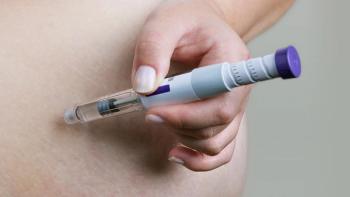
Insulin efsitora alfa-gobe (Onswik) cuts injections from 365 to 52 a year for adults with type 2 diabetes, per its new FDA approval.
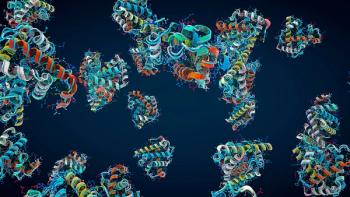
Genentech is paying Earendil Labs $55 million upfront in a deal worth over $1.5 billion to develop bispecific antibodies for hard-to-treat cancers.
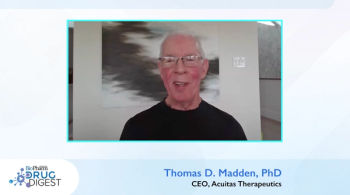
Acuitas CEO Dr Thomas Madden and NanoVation co-founder and president Dr Dominik Witzigmann discuss how LNP engineering is expanding genetic medicine applications to traditionally undruggable targets.

Guselkumab eased spinal pain, stiffness, and MRI-confirmed spinal inflammation in a 411-patient trial of psoriatic arthritis with axial involvement.

IMVT-1402 (imeroprubart) failed to reach statistical significance on CLASI-A at Week 12 in a 57-patient proof-of-concept study, and Immunovant will stop development in cutaneous lupus erythematosus. The anti-FcRn antibody continues in five other autoimmune indications.
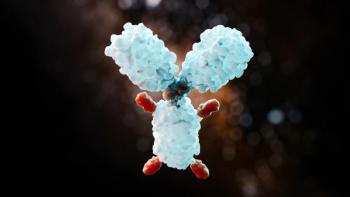
SOTIO Biotech's LRRC15-targeted antibody-drug conjugate SOT106 now holds both Orphan Drug and Fast Track Designations in soft tissue sarcoma and osteosarcoma. The company expects to start first-in-human testing later in 2026.
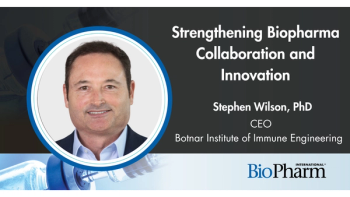
Dr Stephen Wilson, CEO of the Botnar Institute of Immune Engineering, describes Basel's collaborative ecosystem and a 3-year roadmap linking research to global clinical partners.

Johnson & Johnson's modeling projects 18.5-year life expectancy with Tecvayli-Darzalex versus 4.9 years for standard care.

InnoCare will discover compounds against up to 5 targets for Lilly, backing a deal worth up to $3.35 billion in milestones.
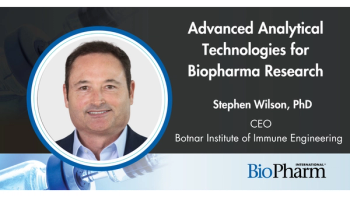
BIIE CEO Dr Stephen Wilson outlines rapid growth plans and a multidisciplinary technology stack targeting global clinical translation.
FDA's new rule formally recognizes non-animal methods like organoids and AI models as valid ways to support human drug testing.

Amgen's Dazodalibep Meets Primary Endpoint in Phase 3 Sjögren's Trial
Published: | Updated:
Dazodalibep hit its phase 3 primary endpoint at week 48, building on phase 2 data showing a 6.3-point ESSDAI reduction versus placebo.

Glycomine's GLM101, an investigational liposomal mannose-1-phosphate substrate replacement therapy, has received FDA Breakthrough Therapy designation for PMM2-CDG, a rare glycosylation disorder with no approved treatments.
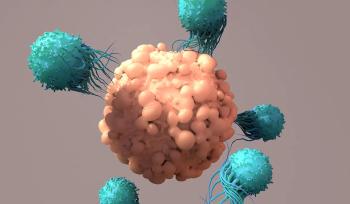
Made Scientific's new 85,000-sq.-ft. facility, with 145 prior GMP batches, adds clinical- to commercial-scale cell therapy capacity.

Novo Nordisk reports that CagriSema outperformed tirzepatide with 12.4% weight loss versus 9.1% in a phase 3 trial in adults with type 2 diabetes.

Vironexis Biotherapeutics reported that the first three antibody-naive patients with relapsed/refractory acute lymphoblastic leukemia treated with its one-time in vivo immunotherapy VNX-101 all achieved MRD-negative complete responses, with durability tracked through at least nine months.
Advertisement
Advertisement
Trending on BioPharm International
1
BioPharm Brief: Gene Therapy Progress, FDA Approval, and $103M Funding
2
Opus Genetics’ OPGx-LCA5 Gene Therapy Shows Sustained Vision Gains Ahead of Phase 3
3
Estuary Biotherapeutics Launches With $103 Million for ADPKD Gene Therapy
4
FDA Approves Roche’s Enspryng as First At-Home Subcutaneous Treatment for Thyroid Eye Disease
5