




Development
Latest News
Advertisement
Research into Cold Cancers Heating Up
Accurately targeted immunotherapies through reliable neoantigen recognition enable personalized medicine development.
Proprietary Cell-Line Development for High-Titer AAV Manufacturing
Proprietary cell lines offer opportunities for achieving high AAV titers.

Bracing for a Future Wave of Advanced Therapies
In the ATMP space, CGTs are hitting their stride with unprecedented approvals in the past year alone.

Latest Videos

Advertisement
More News

AbbVie's bispecific antibody posted a 90% response rate in squamous NSCLC, headlining the company's expanding lung cancer pipeline data.
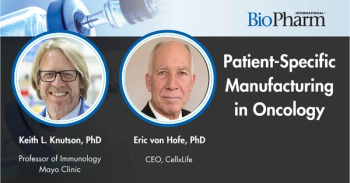
Dr Eric von Hofe of CellxLife and Dr Keith L. Knutson of Mayo Clinic explain why manufacturing speed and cost will determine the scalability of personalized cancer vaccines.

Avexitide cut severe hypoglycemic events 55% in a pivotal PBH trial, positioning it to become the condition's first approved therapy.
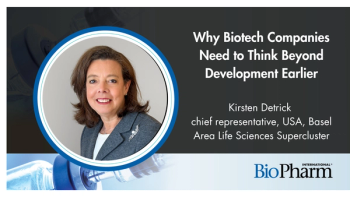
Kirsten Detrick, chief representative, USA, at Basel Area Life Sciences Supercluster, discusses why emerging biopharmaceutical companies should incorporate market access and commercial considerations earlier and how Basel’s concentration of cross-functional talent can support product development and launch.

Regeneron Pharmaceuticals' garetosmab-grts has become the first approved therapy to shrink new bone lesions in FOP, cutting them by up to 94% as it targets the disease's root biology directly.
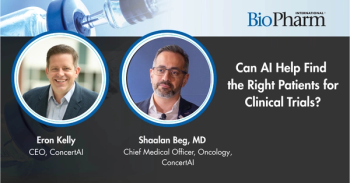
AI tools that extract information from unstructured medical records could help oncology practices identify eligible clinical trial patients, surface care gaps, and compare treatment outcomes across real-world cohorts, according to Shaalan Beg and Eron Kelly of ConcertAI.

The companies are targeting a protein on glioblastoma's treatment-resistant tumor stem cells, which could open a new path past the blood-brain barrier.
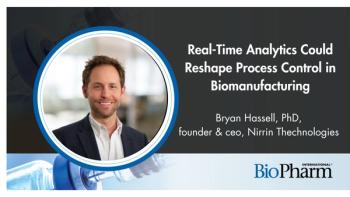
Real-time process analytics and digital manufacturing systems could generate the reliable data needed for artificial intelligence to deliver more predictive insights in biopharmaceutical manufacturing, according to Bryan Hassell, founder and CEO of Nirrin Technologies.

Merck and Moderna's Intismeran Autogene Plus Pembrolizumab Meets Endpoints in Phase 3 Melanoma Trial
Merck and Moderna report that the personalized mRNA plus mAb cancer therapy cleared its first phase 3 hurdle, cutting recurrence risk beyond pembrolizumab alone.

Webcasts
Webinar Date/Time: Tue, Sep 8, 2026 11:00 AM EDT
CellxLife CEO Dr Eric von Hofe and Mayo Clinic immunology professor Dr Keith L. Knutson explain how dendritic cell vaccines generate long-term immune memory to prevent cancer recurrence.

Australia's first commercial imlifidase transplant offers a path forward for patients whose antibodies had blocked a compatible kidney.

Genprex moves its diabetes gene therapy toward the clinic, tapping a CGMP CDMO after preclinical models reversed hyperglycemia in mice.

Outsourced cell and gene therapy manufacturing is set to grow nearly 6-fold by 2035 as biotech pipelines outpace in-house capacity.
The independent data monitoring committee's finding leaves clinicians without a new option for PD-L1-low NSCLC, a population historically underserved by current immunotherapies.

IASO Bio adds a fratricide-resistant CAR-T platform to its pipeline, aiming to speed novel T-cell malignancy therapies to patients.

Spevatamig's fast track status targets a cancer where 5-year survival is under 20%, pairing a novel mechanism with pembrolizumab.
Why Cancer Vaccines' Greatest Advantage May Be Durability of Response, Not Immediate Tumor Shrinkage
Cellex Life CEO Dr Eric von Hofe and Professor of Immunology at Mayo Clinic, Dr Keith L. Knutson, explain why individualized tumor profiling, not off-the-shelf targeting, is key to effective personalized cancer vaccines.
Fresh $175 million in funding follows Silence's 88% response rate in its divesiran polycythemia vera trials, positioning the company for a planned 2027 phase 3 push.
Under the 5-year manufacturing deal, NurExone will access Made Scientific's Princeton, NJ, GMP facility to speed regenerative exosome therapies toward clinical trials.

AbCellera aims to tap public markets to push ABCL635 forward after the therapy cut menopause hot flash severity 58% versus 12% for placebo in trials.

Zamubafusp alfa's FDA fast track status highlights the therapy's ability to remove toxic amyloid already damaging the heart and kidneys in AL amyloidosis patients.
Dr Steve Harr, Sana Biotechnology's CEO, identifies scalability, commercialization, and reimbursement as the defining hurdles for curative islet cell therapy in type 1 diabetes.

Silence's siRNA drug freed 88% of trial patients from ongoing phlebotomies, a chronic burden for people with polycythemia vera.

Early Parkinson patients could gain a first disease-modifying option as ACI-7104 clears a major FDA hurdle after strong interim results.
Advertisement
Advertisement
Trending on BioPharm International
1
T-Therapeutics Raises $133 Million to Take TCR Bispecifics Into the Clinic
2
The BioPharm Brief: Ivonescimab Priority Review in China, Stargardt Gene Therapy Moves Toward Phase 3, and Longer Dosing Intervals for an IBD Bispecific
3
Boehringer Ingelheim Licenses Six Preclinical ADC and T-Cell Engager Programs From SBP Group in Deal Worth Up to $7 Billion
4
China Grants Ivonescimab Priority Review in Biliary Tract Cancer
5