





Teva's TEV '408 blocked gluten-induced gut damage in a phase 2a trial, supporting its use for celiac disease, which has no approved drug treatment.
Teva's TEV '408 blocked gluten-induced gut damage in a phase 2a trial, supporting its use for celiac disease, which has no approved drug treatment.

Today’s BioPharm Brief covers a new first-line HER2 breast cancer approval in Europe, a $1.5 billion Roche deal, and new survival data for Ziihera in gastroesophageal cancer.

BeOne Medicines and Jazz Pharmaceuticals announced positive topline overall survival results from the second interim analysis of the Phase 3 HERIZON-GEA-01 trial, reinforcing the benefit of Ziihera-containing regimens just days after their FDA approval in first-line HER2-positive gastroesophageal adenocarcinoma.

GSK will begin a phase 3 trial in September 2026 for its investigational mRNA seasonal flu vaccine after phase II data showed stronger immune responses than licensed comparators. The candidate is designed to target both hemagglutinin and neuraminidase, a dual-antigen approach not yet tested in a late-stage mRNA flu trial.

SIM0660's dual CD79a/CD19 targeting aims to deepen B-cell depletion, supporting Roche's up-to-$1.53 billion bet on Simcere Zaiming's TCE platform.

AstraZeneca's Enhertu plus pertuzumab cut progression risk 44%, extending PFS past 3 years as the first new 1st-line HER2+ regimen in 10 years.
Today’s BioPharm Brief looks at a new treatment for essential thrombocythemia, a halted cancer vaccine trial, and updated COVID-19 vaccine approvals ahead of the 2026-2027 season.

Novavax's partners Sanofi and Takeda have received regulatory approvals for an XFG variant-adapted formulation of Nuvaxovid, the company's protein-based, non-mRNA COVID-19 vaccine, across the US, EU, and Japan for the 2026-2027 vaccination season, positioning Novavax to continue earning royalties without maintaining its own commercial infrastructure.
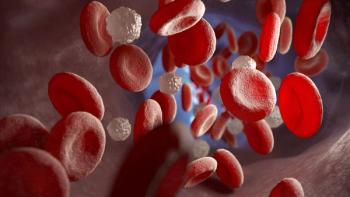
PharmaEssentia's ropeginterferon alfa-2b-njft (Besremi) cut ET response rates to 43% versus 6% for anagrelide, backing a first-in-decades FDA nod for a new rare blood cancer treatment.

LIlly reports that Taltz plus Zepbound helped 30.6% of psoriasis patients clear skin and lose 10%+ weight at 1 year, versus 4.4% on Taltz alone.

BioNTech has terminated the Phase 2 BNT122-01 trial of autogene cevumeran as an adjuvant monotherapy in ctDNA-positive resected colorectal cancer, following a DSMB recommendation citing a numerical imbalance in overall survival, while the drug's separate pancreatic cancer trial continues unaffected.
Today’s BioPharm Brief looks at a new cardiovascular indication for Mounjaro, a billion-dollar ADC deal, and a potential new biosimilar competitor for Kadcyla.

Eron Kelly, CEO of ConcertAI, and Shaalan Beg, MD, chief medical officer, oncology, ConcertAI, discuss how artificial intelligence (AI) can accelerate clinical trial design, patient identification, and site selection while maintaining trust in clinical data.

TSY-110 could become the first biosimilar rival to Roche's ado-trastuzumab emtansine (Kadcyla), a $2.5 billion HER2 breast cancer therapy.

DualityBio's DUP5 payload shrank tumors resistant to topoisomerase inhibitor ADCs, backing its new $1 billion-plus deal with Genentech.

The FDA has approved Lilly's tirzepatide (Mounjaro) to reduce major adverse cardiovascular events in adults with type 2 diabetes at high risk, based on the head-to-head SURPASS-CVOT trial showing non-inferiority to dulaglutide (Trulicity), making it the first GIP/GLP-1 receptor agonist with this indication.
Today’s BioPharm Brief covers positive Phase 3 data for Akeso’s ivonescimab in biliary tract cancer, FDA Fast Track designation for CytomX’s Varseta-M in colorectal cancer, and positive Phase 3 results for Tezspire in eosinophilic esophagitis.

Celularity has entered a US manufacturing collaboration with MuseCell Innovations to produce Dezawa MuseCells and related exosome and secretome products at Celularity's Florham Park, New Jersey facility, a relationship that could generate more than $300 million in aggregate purchases over five years.

Mayo Clinic’s Dr Keith L. Knutson and CellxLife’s Dr. von Hofe discuss why cancer vaccines may succeed where checkpoint inhibitors fall short in 60 to 70% of patients.
Akeso's PD-1/VEGF bispecific antibody ivonescimab met its primary endpoint of overall survival against durvalumab plus chemotherapy in the phase 3 HARMONi-GI1 trial for first-line advanced biliary tract cancer, marking the first phase 3 readout for ivonescimab outside non-small cell lung cancer.

Varsetatug masetecan (Varseta-M) posted a 32% response rate in colorectal cancer, backing its new FDA fast track designation.

Amgen and AstraZeneca's tezepelumab (Tezspire) eased swallowing and cut esophagus inflammation in a 368-patient trial through week 52.
Today’s BioPharm Brief covers FDA approval of daraxonrasib for metastatic pancreatic cancer, the first patient dosed in HaemaLogiX’s KMCAR CAR-T trial, and a new collaboration to advance cell-free synthetic DNA for viral vector manufacturing.
FDA's 2025–2026 guidance changes would substantially streamline biosimilar development, including by reducing comparative efficacy and switching-study requirements. Here's what's confirmed, what industry has criticized about the existing pathway, and what's still unresolved.

The FDA has cleared daraxonrasib, the first RAS(ON) tri-complex inhibitor to reach approval, validating a mechanism-driven platform approach to a historically undruggable oncogene family in pancreatic cancer.
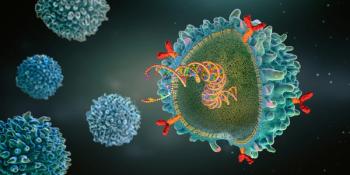
HaemaLogiX has dosed the first patient in its Phase 1 KOALA trial of KMCAR T-cell therapy, a novel CAR-T designed to selectively target kappa-restricted multiple myeloma cells while sparing healthy immune cells, with the treatment reported as well tolerated and a second patient enrolling at a higher dose.

4basebio and Genezen have entered an expanded, non-exclusive collaboration giving drug developers access to 4basebio's hpDNA cell-free synthetic DNA technology within Genezen's viral vector development and manufacturing services, aiming to streamline gene and cell therapy programs from early development through commercial manufacturing.
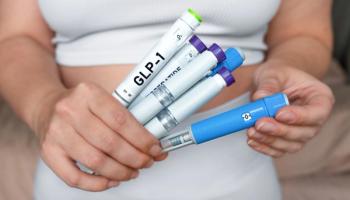
A retrospective cohort study published in Diabetes, Obesity and Metabolism found that sustained Zepbound (tirzepatide) use in adults over 55 with obesity was associated with lower monthly healthcare costs and fewer hospital admissions and emergency department visits compared with untreated matched controls.

Biopharma mergers and acquisitions aren’t one-size-fits-all—this FAQ breaks down how deal type shapes premium pricing, deal protection, and IND sponsorship obligations.
Welcome to The BioPharm Brief, your daily snapshot of developments shaping the biopharmaceutical industry. It’s a busy day for FDA action, with two approvals and a new designation spanning cancer, autoimmune disease, and rare disease. Here’s what we have today.