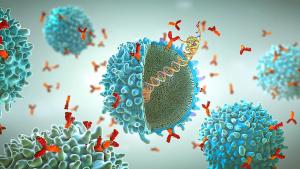
The FDA expanded ImmunityBio’s Anktiva plus BCG to include patients with BCG-unresponsive non-muscle invasive bladder cancer with papillary-only tumors, extrapolating efficacy from the QUILT-3.032 carcinoma in situ cohort.
Emily Schoenthaler is content producer for BioPharm International®.
The FDA expanded ImmunityBio’s Anktiva plus BCG to include patients with BCG-unresponsive non-muscle invasive bladder cancer with papillary-only tumors, extrapolating efficacy from the QUILT-3.032 carcinoma in situ cohort.

The FDA expanded Fast Track status for invikafusp alfa, Marengo Therapeutics’ TCR Vβ-targeting antibody-IL-2 fusion protein, from TMB-H colorectal cancer to TMB-H solid tumors regardless of tissue of origin.
The FDA launches a new rare disease development initiative, BioNTech’s BNT113 misses a progression-free survival endpoint, and Viking Therapeutics begins Phase III trials of its oral obesity candidate.

As ArsenalBio, TScan, Bristol Myers Squibb, and others abandon ex vivo programs for in vivo engineering, early clinical data and platform differences point to both the promise and the unresolved safety, manufacturing, and regulatory questions of generating CAR-T cells inside the body.

Viking Therapeutics has started two Phase 3 trials of once-daily oral VK2735, a dual GLP-1/GIP receptor agonist, in adults with obesity, with and without type 2 diabetes.

The FDA has accepted Pierre Fabre Pharmaceuticals’ resubmitted BLA for tabelecleucel, an allogeneic T-cell immunotherapy for EBV+ post-transplant lymphoproliferative disease. The FDA’s target action date is March 31, 2027.
FDA reviews a proposed Keytruda biosimilar, Roche expands its obesity pipeline with an RNAi deal, and guselkumab shows promise for fistula remission in Crohn disease.
Dr. Paz Vellanki discusses Bayesian methods, challenges in developing rare disease endpoints, and why sponsors should engage FDA early in clinical development.

FDA has accepted for review the biologics license application for FYB206, a proposed pembrolizumab biosimilar developed without a comparative phase 3 efficacy trial. A decision could come in the third quarter of 2027.
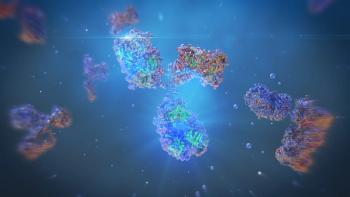
In an eight-week obese non-human primate study, lean mass made up 6% of the weight lost with iBio’s Activin E antibody IBIO-610 plus semaglutide, compared with 22% with semaglutide alone. iBio plans to begin first-in-human studies in the first half of 2027.
Bristol Myers Squibb's Nathan Pennell explains how the MRD endpoint supports accelerated approval in multiple myeloma without changing how clinicians monitor patients.
CaseBioscience joins an ARPA-H effort to develop room-temperature cell therapy preservation, Novartis licenses an mRNA-encoded T-cell engager from Abogen, and AstraZeneca, Daiichi Sankyo, and Summit plan to combine Datroway with ivonescimab.

Artiva Biotherapeutics will present data on AlloNK, an allogeneic, non-genetically modified NK cell therapy given with rituximab, in refractory rheumatoid arthritis, Sjögren disease and systemic sclerosis at ACR Convergence 2026, ahead of a planned phase 3 trial in rheumatoid arthritis.

Novartis has secured an exclusive worldwide license to ABO2203, Abogen's investigational mRNA-encoded CD19xCD3 T-cell engager designed to produce the bispecific inside the body to reset B cells in autoimmune disease. The agreement also includes options on other programs built on Abogen's RNA platform.
Former FDA oncology reviewer Paz Vellanki, MD, PhD, of Precision for Medicine, discusses how CDER's ARC program supports novel end points such as ctDNA for rare diseases and why sponsors should engage FDA early.

Following an FDA meeting, Wave Life Sciences plans a single 2-year registrational trial of WVE-006, its GalNAc-conjugated RNA editing oligonucleotide for alpha-1 antitrypsin deficiency, with a 1-year interim analysis that could support accelerated approval based on biomarkers.
Real-world data show weight loss after switching to the Wegovy pill, Lilly reports positive hand and foot atopic dermatitis data, and Teva wins FDA approval for a Xgeva biosimilar.

The Bend, Oregon, CDMO is building a greenfield commercial facility, due in 3Q 2027, that will add OEB4 spray drying, nano-milling, and finished-dose capabilities for oral and inhaled products.
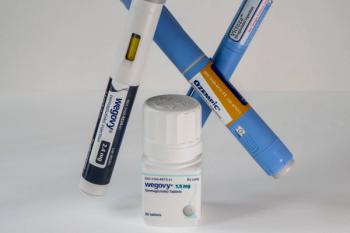
In the OCTANE real-world analysis presented at EASD 2026, adults who switched from injectable semaglutide or tirzepatide to once-daily oral semaglutide lost an average of 4.1% of body weight after 3 months.
Novo Nordisk licenses a once-weekly oral GLP-1/GIP candidate, uniQure reports 48-month Huntington’s disease data, and AstraZeneca invests $2 billion in Summit Therapeutics.
Novo gains global rights, excluding Greater China, to HRS-1596, a phase 1-ready GLP-1/GIP dual receptor agonist that Hengrui says has potential for once-weekly oral dosing in obesity and type 2 diabetes.

Updated 36-month data in 15 high-dose patients showed 80% slowing on cUHDRS, while the 48-month cUHDRS result did not reach statistical significance. uniQure attributes the gap to attrition in the external control, and the FDA is reviewing a BLA based on the 36-month data.
AstraZeneca's sBLA for durvalumab combined with neoadjuvant enfortumab vedotin in muscle-invasive bladder cancer, based on the Phase 3 VOLGA trial, has a PDUFA date expected in the fourth quarter of 2026.

IMVT-1402 (imeroprubart) failed to reach statistical significance on CLASI-A at Week 12 in a 57-patient proof-of-concept study, and Immunovant will stop development in cutaneous lupus erythematosus. The anti-FcRn antibody continues in five other autoimmune indications.
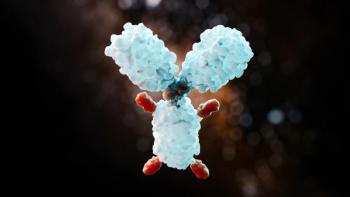
SOTIO Biotech's LRRC15-targeted antibody-drug conjugate SOT106 now holds both Orphan Drug and Fast Track Designations in soft tissue sarcoma and osteosarcoma. The company expects to start first-in-human testing later in 2026.

The FDA has approved a label update for Merck's Winrevair (sotatercept-csrk) incorporating Phase 3 HYPERION data, showing a 76% reduction in clinical worsening events when added to background therapy in adults diagnosed with pulmonary arterial hypertension within the past year.

Glycomine's GLM101, an investigational liposomal mannose-1-phosphate substrate replacement therapy, has received FDA Breakthrough Therapy designation for PMM2-CDG, a rare glycosylation disorder with no approved treatments.
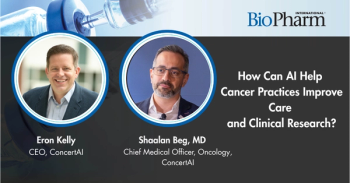
Eron Kelly, CEO of ConcertAI, and Dr. Shaalan Beg, CMO, oncology, ConcertAI, discuss how AI can help physicians access the right information at the right time while supporting clinical trials, research, and quality initiatives.
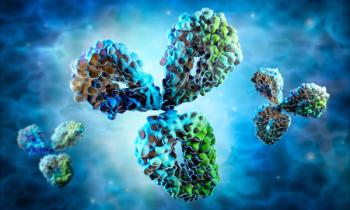
Biocon's Pebrilzo, a pertuzumab biosimilar for HER2-positive breast cancer, has become the first monoclonal antibody biosimilar to receive a positive CHMP opinion under EMA's newly adopted tailored clinical approach, which can reduce comparative efficacy trial requirements.

Vironexis Biotherapeutics reported that the first three antibody-naive patients with relapsed/refractory acute lymphoblastic leukemia treated with its one-time in vivo immunotherapy VNX-101 all achieved MRD-negative complete responses, with durability tracked through at least nine months.