




New clinical data highlight improved disease control, reduced eye bulging, and weight-loss benefits, potentially broadening options for patients with unmet needs.
New clinical data highlight improved disease control, reduced eye bulging, and weight-loss benefits, potentially broadening options for patients with unmet needs.
Antisense oligonucleotides are reshaping drug design, from RNase H gapmers to inhaled delivery; this FAQ explains how they work and why trials still fail.
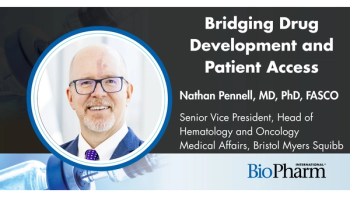
Bristol Myers Squibb's Nathan Pennell explains how the MRD endpoint supports accelerated approval in multiple myeloma without changing how clinicians monitor patients.

Once-weekly amylin analog petrelintide produced up to 9.2% weight loss at 28 weeks in adults with obesity and type 2 diabetes, Zealand Pharma reports.

Teprotumumab N01 (Sycume) reduced eye bulging in 60.4% of patients with chronic, inactive thyroid eye disease in a phase 3 trial.

Tecentriq plus chemotherapy gains FDA approval for stage III dMMR colon cancer after a phase 3 trial showed improved disease-free survival.
New clinical milestones, manufacturing investments, and regulatory incentives could help developers overcome barriers to delivering treatments for patients with rare diseases.

Genglycos, the gene therapy that earned the voucher, will fund new Ultragenyx therapies for other rare and ultra-rare diseases.

Series A led by Oxford Science Enterprises and up to $20 million in public funding will move cell-based mRNA production toward clinical-grade scale.

Rocket’s modified protocol keeps the first three patients in a 12-patient efficacy population, with topline Danon disease data expected in mid-2028.
New regulatory decisions, manufacturing partnerships, and financing pressures are reshaping access, supply, and development pathways for emerging advanced therapies.

Caribou is halting vispa-cel and CB-011, allogeneic CAR-T therapies that showed up to 92% response rates, citing a difficult financing environment.

Celltrion USA's Omlyclo, the first interchangeable biosimilar to Xolair, reaches the U.S. market across four allergic and inflammatory indications.

Alvotech turns to a CDMO's 40,000-liter Syracuse facility for biosimilar drug substance as it expands its manufacturing network.

AbbVie's c-Met ADC Temab-A showed a 15.6% response rate in late-line colorectal cancer ahead of its 2 new FDA breakthrough designations.
New data and partnerships are advancing brain-penetrant enzyme therapy, targeted antibodies, flexible obesity dosing, and frontline lymphoma treatment strategies.
Topline phase 3 data show epcoritamab plus R-CHOP reduced the risk of progression or death by 51% in newly diagnosed diffuse large B-cell lymphoma.

Part 2 of the VK2735 maintenance study tests whether daily or weekly oral tablets can hold weight loss first achieved with weekly subcutaneous injections.

CSL and Alentis will co-develop lixudebart, an antibody targeting claudin-1, across 3 rare kidney and liver disease indications.

AL050 aims to treat GBA1-driven Parkinson disease by delivering a GCase enzyme across the blood-brain barrier.
Survodutide advances metabolic disease treatment, while biosimilar capacity expands, FDA delays hemophilia review, and lupus data support next steps.

Litifilimab extended skin responses through 52 weeks in phase 2 AMETHYST data in cutaneous lupus erythematosus, with phase 3 results expected in 2027.

Manufacturing remediation, not efficacy or safety data, is delaying US approval of Novo's h+emophilia A therapy denecimig.

Doubled drug substance capacity at Alvotech's Reykjavik, Iceland, site aims to secure steady US supply of the Humira biosimilar Simlandi.
The glucagon/GLP-1 dual agonist hit both weight loss endpoints in phase 3, though gastrointestinal discontinuations and competitor data temper the readout.
CaseBioscience joins an ARPA-H effort to develop room-temperature cell therapy preservation, Novartis licenses an mRNA-encoded T-cell engager from Abogen, and AstraZeneca, Daiichi Sankyo, and Summit plan to combine Datroway with ivonescimab.
LumaLex Law's Dustin Robinson explains why retatrutide compounding remains illegal regardless of the Seventh Circuit's pending classification ruling.

Artiva Biotherapeutics will present data on AlloNK, an allogeneic, non-genetically modified NK cell therapy given with rituximab, in refractory rheumatoid arthritis, Sjögren disease and systemic sclerosis at ACR Convergence 2026, ahead of a planned phase 3 trial in rheumatoid arthritis.

Novartis has secured an exclusive worldwide license to ABO2203, Abogen's investigational mRNA-encoded CD19xCD3 T-cell engager designed to produce the bispecific inside the body to reset B cells in autoimmune disease. The agreement also includes options on other programs built on Abogen's RNA platform.

The 15-month project could let living cell therapies ship and store at room temperature, cutting cold-chain costs that limit patient access.