

"This latest result is also particularly meaningful for BeOne given our rights to ZIIHERA across much of Asia, where the burden of gastroesophageal cancer is substantial, as we work to bring these treatment options to more patients around the world."
— Mark Lanasa, M.D., Ph.D., chief medical officer, solid tumors, BeOneMedicines
News|Events|September 1, 2026
BeOne Medicines Reports Positive Second Interim Survival Data for Ziihera in HER2+ Gastroesophageal Cancer
Author(s)Emily Schoenthaler
Listen
0:00 / 0:00
BeOne Medicines and Jazz Pharmaceuticals announced positive topline overall survival results from the second interim analysis of the Phase 3 HERIZON-GEA-01 trial, reinforcing the benefit of Ziihera-containing regimens just days after their FDA approval in first-line HER2-positive gastroesophageal adenocarcinoma.
Advertisement
BeOne Medicines and Jazz Pharmaceuticals announced positive topline results from the second interim analysis (IA2) of the Phase 3 HERIZON-GEA-01 trial evaluating Ziihera (zanidatamab), in combination with chemotherapy, with and without Tevimbra (tislelizumab), as first-line treatment for HER2-positive locally advanced or metastatic gastroesophageal adenocarcinoma (GEA).¹ At IA2, Ziihera plus chemotherapy demonstrated a statistically significant and clinically meaningful improvement in overall survival (OS) compared with trastuzumab plus chemotherapy, meeting the trial's remaining primary endpoint.¹ IA2 also provided longer follow-up data for the Tevimbra plus Ziihera and chemotherapy regimen, showing an improved OS hazard ratio and continued durable outcomes.¹ The safety profile of both Ziihera-containing regimens at IA2 was generally consistent with IA1, with no new safety signals identified.¹ The results have been submitted for presentation at a major medical meeting in the fourth quarter of 2026.¹
How does this build on the recent FDA approval?
The IA2 data arrive days after the FDA approved supplemental Biologics License Applications for both Ziihera and Tevimbra in combination with chemotherapy for first-line treatment of HER2-positive gastric, gastroesophageal junction, or esophageal adenocarcinoma,
How does Ziihera work?
Ziihera is a bispecific HER2-directed antibody that binds two distinct extracellular sites on HER2 simultaneously.² Binding drives internalization and a reduction in HER2 expression on the tumor cell surface, while also inducing complement-dependent cytotoxicity, antibody-dependent cellular cytotoxicity, and antibody-dependent cellular phagocytosis, mechanisms that together produce tumor growth inhibition and cell death.² Zanidatamab is developed by Jazz Pharmaceuticals and BeOne Medicines under separate license agreements with Zymeworks, which discovered the molecule; BeOne holds rights in Asia (excluding India and Japan), Australia, and New Zealand, while Jazz holds rights elsewhere.²
Bispecific antibodies remain a small share of the biologics approved to date relative to what's advancing through earlier-phase pipelines. "Within the FDA-approved products, there's a minimal amount right now that … are bispecifics. However, when you look at the pipeline of products that are coming through in phase 1, phase 2, there's an enormous wave of these complex proteins that are coming through," said Atul Mohindra, head of biologics R&D at Lonza, in earlier BioPharm International© coverage of the bispecific antibody field broadly — a
Why does this matter for GEA patients?
GEA, encompassing cancers of the stomach, gastroesophageal junction, and esophagus, represents the fifth (stomach) and eighth (esophageal) most common cancers worldwide.³ Roughly 20% of GEA patients have HER2-positive disease.5 Once advanced, GEA carries a poor prognosis, with cure remaining rare outside of localized disease.³ HERIZON-GEA-01 randomized 914 patients across approximately 300 sites in more than 30 countries, comparing Ziihera plus chemotherapy, with and without Tevimbra, against trastuzumab plus chemotherapy, the prior standard of care.¹
What happens next?
Full IA2 data, including hazard ratios and confidence intervals not yet disclosed in the topline announcement, are expected at a major medical meeting in the fourth quarter of 2026.¹ HERIZON-GEA-01 continues with further analyses planned.
References
- BeOne Medicines Ltd.
BeOne Medicines Announces New Phase 3 Survival Data Reinforcing Benefit of ZIIHERA-Containing Regimens in First-Line HER2+ Gastroesophageal Cancer . Press release. Published August 31, 2026. Accessed September 1, 2026. - BeOne Medicines Ltd. About ZIIHERA (zanidatamab-hrii). Included in reference 1 above.
- Bartley AN, Washington MK, Ventura CB, et al. HER2 Testing and Clinical Decision Making in Gastroesophageal Adenocarcinoma: Guideline From the College of American Pathologists, American Society for Clinical Pathology, and the American Society of Clinical Oncology. J Clin Oncol. Published online October 2016.
- Mohindra A.
The Challenges, Successes, and Future of Bispecific Antibodies . BioPharm International. Published December 17, 2024. Accessed September 1, 2026. - Abrahao-Machado, L. F., & Scapulatempo-Neto, C. (2016). HER2 testing in gastric cancer: An update. World journal of gastroenterology, 22(19), 4619–4625.
https://doi.org/10.3748/wjg.v22.i19.4619 .
Advertisement
Related to this article

The FDA has accepted Pierre Fabre Pharmaceuticals’ resubmitted BLA for tabelecleucel, an allogeneic T-cell immunotherapy for EBV+ post-transplant lymphoproliferative disease. The FDA’s target action date is March 31, 2027.
Antisense oligonucleotides are reshaping drug design, from RNase H gapmers to inhaled delivery; this FAQ explains how they work and why trials still fail.
When large pharmaceutical companies deprioritize drug candidates, smaller developers may license or acquire them, but due diligence, deal structure, and trial planning determine whether a program can move forward.

The FDA approved Roche's satralizumab (Enspryng), an IL-6 receptor-targeting monoclonal antibody, for adults with thyroid eye disease based on the Phase 3 SatraGO-1 and SatraGO-2 trials, giving patients the first at-home subcutaneous treatment option.

AVT29, a proposed aflibercept biosimilar to Eylea 8 mg, could extend retinal disease treatment intervals to 16 weeks, versus 8 weeks today.
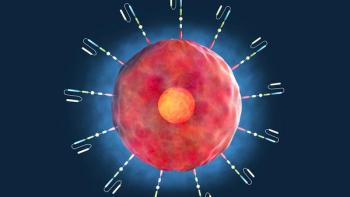
As ArsenalBio, TScan, Bristol Myers Squibb, and others abandon ex vivo programs for in vivo engineering, early clinical data and platform differences point to both the promise and the unresolved safety, manufacturing, and regulatory questions of generating CAR-T cells inside the body.

Viking Therapeutics has started two Phase 3 trials of once-daily oral VK2735, a dual GLP-1/GIP receptor agonist, in adults with obesity, with and without type 2 diabetes.

MT027, T-MAXIMUM's B7-H3 CAR-T therapy, earns a second FDA-cleared phase 2 trial, now testing lung and breast cancer brain metastases.
Advertisement
Advertisement
Trending on BioPharm International
1
Alvotech, Advanz Submit First Eylea 8 mg Biosimilar Bid
2
Lilly's Mirikizumab (Omvoh) Hits New IBD Remission Goals
3
Shift to In Vivo CAR T Will Reshape Facility Design, Says Arcadis’ Emily Heffernan
4
The BioPharm Brief: New Approvals, Biosimilar Competition, and Deeper Remission
5