






AstraZeneca's sBLA for durvalumab combined with neoadjuvant enfortumab vedotin in muscle-invasive bladder cancer, based on the Phase 3 VOLGA trial, has a PDUFA date expected in the fourth quarter of 2026.
AstraZeneca's sBLA for durvalumab combined with neoadjuvant enfortumab vedotin in muscle-invasive bladder cancer, based on the Phase 3 VOLGA trial, has a PDUFA date expected in the fourth quarter of 2026.

IMVT-1402 (imeroprubart) failed to reach statistical significance on CLASI-A at Week 12 in a 57-patient proof-of-concept study, and Immunovant will stop development in cutaneous lupus erythematosus. The anti-FcRn antibody continues in five other autoimmune indications.

SOTIO Biotech's LRRC15-targeted antibody-drug conjugate SOT106 now holds both Orphan Drug and Fast Track Designations in soft tissue sarcoma and osteosarcoma. The company expects to start first-in-human testing later in 2026.
Dr Stephen Wilson, CEO of the Botnar Institute of Immune Engineering, describes Basel's collaborative ecosystem and a 3-year roadmap linking research to global clinical partners.

Johnson & Johnson's modeling projects 18.5-year life expectancy with Tecvayli-Darzalex versus 4.9 years for standard care.

InnoCare will discover compounds against up to 5 targets for Lilly, backing a deal worth up to $3.35 billion in milestones.

FDA expands Winrevair’s label with HYPERION data, formalizes the use of non-animal testing methods, and Amgen reports positive Phase 3 results for dazodalibep in Sjögren disease.

The FDA has approved a label update for Merck's Winrevair (sotatercept-csrk) incorporating Phase 3 HYPERION data, showing a 76% reduction in clinical worsening events when added to background therapy in adults diagnosed with pulmonary arterial hypertension within the past year.
BIIE CEO Dr Stephen Wilson outlines rapid growth plans and a multidisciplinary technology stack targeting global clinical translation.
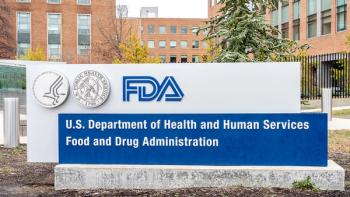
FDA's new rule formally recognizes non-animal methods like organoids and AI models as valid ways to support human drug testing.

Dazodalibep hit its phase 3 primary endpoint at week 48, building on phase 2 data showing a 6.3-point ESSDAI reduction versus placebo.

Glycomine's GLM101, an investigational liposomal mannose-1-phosphate substrate replacement therapy, has received FDA Breakthrough Therapy designation for PMM2-CDG, a rare glycosylation disorder with no approved treatments.

How early Phase I decisions can shape or compromise the regulatory and financing outcomes that define a biotech program's future.
Novo Nordisk reports positive phase 3 CagriSema data, Biocon’s pertuzumab biosimilar gets a positive CHMP opinion under EMA’s new tailored pathway, and Vironexis reports complete responses with its one-time in vivo therapy for relapsed ALL.

Eron Kelly, CEO of ConcertAI, and Dr. Shaalan Beg, CMO, oncology, ConcertAI, discuss how AI can help physicians access the right information at the right time while supporting clinical trials, research, and quality initiatives.
Made Scientific's new 85,000-sq.-ft. facility, with 145 prior GMP batches, adds clinical- to commercial-scale cell therapy capacity.

Biocon's Pebrilzo, a pertuzumab biosimilar for HER2-positive breast cancer, has become the first monoclonal antibody biosimilar to receive a positive CHMP opinion under EMA's newly adopted tailored clinical approach, which can reduce comparative efficacy trial requirements.

Novo Nordisk reports that CagriSema outperformed tirzepatide with 12.4% weight loss versus 9.1% in a phase 3 trial in adults with type 2 diabetes.

Vironexis Biotherapeutics reported that the first three antibody-naive patients with relapsed/refractory acute lymphoblastic leukemia treated with its one-time in vivo immunotherapy VNX-101 all achieved MRD-negative complete responses, with durability tracked through at least nine months.

New data show risk-based and centralized monitoring shifts effort across roles, sites, and timelines, reshaping how sponsors plan CRA capacity needs.

Laru-zova helped 31% of high-dose patients gain 15+ letters of vision, representing the first pivotal trial to succeed in treating XLRP.

Telix will acquire ITM for $1.65 billion, gaining a phase 3-validated therapy that cut GEP-NET progression risk versus everolimus.

mAbxience and Sandoz are targeting a $5.7 billion market with a proposed emicizumab biosimilar for hemophilia A.

Fayuvi scored 23.5 points higher than untreated peers on cognitive testing, backing the first-ever approval for a Sanfilippo syndrome A gene therapy.
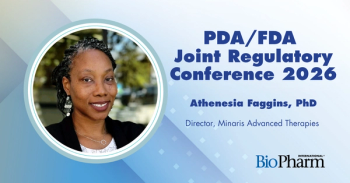
Athenecia Faggins of Minaris Advanced Therapies discusses raw material qualification, supplier management, testing, and risk control for advanced therapy manufacturing.

FDA compliance officers detailed 2026 guidance updates, online drug sale enforcement, and a first-of-its-kind AI-related warning letter at the PDA/FDA Joint Regulatory Conference.
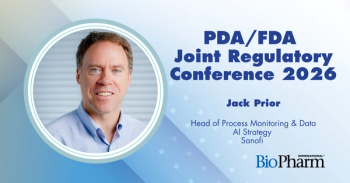
Sanofi’s Jack Prior discusses how biopharmaceutical manufacturers can assess whether process data is ready for human and AI use, and the role of data quality, accessibility, governance, and AI in manufacturing.

Panelists from FDA, Genentech, and Minaris discussed raw material risk, supplier oversight, and at-risk release strategies for advanced therapies at the PDA/FDA Joint Regulatory Conference.

Dualitas will screen over 300,000 bispecific combinations for Roche, backing a deal worth up to $1 billion in immunology research.

FDA's Francis R.W. Godwin (CDER) and Kathleen Jones, PhD (CBER) detail a record pace of drug warning letters and the CGMP deficiencies most commonly cited in biologics facility inspections.