

"As coverage expands across Medicare, states and employers, these data offer evidence on the cost implications of long-term obesity treatment and should help shape decisions." — Ilya Yuffa, executive vice president and president, Lilly USA and Global Customer Capabilities¹
News|Events|August 26, 2026
Real-World Study Links Lilly's Zepbound to Lower Healthcare Costs in Older Adults With Obesity
Author(s)Emily Schoenthaler
A retrospective cohort study published in Diabetes, Obesity and Metabolism found that sustained Zepbound (tirzepatide) use in adults over 55 with obesity was associated with lower monthly healthcare costs and fewer hospital admissions and emergency department visits compared with untreated matched controls.
Advertisement
Eli Lilly announced results from a real-world study finding that sustained use of tirzepatide (Zepbound) for weight management was associated with lower healthcare costs over time in adults over 55 with overweight or obesity, compared with similar untreated adults.¹ The study, published in Diabetes, Obesity and Metabolism, is described by Lilly as the first of its kind in this age group.¹ At six months, costs were up to 15% lower, a difference of up to $181 per patient per month; by 12 months, the gap widened to an estimated $607 per patient per month, reflecting up to 38% lower costs relative to untreated adults.¹ In the primary Inverse Probability of Censoring Weighting (IPCW) analysis, Zepbound-treated patients showed lower rates of hospital admissions and emergency department visits across every follow-up period, alongside numerically higher rates of routine outpatient and office visits, consistent with greater engagement in routine care.¹ In the secondary pairwise analysis, this same reduction in hospital admissions and ED visits was directionally consistent but did not reach statistical significance.¹
How was the study designed?
The retrospective observational cohort study drew on Komodo's Healthcare Map, a claims database covering more than 330 million individuals enrolled in US healthcare plans.¹ Researchers identified 15,843 adults over 55 (mean age 64.5) with obesity or overweight plus at least one weight-related complication who initiated Zepbound between November 2023 and September 2025, each matched 1:1 to a control who met the same eligibility criteria but did not initiate any GLP-1 or GIP/GLP-1 receptor agonist.¹ Matching accounted for baseline demographics, clinical characteristics, obesity-related complications, and healthcare utilization patterns, and all participants had at least 12 months of continuous enrollment before the study period.¹
Two complementary analytic methods were used to account for patients who left the study at different times: a pairwise analysis directly comparing matched pairs, and an IPCW analysis that statistically reweighted results to correct for early dropout.¹ Results were directionally consistent but varied in magnitude between methods — the pairwise analysis showed a $607 per-patient-per-month difference at 12 months (38% lower costs), while the IPCW analysis showed a smaller $319 difference (25% lower costs).¹ Because claims data don't capture Zepbound's net price, the study excluded the drug's own cost from the total cost comparison, meaning the reported figures represent potential offsetting savings rather than net cost impact of treatment overall.¹
"This compelling real-world evidence highlights the impact that treating obesity with Zepbound can have on older patients and the healthcare system," said Ilya Yuffa, executive vice president and president of Lilly USA and Global Customer Capabilities. "This analysis shows treatment costs can be lowered, and in some cases more than covered, by savings elsewhere in care – including for payers and in Medicare. As coverage expands across Medicare, states and employers, these data offer evidence on the cost implications of long-term obesity treatment and should help shape decisions."¹
How does this relate to the Medicare GLP-1 Bridge program?
The study frames its findings against the Medicare GLP-1 Bridge program, a temporary CMS demonstration that launched July 1, 2026, and runs through December 31, 2027, providing eligible Part D beneficiaries access to GLP-1 medications approved for weight loss — including Zepbound and Wegovy — for a $50 monthly copay, outside standard Part D coverage.² Lilly reports that by six months, estimated cost savings nearly covered the Bridge program's $195 per-patient monthly treatment cost, and by 12 months, savings exceeded that cost.¹ The Bridge program exists because Medicare Part D has been statutorily barred from covering weight-loss-only medications, a restriction that predates the current wave of GLP-1 obesity drugs; a planned successor program, the BALANCE Model, has been delayed indefinitely.²
How does Zepbound work, and where does it fit in the broader GLP-1 landscape?
Zepbound is described as the first and only dual GIP and GLP-1 receptor agonist approved for obesity, reducing appetite and food intake; it also carries an FDA indication for moderate-to-severe obstructive sleep apnea with obesity.¹ BioPharm International© has covered the broader obesity drug market's growth trajectory as tirzepatide and rival GLP-1 agents expanded from diabetes into weight management.³ The GLP-1 class continues to draw competitive and biomarker-driven development activity as companies work to differentiate response rates and identify which patients benefit most.⁴
What's next?
The study's authors note its limitations plainly: it is observational rather than randomized, and cost differences reflect potential offsetting savings rather than a full net-cost analysis inclusive of Zepbound's price.¹ As Medicare coverage under the Bridge program continues through 2027 and policymakers evaluate the BALANCE Model's future, further real-world data will likely inform how payers weigh GLP-1 treatment costs against downstream healthcare utilization.²
References
Zepbound linked to lower healthcare costs in adults over age 55 with obesity according to a real-world study . News release. Eli Lilly and Company; August 26, 2026. Accessed August 26, 2026.What to know about the BALANCE Model for GLP-1s in Medicare and Medicaid and the Medicare GLP-1 Bridge . KFF. Updated May 11, 2026. Accessed August 26, 2026.Are obesity drugs the next blockbusters ? BioPharm International. Accessed August 26, 2026.PrecisionLife and Ovation target GLP-1 response variability with new biomarker-driven collaboration . BioPharm International. Accessed August 26, 2026.
Advertisement
Related to this article

In the phase 3 SHINE-2 trial, half of pediatric patients who responded to mirikizumab induction were in clinical remission at week 52. Lilly plans to file for a pediatric UC label expansion.

Roche will take ex-China development of Hansoh’s two preclinical ADCs and multiple programs against Roche-proposed targets once Hansoh completes global phase 1a trials. The deal includes $400 million upfront and more than $15 billion in potential milestones.
When large pharmaceutical companies deprioritize drug candidates, smaller developers may license or acquire them, but due diligence, deal structure, and trial planning determine whether a program can move forward.

As ArsenalBio, TScan, Bristol Myers Squibb, and others abandon ex vivo programs for in vivo engineering, early clinical data and platform differences point to both the promise and the unresolved safety, manufacturing, and regulatory questions of generating CAR-T cells inside the body.

Viking Therapeutics has started two Phase 3 trials of once-daily oral VK2735, a dual GLP-1/GIP receptor agonist, in adults with obesity, with and without type 2 diabetes.

The FDA has accepted Pierre Fabre Pharmaceuticals’ resubmitted BLA for tabelecleucel, an allogeneic T-cell immunotherapy for EBV+ post-transplant lymphoproliferative disease. The FDA’s target action date is March 31, 2027.

Antisense oligonucleotides are reshaping drug design, from RNase H gapmers to inhaled delivery; this FAQ explains how they work and why trials still fail.
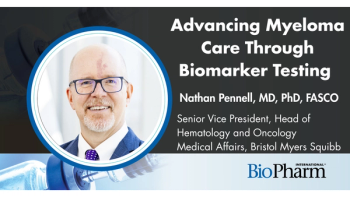
BMS's Dr Nathan Pennell outlines how biomarker testing barriers and trial diversity affect patient access to targeted oncology drugs.
Advertisement
Advertisement
Trending on BioPharm International
1
FDA Approves Roche’s Enspryng as First At-Home Subcutaneous Treatment for Thyroid Eye Disease
2
Estuary Biotherapeutics Launches With $103 Million for ADPKD Gene Therapy
3
Roche, Hansoh Sign Second ADC Pact Covering Preclinical and Roche-Selected Targets
4
BioPharm Brief: Gene Therapy Progress, FDA Approval, and $103M Funding
5