





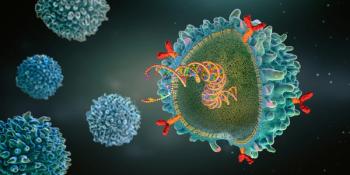
AbelZeta Pharma has reclaimed global rights to prizloncabtagene autoleucel from Janssen and secured FDA clearance to begin US trials, positioning the anti-CD20/CD19 bispecific CAR-T for patients who relapse after existing CAR-T therapies.
AbelZeta Pharma has reclaimed global rights to prizloncabtagene autoleucel from Janssen and secured FDA clearance to begin US trials, positioning the anti-CD20/CD19 bispecific CAR-T for patients who relapse after existing CAR-T therapies.
This week’s BioPharm Brief covers positive phase 3 melanoma results for Merck and Moderna’s individualized neoantigen therapy, a personalized cancer vaccine manufacturing platform entering clinical use, and a new brain-penetrant antibody approach for glioblastoma.
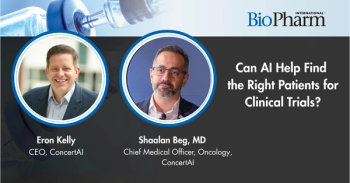
AI tools that extract information from unstructured medical records could help oncology practices identify eligible clinical trial patients, surface care gaps, and compare treatment outcomes across real-world cohorts, according to Shaalan Beg and Eron Kelly of ConcertAI.

The companies are targeting a protein on glioblastoma's treatment-resistant tumor stem cells, which could open a new path past the blood-brain barrier.

Real-time process analytics and digital manufacturing systems could generate the reliable data needed for artificial intelligence to deliver more predictive insights in biopharmaceutical manufacturing, according to Bryan Hassell, founder and CEO of Nirrin Technologies.

Merck and Moderna report that the personalized mRNA plus mAb cancer therapy cleared its first phase 3 hurdle, cutting recurrence risk beyond pembrolizumab alone.

NTx Bio's NTxscribe CORE platform is being used by Baylor College of Medicine to manufacture mRNA for DOC1021, Diakonos Oncology's personalized dendritic cell vaccine, now dosing patients in a Phase 1 trial for refractory melanoma.
Today’s BioPharm Brief looks at a long-acting anti-VEGF therapy entering clinical trials, the first commercial use of imlifidase in Australia for kidney transplantation, and FDA Fast Track designation for a platelet-derived biologic for chronic sciatica.
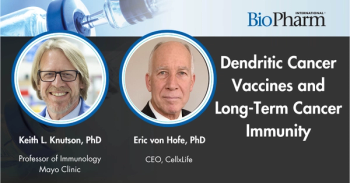
CellxLife CEO Dr Eric von Hofe and Mayo Clinic immunology professor Dr Keith L. Knutson explain how dendritic cell vaccines generate long-term immune memory to prevent cancer recurrence.

Eyconis has dosed the first patients in OVERTURE, a phase 1b/2a first-in-human trial of EYC-0305, an investigational anti-VEGF antibody fragment designed for six-month or longer dosing intervals in wet age-related macular degeneration, marking the company's transition to clinical-stage status.

Australia's first commercial imlifidase transplant offers a path forward for patients whose antibodies had blocked a compatible kidney.

The FDA has granted Fast Track designation to C-1101, Consano Bio's investigational platelet-derived multi-protein biologic for chronic, painful lumbosacral radiculopathy, following the drug's recent IND clearance and as the company advances a Phase 1 trial evaluating the epidural injection.

Genprex moves its diabetes gene therapy toward the clinic, tapping a CGMP CDMO after preclinical models reversed hyperglycemia in mice.
Today’s BioPharm Brief looks at an oncology trial discontinuation, an AI-designed glioblastoma vaccine, and an expanded biosimilars collaboration.

Outsourced cell and gene therapy manufacturing is set to grow nearly 6-fold by 2035 as biotech pipelines outpace in-house capacity.
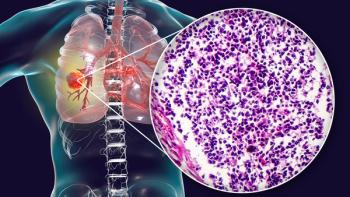
The independent data monitoring committee's finding leaves clinicians without a new option for PD-L1-low NSCLC, a population historically underserved by current immunotherapies.

Evaxion has added EVX-05, an AI-designed, off-the-shelf therapeutic vaccine targeting glioblastoma, to its pipeline, discontinuing the EVX-03 program as part of a broader R&D refocus while maintaining its cash runway into the second half of 2027.

OncoC4 has dosed the first patient in a phase 1 trial of ONC-783, a T-cell engager targeting neoCD24, a cancer-specific glycoform of CD24, positioning the subcutaneously administered candidate as a potential treatment across multiple solid tumor types.

Shanghai Henlius Biotech has entered a strategic collaboration with Sandoz covering up to 10 proposed monoclonal antibody and antibody-drug conjugate biosimilar assets, deepening the companies' existing oncology biosimilars partnership with initial deals worth up to $322 million.

IASO Bio adds a fratricide-resistant CAR-T platform to its pipeline, aiming to speed novel T-cell malignancy therapies to patients.

The European Medicines Agency has validated the Marketing Authorization Application for PF-07307405, Pfizer and Valneva's six-valent OspA-based Lyme disease vaccine candidate, beginning formal review of what could become the first Lyme disease vaccine available in Europe.

Spevatamig's fast track status targets a cancer where 5-year survival is under 20%, pairing a novel mechanism with pembrolizumab.

Fate Therapeutics has initiated RECLAIM-LN, a Phase 2 potentially registrational trial of its off-the-shelf, iPSC-derived CD19-targeting CAR T-cell candidate FT819, in patients with refractory lupus nephritis, following favorable Phase 1 safety and efficacy data.
Today’s BioPharm Brief covers NMPA approval of ivonescimab plus chemotherapy for first-line squamous NSCLC, a $175 million financing for Silence Therapeutics, and Infinimmune’s $75 million Series A for its human-derived antibody pipeline.

Infinimmune has closed a $75 million Series A financing co-led by Regeneron Ventures and Playground Global to advance its lead atopic dermatitis programs, IFX-101 (targeting IL-22) and IFX-201 (targeting IL-13), both derived from its Anthrobody platform for discovering fully human antibodies.
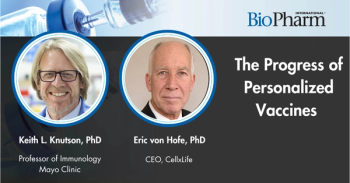
Cellex Life CEO Dr Eric von Hofe and Professor of Immunology at Mayo Clinic, Dr Keith L. Knutson, explain why individualized tumor profiling, not off-the-shelf targeting, is key to effective personalized cancer vaccines.

Fresh $175 million in funding follows Silence's 88% response rate in its divesiran polycythemia vera trials, positioning the company for a planned 2027 phase 3 push.

China's NMPA has approved ivonescimab plus chemotherapy for first-line advanced squamous non-small cell lung cancer, based on Phase III HARMONi-6 data showing the PD-1/VEGF bispecific antibody combination reduced the risk of death by 34% compared with a PD-1 inhibitor plus chemotherapy.
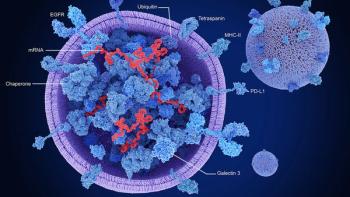
Under the 5-year manufacturing deal, NurExone will access Made Scientific's Princeton, NJ, GMP facility to speed regenerative exosome therapies toward clinical trials.
Today’s BioPharm Brief looks at new financing for multispecific antibody development, AbCellera’s $200 million public offering, and an expanded AI collaboration between Nucleai and Gilead focused on ADC development.