

FDA releases guidance on the qualification of drug development tools.
The digital transformation of quality-by-design assessment workflows can improve efficiency, reduce human errors, and facilitate integration within a much broader digital ecosystem.

The authors discuss subjectivity in the ICH Q9 (R1) guidance document.

Understanding how to apply phase-appropriate GMPs is crucial for achieving successful regulatory approval.

FDA releases guidance on the qualification of drug development tools.
Techniques to enable the design and formulation of stable, protein-based therapeutics.

Regulators work with manufacturers to improve systems for measuring product performance and manufacturing reliability.
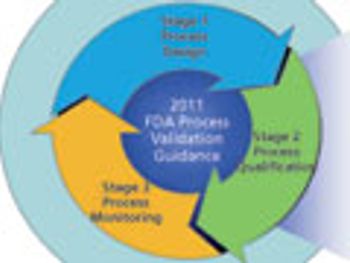
Criticality is used as a risk-based tool to drive control strategies.
Abrams Royal Pharmacy is recalling all unexpired lots of sterile products dispensed in the US.
Genzyme plans to appeal FDA?s decision that the multiple-sclerosis treatment is not ready for approval.
Baxter International recalls dextrose injection and four sodium chloride injections.
FDA and EMA launch initiative to share bioequivalence inspection information.
Agency issues precautionary recall due to manufacturing fault.
Agency issues precautionary recall due to manufacturing fault.
NPS Pharmaceuticals uses its expertise in development, regulatory compliance, and commercialization to bring to market products with orphan drug status.
FDA details efforts to evaluate potential risks from use of nanomaterials in drug products and discuss analytical considerations, impact on stability, safety, and toxicology effects.
OGD is under pressure to improve review operations.
EMA revises its polices on fee reductions for orphan drugs for 2014.
Drug Quality and Security Act gives FDA authority over compounding pharmacies.

The European Union is strengthening its pioneering role in the regulation of biosimilars by further developing the basic rules for determining the levels of compatibility for this group of drugs. There are, however, some key issues that are not easy to resolve, as evident in a recent workshop on biosimilars organized by the European Medicines Agency (EMA).
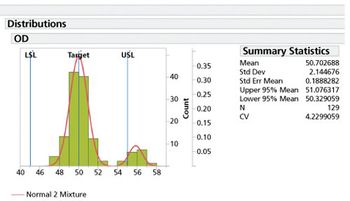
Variation understanding and modeling is a core component of modern drug development.
New policies and products seek to maintain access to pain medicines while curbing rampant abuse.

Wolfgang Weikmann of Vetter Pharma discusses the implementation of quality by design in sterile manufacturing.

Israel's diverse population, high-quality healthcare system, and resilience to global financial stress make it a strong partner for R'D, clinical research, and market growth.
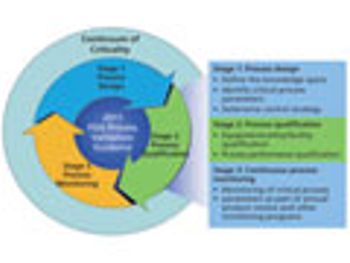
Criticality is used as a risk-based tool to drive control strategies.

The rising cost of drug development and the decreasing proportion of drug-naive population in the US and European markets are driving international pharmaceutical companies to consider emerging markets as a location to conduct their clinical trials. Asia stands out among the emerging markets given its double-digit growth rates.
The international “Fight the Fakes” campaign will raise awareness about the dangers of counterfeit medicines.
European Medicines Agency announces the launch of the Accelerated development of vaccine benefit-risk collaboration in Europe (ADVANCE) project.
USP issues call for candidates for its 2015-2020 Council of Experts.