
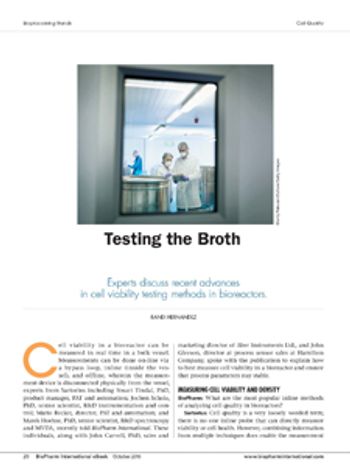
Experts discuss recent advances in cell viability testing methods in bioreactors.
Experts discuss recent advances in cell viability testing methods in bioreactors.

WuXi AppTec’s new biomanufacturing facility is its third facility in the Philadelphia, PA Navy Yard.
Results from the Phase III POLLUX trial with Janssen’s Darzalex showed that the drug was effective at reducing disease progression in patients with relapsed or refractory multiple myeloma.
The companies are collaborating on the commercialization of two biosimilar candidates in the US and Canada.
Xellia added laboratory space and personnel in Zagreb, Croatia to work on anti-infective products that combat the antimicrobial resistance problem.
Allergan entered into a licensing agreement with AstraZeneca for MEDI2070, an anti-IL-23 monoclonal antibody in phase IIB development for the treatment of patients with moderate-to-severe Crohn’s disease.
ViraTherapeutics will develop its VSV-GP therapy alone and in combination with other therapies.
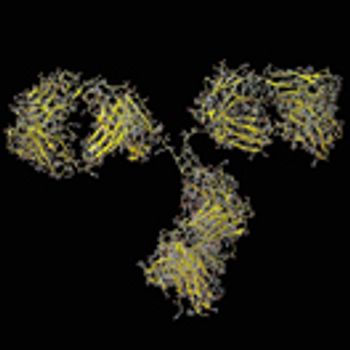
An approach to stabilize PBS-based formulations could provide a simple physiological solution for use of proteins in research, preclinical, diagnostics, and clinical studies, as well as commercial biotherapeutic products.

A new virus-retentive membrane may be used to filter chemical-defined cell culture media for risk mitigation.
R-Pharm Group, a private Russian pharmaceutical company, has opened a biopharmaceutical production plant in Yaroslavl, Russia, to produce biologics and biosimilars to treat autoimmune diseases and cancer. The facility, which has a line capacity is 2,000 L of cell culture per production cycle, is ready to be validated to US and Russia FDA and GMP requirements, the company reports.
GE Healthcare’s GE BioPark Cork will hold four KUBio manufacturing facilities; GE will also collaborate with NIBRT for biopharmaceutical training.
Advances in cell culture media technology have helped achieve safer biologics.

Model effectiveness is determined by the quality and composition of the data inputs.
The platform combines an expression system with equipment and process controls to enable rapid development and scale-up of robust titers.
Jacobs Engineering will provide engineering and construction services to expand the Novartis site in Huningue, France.
Jacobs Engineering Group was awarded a contract to provide engineering services and procurement for Alnylam Pharmaceuticals’ new manufacturing facility in Norton, Massachusetts.
An MIT-developed system uses microbes for manufacturing small amounts of vaccines and other therapies.
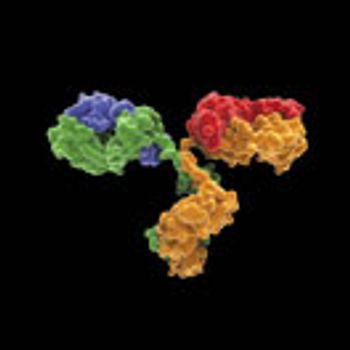
The study demonstrates a systematic approach to stabilize PBS-formulated mAbs against freeze-thaw degradation.
The mAb, in combination with lenalidomide and dexamethasone, or bortezomib and dexamethasone, was granted a Breakthrough Therapy Designation from FDA for the treatment of multiple myeloma.
The company will invest €100 million in the expansion of its Athlone facility.
Novo Nordisk broke ground on an expanded production plant for insulin in Kalundborg, Denmark.
The acquisition will give Bristol-Myers Squibb full rights to Cormorant’s HuMax-IL8 antibody program.
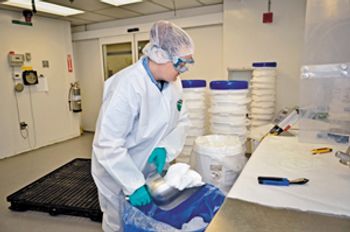
Recent trends in raw materials packaging may impact manufacturing, quality, and cost of biopharmaceuticals.
Capacity for complex therapeutics is become increasingly difficult to predict.
A streamlined approach may enhance process efficiency and product quality.