






Does global development have to entail multiple comparability studies?
The digital transformation of quality-by-design assessment workflows can improve efficiency, reduce human errors, and facilitate integration within a much broader digital ecosystem.

The authors discuss subjectivity in the ICH Q9 (R1) guidance document.

Understanding how to apply phase-appropriate GMPs is crucial for achieving successful regulatory approval.

Does global development have to entail multiple comparability studies?
Social media use raises questions about applying old standards to new information technology.

Key business considerations when developing biosimilar products virtually.

Has the long-awaited guidance answered all of the industry's questions?
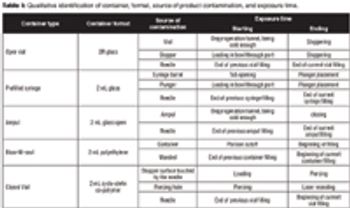
The authors compare the exposure risk from viable particles from the air supply in four well-established aseptic filling technologies.

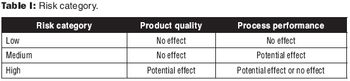
Focusing on how risk affects the entire organization can improve the business bottom line.
Key technical considerations when developing a clinical project in the biotech world.
During this podcast, we will discuss the causes and implications of Adventitious Agent Contamination for pharmaceutical and biopharmaceutical manufacturers. We will discuss ways in which Lancaster Laboratories is helping manufacturers minimize the risk for this contamination to avoid production delays.

When a pharmaceutical supply chain is compromised, there can be disastrous consequences, not only for consumers, but also for manufacturers. Without comprehensive security measures, pharmaceuticals are susceptible to counterfeit, diversion, dilution, tampering and deliberate contamination ultimately compromising patient safety.

New educational programs are key to the industry's future and to safe, available drugs.
Strategies for transfer of the manufacturing process.
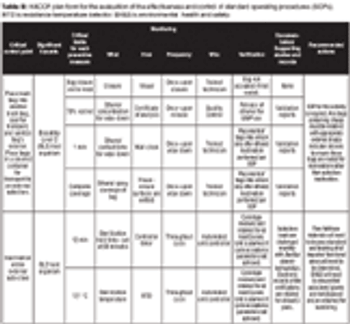
A Risk-Management Case Study.
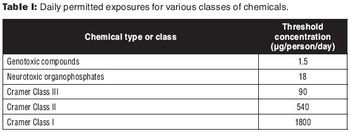
This article is the second in a two-part series on extractables and leachables.

Introducing a new way to think about sharing information in a patent-driven industry.

More collaboration and expanded oversight aim to compel manufacturers to follow GMPs.

Contract organizations must have highly organized teams and plans to accommodate today's audits.

The benefits of harmonization may be on industry's wish list, but buying into change is another story.
Government plans require investment, partnership, and industry collaboration.

Pressure to approve new user fees opens the door to action on drug shortages, prices, and regulation.
This month, we rewind to "Separations Technology Outlook, Part II: Improved Recovery and Greater Purity."

Greater emphasis on focus and efficiency for companies as market demands value in 2012.
In a Warning Letter, FDA cited ?significant violations? of CGMP regulations, including several repeat observations, at three Novartis facilities. The violations included failure to prevent microbiological contamination of sterile drug products, failure to investigate out-of-specification batches, failure to clean and maintain equipment, and failure to ensure drugs? identity, strength, quality, and purity.

Political leaders need to consider the impact of the biopharmaceutical industry on the economy.
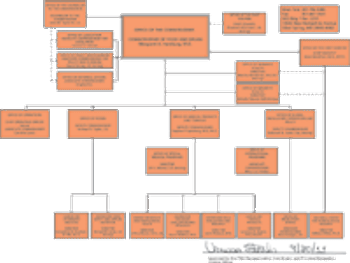
Added responsibilities and outside concerns prompt overhaul of agency's structure.

Readers react to the economic turmoil of the past year and look longingly forward to 2012.