


European and US associations call for continued vigilance against the threat of counterfeit medicines.
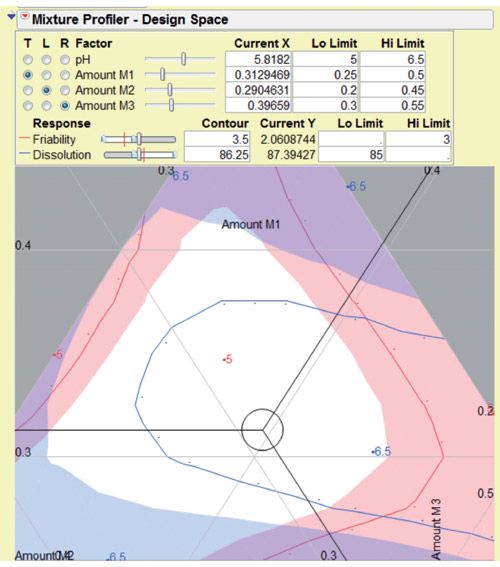
The digital transformation of quality-by-design assessment workflows can improve efficiency, reduce human errors, and facilitate integration within a much broader digital ecosystem.

The authors discuss subjectivity in the ICH Q9 (R1) guidance document.

Understanding how to apply phase-appropriate GMPs is crucial for achieving successful regulatory approval.

European and US associations call for continued vigilance against the threat of counterfeit medicines.

BIO is calling for a more patient-centric approach to user-fee reauthorization.
Implementing quality by design makes the determination of quality metrics across CMOs and sponsors essential.
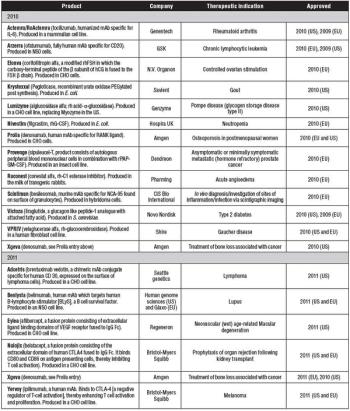
A review of new biologic drug approvals over the years, featuring highlights from 2010 and 2011.

Leading industry collaborators outline top 10 best practices for human error reduction.

In a special anniversary interview, Washington Editor Jill Wechsler speaks with with FDA Deputy Commissioner Deborah Autor about where the agency is headed.

The contract provider needs to know as much as the NDA holder.
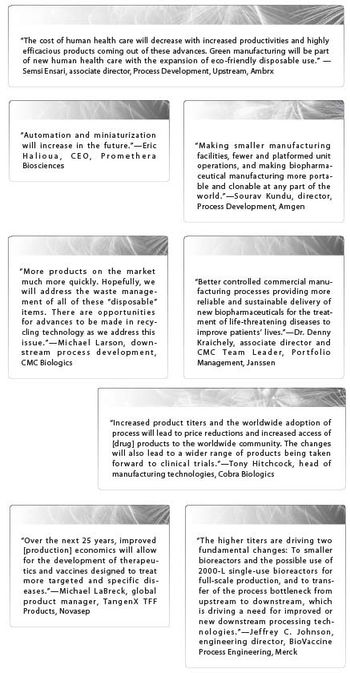
A review of key industry shifts and promises for the future.
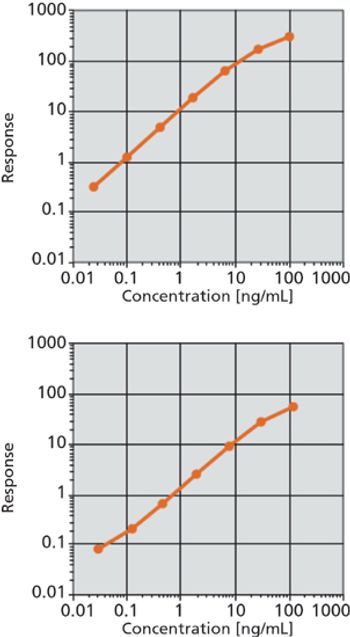
The authors discuss a new, rapid immunoassay for the detection of biomarkers.

Formulators and developers are at the heart of the industry's basic premise-they are saving lives.

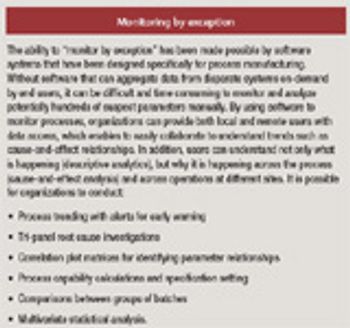
Industry experts discuss significant achievements. Plus: What's in store for the future.
The European Federation of Pharmaceutical Industries and Associations (EFPIA) has welcomed the launch of a EUR 223.7-million ($276.5 million) program to tackle antimicrobial resistance and speed up the development of new antibiotics.
ICH Q11, the anticipated guideline from the International Conference on Harmonization, titled Development and Manufacture of Drug Substances, has achieved international consensus. Q11 has been one of the fastest guidelines to move through the ICH harmonization process.
The European Federation of Pharmaceutical Industries and Associations (EFPIA) has formally adopted a memorandum of understanding (MoU) with key partners for a harmonised, European system for medicines verification.
The UK's Medicines and Healthcare products Regulatory Agency has launched a new anticounterfeiting strategy with the aim of curbing the occurrence of falsified medicines in the county's supply chain.
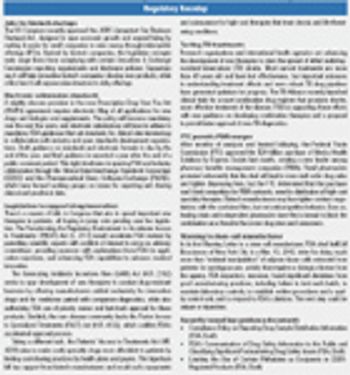
Manufacturers seek clear path to develop safe-use approaches for more risky OTC therapies.
Future sponsor-contract provider relationships will require more integration.
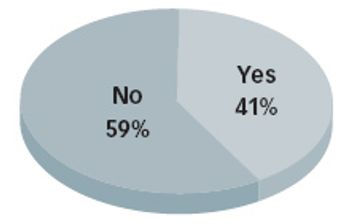
Featuring expert insights from GSK Biologicals, Baxter Pharmaceutical Solutions, GEA Pharma Systems, and more.
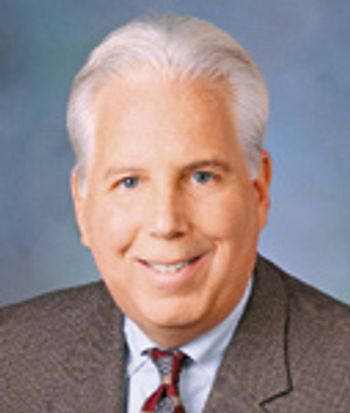
How to handle and respond to a consent decree.
The European Commission is offering a EUR 2-million ($2.64 million) inducement prize to encourage innovation in the area of cold-chain logistics and vaccine stability.

Better news about the global economy buoys life-sciences funding.

FDA has created a dedicated cadre of foreign drug investigators and established permanent offices worldwide.

Soaring opioid use creates challenges for new drug development and supply-chain control.

A closer look at elastomer changeout times provides one example of using industry knowledge to improve operations and cost.
This month, we rewind to an article titled "Good Manufacturing Practices Training."