

How soon could the pharmaceutical industry see a widespread adoption of emerging technologies that are poised to shape its future?
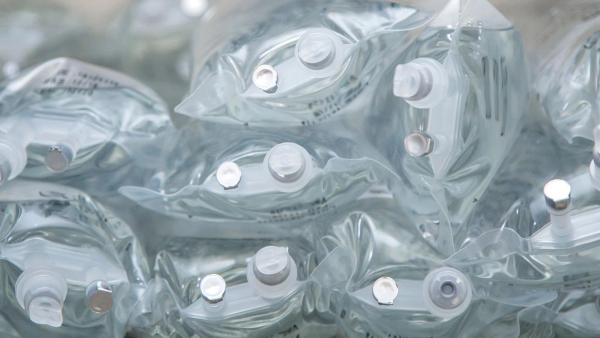
The evolution of therapeutic modalities drives the adoption of single-use technologies.
Despite a growing number of biosimilar approvals, market uptake remains a challenge.

Given the criticality of fill/finish processes, it is clear that automation is the next technological step.
How soon could the pharmaceutical industry see a widespread adoption of emerging technologies that are poised to shape its future?
The biopharmaceutical company has received a $4.2-million grant from the Bill & Melinda Gates Foundation to invest in the development of new treatments for Enterotoxigenic Escherichia coli infections, a bacterial cause of diarrhea in the developing world.
The API manufacturer has announced that it has completed the expansion of large-scale manufacturing capabilities at its Charles City, Iowa site.
The $72-million investment, part of a larger $850-million investment into its US operations, will allow the drugmaker to replace an outdated insulin vial-filling line and to upgrade technology at its Indianapolis manufacturing plant.
The clinical-stage biopharmaceutical company has announced the opening of a new gene therapy manufacturing facility in Modiin, Israel, which is anticipated to be the production site of the company’s lead cancer drug candidate.
The biotechnology company has officially opened its new Michigan research and production center for the production of spider silk-based fibers, as well as for the company’s polymer research and development program.
The European Commission and EMA have created an action plan to address challenges identified by stakeholders involved in developing advanced therapies.
This approval marks the second gene therapy to be approved by FDA and the first to be approved for certain types of non-Hodgkin lymphoma.
The companies aim to use CureVac’s proprietary messenger RNA technology to develop and commercialize up to five potential cancer vaccine products.
SCHOTT began production of glass ampoules, vials, and cartridges at a new facility at the SCHOTT Xinkang headquarters in Zhejiang, China.
The two companies announced their collaboration for the production and development of cancer vaccines.
The partnership and the formation of the institute intend to bring together industry, academia, and regulators to tackle challenges and provide solutions for continuous manufacturing.
Almac Group’s Almac Pod, a temperature-controlled shipping solution service for biologics and other temperature-sensitive products, is available in the United States.
The vaccine is a non-live, recombinant subunit vaccine that combines an antigen and an adjuvant system to trigger a targeted and long-lasting immune response to the shingle-causing virus.
The companies will collaborate to produce and improve the recombinant properties of Aethlon’s Hemopurifier blood purification device.
Through the support of the Japanese agency, Daiichi Sankyo intends to further develop its genetic vaccine platform focused around its new nucleic acid delivery technology.
The company announced plans to expand its viral vector process development facilities in the United States and its cleanroom facilities in the Netherlands for vector-based products.
Samsung BioLogics’ second facility adds 152,000 L of mAb drug substance capacity.
Baxter and FDA are working together to prevent shortages of the company’s sodium chloride 0.9% injection bags after recent hurricanes damaged the island.
The company is investing EUR 170 million (US$201 million) to expand its vaccine manufacturing site in France for its newest influenza vaccine.
The companies have entered into a strategic collaboration to establish a new cell therapy and regenerative medicine manufacturing platform, which includes a new manufacturing facility in Belgium.
The collaboration will focus on developing a novel and differentiated challenge model for respiratory syncytial virus.
Europe updates the guideline on excipients information in labeling and packaging.
Johnson & Johnson’s Janssen Sciences Ireland UC will invest more than EUR 300 million (US$355 million) to expand manufacturing capacity for biologic medicines at its Ireland facility.
Hitachi Chemical Advanced Therapeutics Solutions will expand its PCT service platform for cell therapy by adding GMP manufacturing and cleanroom capacity in Allendale, NJ.