
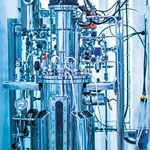

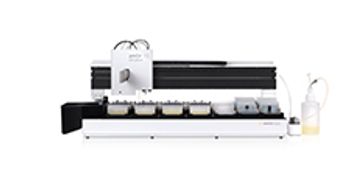
Sartorius Stedim Biotech’s Generation 2 ambr 15 cell culture microbioreactor system offers increased flexibility and expanded capability for clone selection, media and feed optimization, and early process development work.

The evolution of therapeutic modalities drives the adoption of single-use technologies.
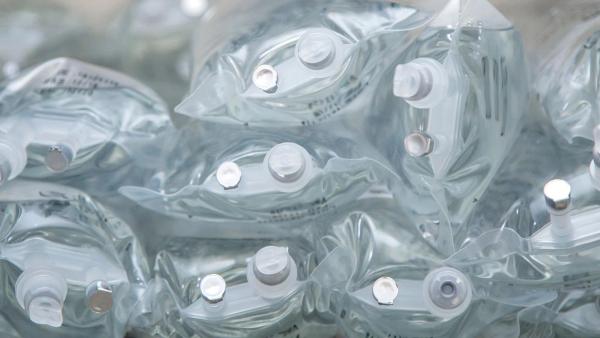
Despite a growing number of biosimilar approvals, market uptake remains a challenge.
Given the criticality of fill/finish processes, it is clear that automation is the next technological step.
Sartorius Stedim Biotech’s Generation 2 ambr 15 cell culture microbioreactor system offers increased flexibility and expanded capability for clone selection, media and feed optimization, and early process development work.

Biopharma industry faces production challenges as gene therapies move from clinical to commercialization.
Mass-produce cell and gene therapies presents the biopharma industry with a unique set of challenges.
Researchers in China are playing a role in advancing gene therapy development.
NIIMBL announced it is partnering with FDA through the University of Delaware to improve biopharmaceutical manufacturing.
Olon began construction of a GMP facility for biologic APIs in Capua, Italy.
Cytena Bioprocess Solutions, a new Cytena subsidiary in Taiwan, will provide bioprocess solutions for pharmaceutical companies and research institutes.
Sartorius Stedim Biotech has unveiled a new single-use vessel for its ambr 250 modular benchtop automated mini bioreactor system that has been specifically designed for therapeutic cell lines.
Catalent Biologics has entered into a long-term strategic agreement to develop and manufacture an AveXis gene therapy treatment for spinal muscular atrophy (SMA), Zolgensma.
Catalent recently held a groundbreaking ceremony at its Bloomington, Indiana pharmaceutical fill/finish site.
The new cleanroom, designed and built by WHP, is part of ADC Bio’s new bioconjugation facility in the UK.
Amicus Therapeutics has entered into a strategic gene therapy development and manufacturing collaboration with Brammer Bio, which is a part of Thermo Fisher Scientific.
Lonza Pharma & Biotech announced a binding contractual commitment for the purchase of a sterile drug product fill and finish facility.
Fujifilm Irvine Scientific has announced plans to open a third manufacturing facility in Tilburg, The Netherlands.
Research from the Institute for Research in Biomedicine offers insight into the source of asymmetry between nucleic acid hybrids.
Real-time monitoring of product- and process-related impurities remains a challenge.
FDA guidance is expected to improve industry practices, but work is also needed to bridge disparate industry and software engineering standards.

Although downstream efficiency still lags behind upstream, engineering-driven innovation is breaking through boundaries.
The commercialization of cell and gene therapies has become a reality, prompting deeper considerations of logistics, technology, and design for manufacturing facilities.
Recently released equipment and products include microbioreactor systems, cell therapy automation software, and IIoT-enabled flow sensors.
The company has expanded its high-potency API capability at its Riverview, MI, facility to serve the growing antibody drug conjugates market.
IVERIC bio and Catalent Biologics have entered into a strategic manufacturing agreement for gene therapy product candidates to treat orphan inherited retinal diseases.
The companies have signed a strategic multi-year manufacturing agreement for the future commercial production a late-phase investigational cell therapy.
Lyophilization Services of New England acquired a sterile injectables manufacturing facility in León, Spain.
Dual-sourcing and redundant manufacturing capabilities are crucial in a single-use supply chain strategy, but must be applied correctly.