

The project will seek to deliver treatments for the underlying cause of cystic fibrosis through submitted proposals from potential collaborators.
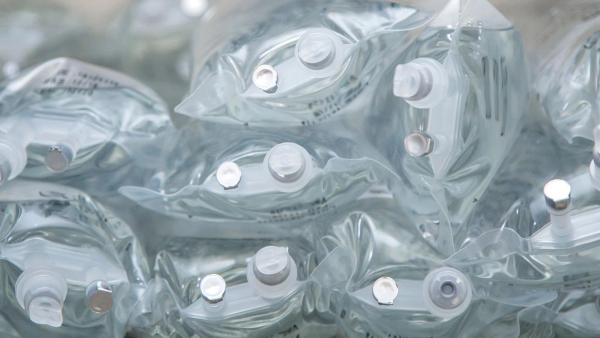
The evolution of therapeutic modalities drives the adoption of single-use technologies.
Despite a growing number of biosimilar approvals, market uptake remains a challenge.

Given the criticality of fill/finish processes, it is clear that automation is the next technological step.
The project will seek to deliver treatments for the underlying cause of cystic fibrosis through submitted proposals from potential collaborators.

The authors of this study demonstrate an innovative method that is useful and complements traditional HA assays.
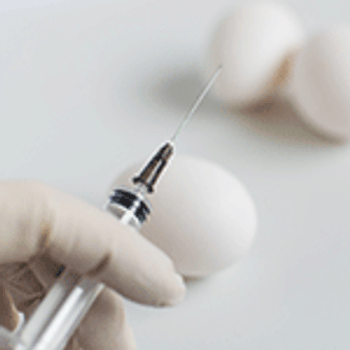
Limitations in traditional flu vaccine manufacturing methods underline the need for shifting to modern technologies.

Manufacturing differences between traditional mAb therapies and newer biotherapeutics dictate whether processes should be scaled up, scaled out, or use an alternate approach for commercial production.
The use of scale-down models allows for the theoretical optimization of processes and for troubleshooting problems during the developmental stage.
FDA report says drug shortages are underappreciated and patients pay a price.

Accelerated timelines and small batch volumes of cell and gene therapies pose unique challenges for product-release testing.
A recent report released by an FDA task force highlights the financial, manufacturing, and policy issues underlying the drug shortages of important prescription medicines in the United States.
GE Healthcare Life Sciences’ KUBio box is an integrated, flexible biomanufacturing environment for viral vector-based gene therapies.
US-based SP Industries acquired the sterile filling line assets of Spain-based i-Dositecno.
Gerresheimer enlarged a cleanroom, installed a high-performance furnace, and automated testing and packaging systems for pharmaceutical glass packaging in Essen, Germany.
The goal of the investment is for the cures to be made available across the globe, including in sub-Saharan Africa’s low-resource communities.
The partners have developed a scalable, cost-effective purification process for adeno-associated viruses.
Under the agreement, gene and cell therapy companies can go directly to Aldevron for NTC’s technology without acquiring a license from NTC.
The company will produce the anti-HER3 antibody drug HMBD-001for use within a clinical partnership between Cancer Research UK and Hummingbird Bioscience to test the agent in a Phase I trial.
The therapy received positive results in a randomized, double-blind, placebo-controlled clinical trial in 34 adults with proven celiac disease.
Through the agreement, Foamix will have access to $20 million of financing to fund the commercial launches of the topical treatments.
The transaction is anticipated to close by the end of 2019.
Ireland's National Institute of Bioprocessing Research and Training (NIBRT), together with technology providers such as GE Healthcare, and universities in Ireland and around the world, are developing courses that aim to close the gap between theoretical studies and practical workplace needs.
The new location is one of the world’s first digital facilities to use intensified, continuous biologics production technology.
Lonza, through its Ibex Solutions, will now cover preclinical and clinical development and manufacturing for a significant portion of Genmab’s pipeline.
MilliporeSigma will now be the first company to make acoustic technology available for cell therapy manufacturing.
The new facility raises production capacity by an additional 19,100 m2 and creates 200 new full-time jobs.
The increased capacity will enable the company to guarantee short production timelines.

Used with perfusion, alternating tangential flow and tangential flow filtration are redefining upstream efficiency.