






Development
Latest News
Advertisement
Research into Cold Cancers Heating Up
Accurately targeted immunotherapies through reliable neoantigen recognition enable personalized medicine development.
Proprietary Cell-Line Development for High-Titer AAV Manufacturing
Proprietary cell lines offer opportunities for achieving high AAV titers.

Bracing for a Future Wave of Advanced Therapies
In the ATMP space, CGTs are hitting their stride with unprecedented approvals in the past year alone.

Latest Videos





Advertisement
More News

In the collaboration, Regeneron and Telix will combine antibodies with targeted radiation to improve tumor selectivity as they aim to enable more precise treatment and response monitoring in oncology.


Through collaboration, Imagene AI and Daiichi Sankyo will apply multimodal AI to improve biomarker discovery with the goals of advancing precision oncology and enhancing clinical trial success rates.

Oricell Therapeutics has raised over $110 million in a pre-IPO round to advance its CAR-T cell therapy platform aimed at treating solid tumors, including liver cancer. The company is developing its lead candidate Ori-C101 and next-generation CAR-T technologies such as in vivo and armored CAR-T, positioning itself to address longstanding challenges in solid tumor immunotherapy.

Alpheus Medical has initiated a phase 2b trial evaluating a novel sonodynamic therapy approach for glioblastoma, with early patient enrollment underway. The investigational PoMA platform aims to improve outcomes by targeting diffuse tumor cells across the brain, addressing a major limitation of current treatments.
Recapping this year’s PDA Week, Kate Malachowski, PhD, and Malav Parikh, the co-chairs of PDA Week 2026, share their insights on how AI and knowledge management are shaping the future of bio/pharma quality.

Astellas taps Dyno’s AI-designed AAV capsid to boost skeletal muscle gene delivery, aiming for lower doses and safer next-gen therapies.

Phase 2 results from Sanofi suggest that lunsekimig could emerge as a novel treatment option for respiratory conditions such as asthma and chronic rhinosinusitis with nasal polyps. The investigational therapy achieved both primary and key secondary goals in two clinical studies, supporting its potential as a dual-target biologic aimed at tackling complex inflammatory pathways.

Subcutaneous Tepezza shows Phase 3 efficacy in thyroid eye disease, achieving 77% response, significant proptosis reduction, and improved patient outcomes.
With $137 million in Series B funding led by Novartis and other firms, Sidewinder Therapeutics will support development of bispecific ADCs designed to improve tumor targeting, enhance drug delivery, and reduce off-target toxicity in cancer.

As 2026 marches forward, the biopharma industry finds itself balancing therapeutic innovation with operational discipline across manufacturing, data integrity, and next-gen precision medicine

Drug development has evolved from a linear, data-driven expectation into a complex, iterative process shaped by scientific uncertainty, modality-specific challenges, and increasing demands for differentiation, real-world value, and reimbursement.
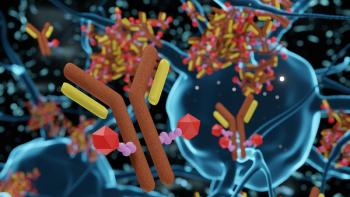
The acquisition aims to advance next-gen ADCs that target NaPi2b and 5T4 and that show early clinical activity in solid tumors, which highlight advances in precision payload delivery and durability.

A disciplined approach is needed to address complexity, limited knowledge, lack of platform processes and standard analytics, and regulatory uncertainty.

Webcasts
Webinar Date/Time: Thu, Apr 30, 2026 11:00 AM EDT

Webcasts
Webinar Date/Time: Tue, May 19, 2026 11:00 AM EDT
CGT is rapidly transforming oncology and rare disease research, with patient-derived models, advanced imaging, CRISPR/Cas9, and 3D organoids driving innovation while solid tumor modeling remains a critical frontier.

Reliable, domain-specific AI models grounded in validated clinical evidence are emerging as essential to safely scaling generative AI across healthcare applications.

New phase 3 data from AstraZeneca suggest that adding systemic agents to embolization can significantly delay disease progression in early hepatocellular carcinoma.

Indirect comparison data from Novo Nordisk show oral semaglutide achieved greater HbA1c reduction and weight loss than Lilly’s orforglipron.

Experts from Acuitas, Mana.bio, NanoVation, and ReCode share their input on targeted LNP engineering, which is accelerating pipeline expansion of nucleic acid therapies for chronic and rare diseases beyond the liver.
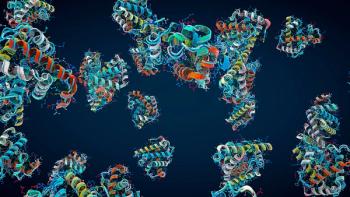
The funding will support expansion of evolution-derived molecule datasets, enabling discovery of novel bioactive compounds and improving AI model performance in drug development.

FDA approval of a denosumab (Prolia) biosimilar and dual filing acceptances by FDA and EMA for an omalizumab (Xolair) biosimilar candidate from Teva signal increasing competition in the biosimilar markets as well as expanded access for allergy and immunology patients.

Christopher Locher, PhD, CEO, Versatope Therapeutics, discusses how emerging vaccine platforms are advancing the pursuit of a universal influenza vaccine, while highlighting the scientific, regulatory, and economic barriers that continue to shape its path to reality.

The approval introduces a one-time gene therapy for LAD-I that restores immune function and addresses the underlying cause of a life-threatening pediatric disease.
Advertisement
Advertisement
Trending on BioPharm International
1
Treasury Proposes Adding Biotech to Outbound Investment Restrictions Under COINS Act
2
BioNTech, BMS to Pair Pumitamig With Trodelvy in Phase 3 First-Line TNBC Trial
3
TaiMed’s Anti-CD4 Antibody TMB-365 Reduces HIV Viral Load in Phase 1, Supporting Long-Acting Combination Regimens
4
FDA Grants Accelerated Approval to Ultomiris as First C5 Inhibitor for IgA Nephropathy
5