






Samsung Biologics' pending PolyPeptide deal adds peptide API manufacturing, including GLP-1 supply, to its antibody and ADC CDMO services.
Samsung Biologics' pending PolyPeptide deal adds peptide API manufacturing, including GLP-1 supply, to its antibody and ADC CDMO services.
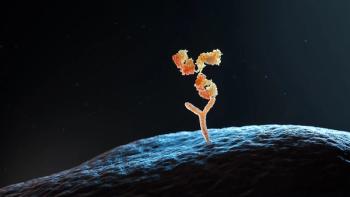
The deal gives Fresenius options on biosimilars spanning monoclonal and bispecific antibodies, ADCs, and fusion proteins, starting with polatuzumab vedotin and teprotumumab, and could expand its portfolio from 29 to 66 molecules.

FDA set a May 1, 2027 target date for AMT-130, a one-time gene therapy that silences the huntingtin gene, and plans an advisory committee meeting.

Inovio reports that Voceryq spared 27% of adults with recurrent respiratory papillomatosis from surgery for 12 months in a 26-patient efficacy group.

Three case studies show how automated Raman plate reading can triage samples before chromatography in bioprocess development.
This year’s AAPS PharmSci 360 highlighted AI transparency, computer modeling in formulation, oral peptide delivery, and new business models.
FDA approves Sun Pharma’s Ilumya for active psoriatic arthritis, BioMarin licenses a subcutaneous Fabry enzyme replacement therapy from GC Biopharma and Hanmi, and Lonza expands bioconjugation capacity in Visp to meet rising ADC demand.
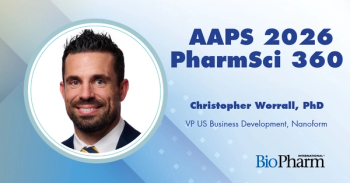
In an interview for BioPharm International’s AAPS PharmSci 360 2026 coverage, Nanoform’s Chris Worrall shares 18-month stability data for a 440 mg/mL trastuzumab suspension and explains how ultra-high-concentration formulations could shorten administration and support at-home injection.
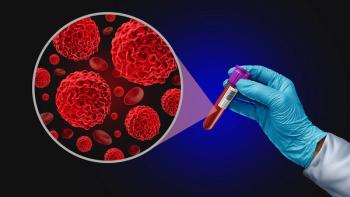
ADC trials are moving from binary antigen testing to quantitative, multiparameter biomarker models that better predict efficacy and toxicity.
Industry experts discuss how reshoring, fill/finish capacity, and cold chain technology are shaping a more resilient biopharma supply chain.

Lonza's Visp expansion adds 3 multiproduct suites at up to 1200 L plus 500-L single-use capacity to scale commercial ADC production from 2028.

The first-in-class molecule, licensed to Dianthus as DNTH212 outside Greater China, is designed to block type 1 interferon production and BAFF/APRIL-driven B-cell activity with a single drug.

HM15421/GC1134A could become the first subcutaneous enzyme replacement therapy for Fabry disease, with BioMarin paying $70 million upfront.
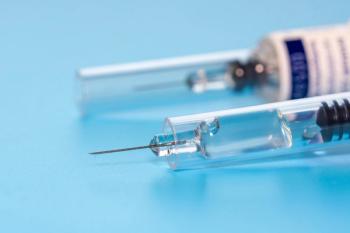
The IL-23p19 inhibitor tildrakizumab becomes the third drug in its class approved for psoriatic arthritis, and the only one given exclusively by a healthcare provider.

In the final part of a three-part interview, Anurag Rathore, PhD, professor of chemical engineering at IIT Delhi, explains how his team has cut monoclonal antibody costs toward $10 per gram and why process intensification will spread one unit operation at a time.
As part of BioPharm International’s AAPS PharmSci 360 2026 coverage, Nanoform’s Chris Worrall explains why stability and viscosity have kept antibody formulations below 200 mg/mL, and how a low-temperature particle engineering process and non-aqueous suspensions could support ultra-high concentrations.

DAX-044 aims to confine IL-12 activity to tumors and avoid the toxicity that has limited IL-12 therapy, with phase 1 testing expected in 2027.

Updated phase 2 IOV-LUN-202 data show Iovance’s TIL cell therapy lifileucel produced a 24.6% response rate in previously treated non-squamous metastatic NSCLC, rising to 52.0% in KRAS and HER2 wild-type patients, as the company launches a biomarker-enriched registrational cohort.
The proposed FDA guidance would let sponsors add patient-specific gene editing variants to approved BLAs via in vitro data, with comments due November 27, 2026.
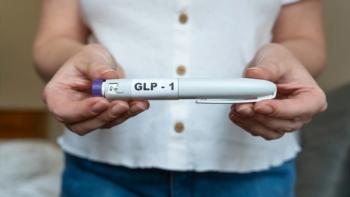
In the 80-week phase 3 TRANSCEND-T2D-2 trial in adults with type 2 diabetes, Eli Lilly’s GIP/GLP-1/glucagon triple agonist retatrutide lowered A1C by 2.2% and body weight by up to 20.9%, compared with 1.8% and 9.4% with Ozempic 2 mg.
Genmab’s petosemtamab plus pembrolizumab cuts the risk of death by 50% in phase 3 head and neck cancer, AbbVie submits a BLA for etentamig in relapsed or refractory multiple myeloma, and Benitec reports interim data for BB-301 gene therapy in OPMD-related dysphagia.
Direct-to-Biology workflows move crude reaction mixtures straight into assays, giving hit-to-lead teams earlier data to guide series selection.

The EGFR×LGR5 bispecific antibody met both primary endpoints, overall survival and objective response rate, at the first interim analysis of LiGeR-HN1 in first-line PD-L1-positive recurrent or metastatic head and neck cancer.
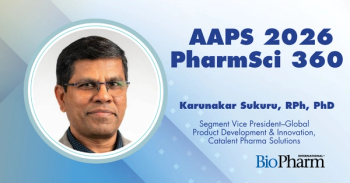
Catalent Pharma Solutions's Dr Karunakar Sukuru explains how peptide potency, dose, and patient needs guide the choice between softgel and sublingual dosage forms.

Long-term phase 2 data presented at ESMO 2026 show 3SBio’s tivunatamig plus chemotherapy extended progression-free survival vs tislelizumab plus chemotherapy in squamous and non-squamous NSCLC.

All 9 patients treated with BB-301 gene therapy met formal response criteria for improved swallowing in an ongoing OPMD trial.

Etentamig cut the risk of progression or death by 60% vs standard therapies in the phase 3 CERVINO trial of triple-class exposed myeloma.
Anurag Rathore, PhD, professor of chemical engineering at IIT Delhi, explains how his team cuts monoclonal antibody costs without cutting purification steps, and why the $10-per-gram target could make antibodies viable for infectious disease and global access.
Adalvo’s purchase of Enzene’s Nplate biosimilar program extends it into biologics and moves Enzene toward a CDMO-only model.

At AAPS PharmSci 360, Thermo Fisher Scientific scientists described how predictive modeling guides technology selection for poorly soluble drugs, and outlined plans to bring solvent-free KinetiSol technology to commercial scale in 2027.