

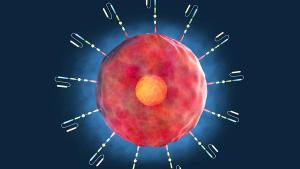


A planned phase 3 trial will test the TROP2 ADC and PD-1/VEGF bispecific together in 1st-line triple-negative breast cancer.
A planned phase 3 trial will test the TROP2 ADC and PD-1/VEGF bispecific together in 1st-line triple-negative breast cancer.

Next-gen bioprocessing, cloud-driven AI, and personalized immunizations are accelerating global therapy delivery while reinforcing cleanroom and trial compliance.
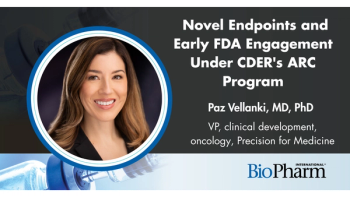
Former FDA oncology reviewer Paz Vellanki, MD, PhD, of Precision for Medicine, discusses how CDER's ARC program supports novel end points such as ctDNA for rare diseases and why sponsors should engage FDA early.

Following an FDA meeting, Wave Life Sciences plans a single 2-year registrational trial of WVE-006, its GalNAc-conjugated RNA editing oligonucleotide for alpha-1 antitrypsin deficiency, with a 1-year interim analysis that could support accelerated approval based on biomarkers.

Decentralized clinical trials can reduce patient burden and expand access, but they also introduce new challenges for clinical trial logistics, supply chain management, technology, data, and regulatory oversight.

Keith Knutson, PhD, of Mayo Clinic explains why vaccine manufacturing speed and cost will determine real-world scalability.

Patients suffered pyrogenic reactions before Fresenius Kabi recalled 3 contaminated batches at its 430,000-sq-ft Melrose Park, Ill., biologics plant.
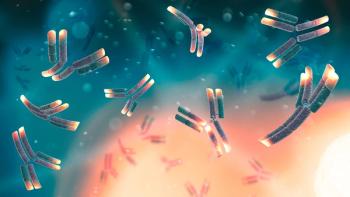
Sanofi is paying Regeneron up to $8 billion to co-develop REGN20423 and 3 other long-acting antibodies beyond dupilumab (Dupixent).
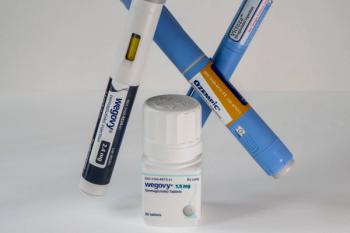
Real-world data show weight loss after switching to the Wegovy pill, Lilly reports positive hand and foot atopic dermatitis data, and Teva wins FDA approval for a Xgeva biosimilar.

In the OCTANE real-world analysis presented at EASD 2026, adults who switched from injectable semaglutide or tirzepatide to once-daily oral semaglutide lost an average of 4.1% of body weight after 3 months.

Denosumab-adet now covers all 3 Xgeva indications, widening lower-cost treatment access for cancer patients with bone complications.

More than half of patients achieved clear or almost clear hands and feet with lebrikizumab by week 16, and 77% reported satisfaction with clearance.
Sponsored
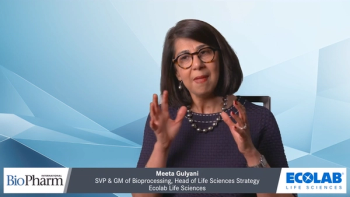
Meeta Gulyani, Ecolab Life Sciences, shares where biomanufacturing is headed next and why the relationship between drug developers and their suppliers is changing along with it.
Novo Nordisk licenses a once-weekly oral GLP-1/GIP candidate, uniQure reports 48-month Huntington’s disease data, and AstraZeneca invests $2 billion in Summit Therapeutics.
Novo gains global rights, excluding Greater China, to HRS-1596, a phase 1-ready GLP-1/GIP dual receptor agonist that Hengrui says has potential for once-weekly oral dosing in obesity and type 2 diabetes.

NouvSight001 isn't limited to the RPE65-mutation subset current gene therapy treats, potentially reaching more of the 1.5 million with RP worldwide.

Updated 36-month data in 15 high-dose patients showed 80% slowing on cUHDRS, while the 48-month cUHDRS result did not reach statistical significance. uniQure attributes the gap to attrition in the external control, and the FDA is reviewing a BLA based on the 36-month data.

Ivonescimab, in phase 3 trials across 8 tumor types, will be paired with sonesitatug vedotin in new gastrointestinal cancer trials.
Today’s biopharma news highlights how new data could reduce treatment burden, improve excipient information sharing, and shape future options for patients with difficult-to-treat cancers.

Daiichi Sankyo and Merck pulled ifinatamab deruxtecan's FDA filing in small cell lung cancer after a 187-patient trial fell short.

IPEC’s EIP user guide streamlines information exchange and response times while increasing accuracy through standardization.
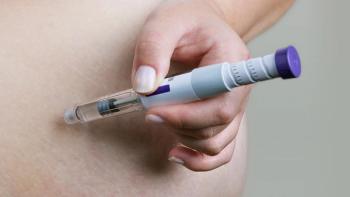
Insulin efsitora alfa-gobe (Onswik) cuts injections from 365 to 52 a year for adults with type 2 diabetes, per its new FDA approval.

Structured fixed-bed bioreactors offer vaccine manufacturers a scalable, lower-cost alternative to roller bottles and microcarrier systems.
Genentech is paying Earendil Labs $55 million upfront in a deal worth over $1.5 billion to develop bispecific antibodies for hard-to-treat cancers.
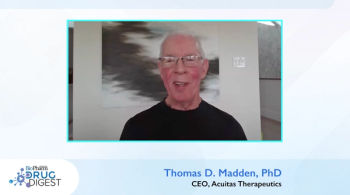
Acuitas CEO Dr Thomas Madden and NanoVation co-founder and president Dr Dominik Witzigmann discuss how LNP engineering is expanding genetic medicine applications to traditionally undruggable targets.

Guselkumab eased spinal pain, stiffness, and MRI-confirmed spinal inflammation in a 411-patient trial of psoriatic arthritis with axial involvement.

AstraZeneca's sBLA for durvalumab combined with neoadjuvant enfortumab vedotin in muscle-invasive bladder cancer, based on the Phase 3 VOLGA trial, has a PDUFA date expected in the fourth quarter of 2026.

IMVT-1402 (imeroprubart) failed to reach statistical significance on CLASI-A at Week 12 in a 57-patient proof-of-concept study, and Immunovant will stop development in cutaneous lupus erythematosus. The anti-FcRn antibody continues in five other autoimmune indications.
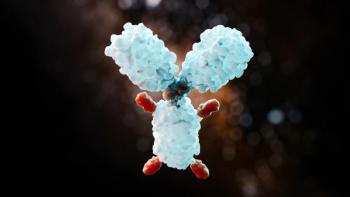
SOTIO Biotech's LRRC15-targeted antibody-drug conjugate SOT106 now holds both Orphan Drug and Fast Track Designations in soft tissue sarcoma and osteosarcoma. The company expects to start first-in-human testing later in 2026.
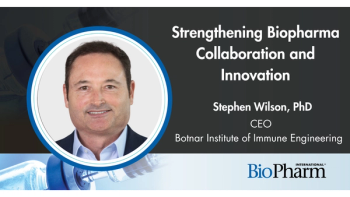
Dr Stephen Wilson, CEO of the Botnar Institute of Immune Engineering, describes Basel's collaborative ecosystem and a 3-year roadmap linking research to global clinical partners.