






Panelists from FDA, Genentech, and Minaris discussed raw material risk, supplier oversight, and at-risk release strategies for advanced therapies at the PDA/FDA Joint Regulatory Conference.
Panelists from FDA, Genentech, and Minaris discussed raw material risk, supplier oversight, and at-risk release strategies for advanced therapies at the PDA/FDA Joint Regulatory Conference.

Dualitas will screen over 300,000 bispecific combinations for Roche, backing a deal worth up to $1 billion in immunology research.

FDA's Francis R.W. Godwin (CDER) and Kathleen Jones, PhD (CBER) detail a record pace of drug warning letters and the CGMP deficiencies most commonly cited in biologics facility inspections.

Sanofi's Dr Jack Prior detailed a data maturity framework for biologics manufacturing, while FDA and Gilead panelists debated risk-based AI validation.

FDA's consumer safety officer, Jason Chancey, detailed real inspection findings, such as taped gaskets and delayed retesting, behind sterile facility deficiencies.

Inebilizumab (Uplizna) cut MG-ADL scores by 1.9 points versus placebo, supporting its approval in Japan for myasthenia gravis.
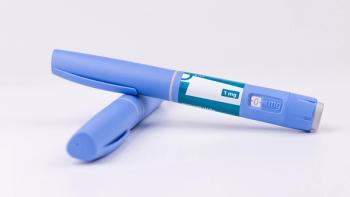
Regulatory approvals, trial data, and major licensing deals in 2026 are accelerating subcutaneous biologics, cutting patient burden and reshaping biopharma strategy.
Today’s biopharma news highlights GSK’s myeloma strategy, Insilico’s AI longevity research, and innovations that may improve future treatment outcomes.

As data volumes explode, clinical data harmonization, hybrid cloud, and AI are reshaping biopharma IT into the industry's core growth engine.

Insilico's Longevity Vaccines use circular mRNA to arm T cells against aging's earliest culprit cells, starting with immune rejuvenation.
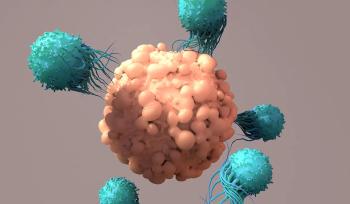
GSK's new trispecific TCE targets 2 tumor antigens plus T cells, aiming to improve on the tolerability of current myeloma therapies.
This episode of the BioPharm Brief highlights Roche’s Tam-Peli phase 3 survival data in relapsed small-cell lung cancer, Cellectis’ shift to in vivo gene editing for lipid disorders, and Phio Pharmaceuticals’ FDA briefing package for PH-762 in cutaneous squamous cell carcinoma.

Tambotatug pelitecan (Tam-Peli), a B7-H3-targeted antibody-drug conjugate, is the second of at least three B7-H3-targeted ADCs to post positive late-stage data in relapsed small-cell lung cancer this year.

Four cell therapy developers have pulled back from ex vivo manufacturing in the past month — ArsenalBio, TScan Therapeutics, and Cellectis all pivoted to in vivo approaches, while Bristol Myers Squibb terminated its manufacturing partnership with automation specialist Cellares after determining its platform couldn't meet requirements for commercial Breyanzi production, triggering layoffs.

Phio's PH-762 posted a 70% response rate in skin cancer, supporting its FDA briefing package for a planned phase 2b trial.

Cellectis is pivoting to in vivo gene editing to advancing its .HEAL-101 and .HEAL-201 candidates for lipid disorders while exiting its CAR T programs.
The BioPharm Brief covers Resolution Therapeutics’ completed enrollment of RTX001 in the EMERALD trial, Samsung Biologics’ $262 million manufacturing deal, and CordenPharma’s $80 million investment to expand sterile injectable capacity.

Samsung Biologics signed a $262 million contract manufacturing agreement with an undisclosed European pharmaceutical company, extending production commitments through 2033 and lifting the CDMO's cumulative contract value past $21.9 billion.

With 15 patients now dosed in its pivotal EMERALD trial, Resolution will build on the 70% 4-year transplant-free survival seen with RTX001 in earlier data.

CordenPharma is expanding its Caponago, Italy site with a €80 million multi-year investment and new aseptic fill-finish lines, aiming to reach 500 million sterile injectable units of annual capacity to meet rising demand across peptide, biologic, LNP, and oligonucleotide-based drug products.

Lundbeck's asedebart, which blocks ACTH signaling at its source, has won FDA orphan status for endogenous Cushingsyndrome.

BIIE CEO Dr Stephen Wilson explains why Basel's condensed innovation ecosystem was chosen for the institute’s translational research mission.

Single-partner platforms promise to replace fragmented prescription hubs with one connected, data-driven journey for manufacturers and patients alike.
The BioPharm Brief highlights Biora Therapeutics’ first human trial of its BioJet oral delivery system, FDA priority review of Roche’s satralizumab for MOGAD, and Encoded Therapeutics’ $275 million financing for its Dravet syndrome gene therapy ETX101.

Solstice Oncology launched with a $225 million Series A financing to advance porustobart, a second-generation, Fc-enhanced CTLA-4 antibody licensed from Harbour BioMed, into neoadjuvant Phase 2 testing for microsatellite-stable colon cancer.

Biora's BioJet capsule aims to deliver adalimumab without a needle, entering human testing after hitting 51.3% preclinical bioavailability.

Satralizumab cut MOGAD relapse risk 68% in a phase 3 trial, positioning it as the first potential treatment for this rare disease.
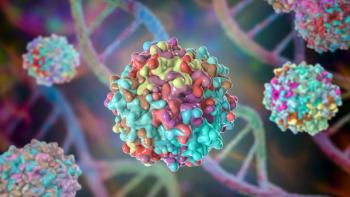
Encoded Therapeutics closed a $275 million Series F financing to fund pivotal and expansion studies of ETX101, an AAV9-mediated gene regulation therapy for SCN1A-positive Dravet syndrome, alongside commercial-scale buildout of the company's in-house GMP manufacturing.
Today’s BioPharm Brief looks at a phase 3 survival win for Imdelltra plus Imfinzi in first-line small cell lung cancer, FDA review of Rezolute’s ersodetug, and Novartis’s del-desiran setback in myotonic dystrophy type 1.

Ersodetug missed its phase 3 primary endpoint in congenital HI, but FDA is reviewing CGM data showing 50%+ hypoglycemia reductions.