

The agreement will allow Roche to use CEVEC’s proprietary ELEVECTA technology, which is designed to enable fully scalable, high-performance AAV vector production in suspension bioprocesses.
The evolution of therapeutic modalities drives the adoption of single-use technologies.
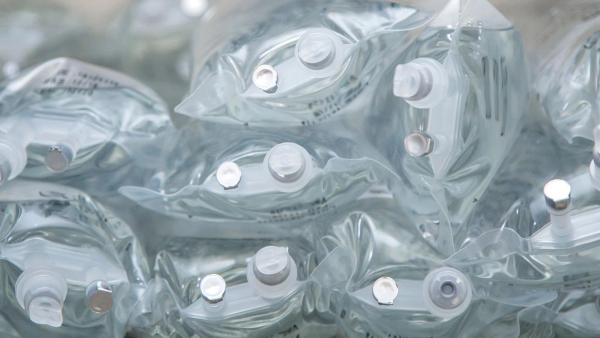
Despite a growing number of biosimilar approvals, market uptake remains a challenge.

Given the criticality of fill/finish processes, it is clear that automation is the next technological step.
The agreement will allow Roche to use CEVEC’s proprietary ELEVECTA technology, which is designed to enable fully scalable, high-performance AAV vector production in suspension bioprocesses.
Apiject was approved for a $590-million loan from the US to build in-country capacity for COVID-19 vaccines and therapeutics.
CordenPharma has announced the expansion of its non-GMP SPPS manufacturing capacity at its Centre of Excellence for Peptide Process Development and non-GMP manufacturing in Frankfurt, Germany.
A second global Phase III clinical trial investigating the safety and efficacy of a two-dose regimen of JNJ-78436735 has been initiated by Johnson & Johnson.
Bone Therapeutics has reported the completion of Catalent’s acquisition of Skeletal Cell Therapy Support SA (SCTS)—Bone Therapeutics’ cell therapy manufacturing subsidiary.
Interim results of AZD1222 trial have demonstrated lower reactogenicity in older adults, and strong immune responses across all adult age groups.
Watson-Marlow Limited Ireland has revealed plans for a new ISO 14644-1 Class 7 cleanroom to be added to the company’s existing site in Cork, Ireland.
Moderna has reported that EMA's CHMP has started a rolling review of mRNA-1273—Moderna’s COVID-19 vaccine candidate.
Pfizer and BioNTech’s BNT162b2 shows efficacy of 95%; the companies plan to submit a request, within days, to FDA for an EUA.
Moderna’s COVID-19 vaccine candidate can be distributed using widely available vaccine delivery and storage infrastructure.
The companies will initially develop and design process technologies, single-use systems, and automation, with plans to eventually focus on an expanding process and digital technologies to optimize a continuous manufacturing process.
FDA issued emergency use authorization for bamlanivimab for patients at risk for severe COVID-19.
Lonza has inaugurated its first ADC payload manufacturing suite at the Visp, Switzerland site.
Sanofi’s Digitally Enabled Integrated Continuous Biomanufacturing Facility in Framingham, MA was named the Overall Award winner at the ISPE virtual annual meeting.

Biopharma can apply new manufacturing practices adopted during the COVID-19 pandemic to enhance bioprocessing.
The agreement will provide capacity for the manufacturing of AZD7442, currently being developed for the potential prevention and treatment of COVID-19, at Lonza's Portsmouth, NH site.

Continuous SEC was shown to increase productivity with the same product quality and yield.

PAT advances are enabling improved process understanding, process control, and error prevention.
Successful migrations require careful planning to meet business needs and maintain data integrity.
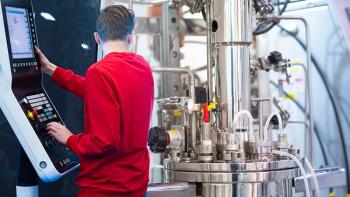
The shift to single-use technologies is driving the need for innovation in PAT-friendly sensor technologies.

Collecting and analyzing data are crucial for creating efficient, automated bioprocesses.
3P Biopharmaceuticals, and Oxford University spin-out, SpyBiotech, have signed a vaccine contract manufacturing agreement.
Catalent has signed an agreement with Bone Therapeutics for the acquisition of Skeletal Cell Therapy Support SA (SCTS).
The Phase III clinical trial of NVX-CoV2373 is expected to be fully enrolled in the UK and will begin in the US and Mexico by the end of November 2020.