



BioPharm International sat down with Christa Myers of CRB Group and Nadiyra Walker Speight of Fujifilm Diosynth Biotechnologies at INTERPHEX 2024 to examine the implementation of Annex 1.
How the Single-Use Trend Benefits Pumping Systems and Fluid Handling (INTERPHEX 2024)
The evolution of therapeutic modalities drives the adoption of single-use technologies.

Despite a growing number of biosimilar approvals, market uptake remains a challenge.

Given the criticality of fill/finish processes, it is clear that automation is the next technological step.

BioPharm International sat down with Christa Myers of CRB Group and Nadiyra Walker Speight of Fujifilm Diosynth Biotechnologies at INTERPHEX 2024 to examine the implementation of Annex 1.

At INTERPHEX 2024, a panel of experts gave insight on new regulatory requirements for contamination control and provided advice for how to implement a contamination control strategy in existing facilities.
At INTERPHEX 2024, Wenyu Zhang, PhD, covered new trends in the aseptic industry and the key factors companies should consider while weighing their options.
ADC manufacturing facilities are requiring more stringent containment requirements as well as advanced analytical detection.
Former FDA drug investigator, Daniel Roberts, discusses the importance of updating process validation and maintaining proper data integrity at a keynote session during INTERPHEX.

The Xcellerex magnetic mixer, single-use mixing system was designed to address challenges in large-scale mAb, vaccine, and genomic medicine manufacturing processes.
WMFTS’ new WMArchitect single-use solutions offers standard ready-to-use single-use assemblies as well as customized designs for biopharma fluid management.
In back-to-back deals, Charles River will offer plasmid DNA manufacturing services for a gene therapy under development by Axovia Therapeutics and for a lead candidate being developed by Ship of Theseus.
Memel Biotech aims to offer a range of services from discovery through to formulation for preclinical through to late-stage clinical and commercial production of advanced therapies.
Lonza has made a deal with Acumen Pharmaceuticals to manufacture sabirnetug, a mAb that will soon be entering Phase II development for treating Alzheimer’s disease.

NGS abbreviates drug discovery timelines.

Univercells and Altamira Therapeutics are collaborating on nanoparticle-delivered mRNA vaccines, while Andelyn Biosciences and Grace Science are partnering on novel therapies for NGLY1 deficiency.

Innovation in this space depends on strategizing for GMP compliance and market access.
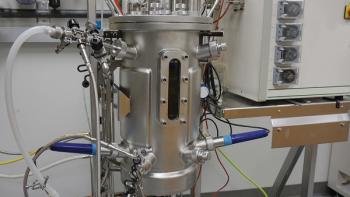
Despite a growing trend toward single-use bioreactors, stainless-steel retains its relevance for certain products.

A look at the newest innovations offers a deeper understanding of affinity ligands and their role in the future of downstream processing.
The new Verafit products from STERIS are designed to help manufacturers conform to regulatory requirements laid out in Annex 1.

With the Vacaville, Calif., site acquisition, Lonza gains one of the largest biologics manufacturing sites for mammalian cell-based therapeutics.

Webcasts
Webinar Date/Time: Thu, Thu, Apr 18, 2024 11:00 AM EDT
Webcasts
Webinar Date/Time: Thu, Apr 25, 2024 11:00 AM EDT
CDMO White Raven aims to reduce contamination risk and gain the capability to handle multiple product formats with the installation of Cytiva’s SA25 Aseptic Filling Workcell.

Cellares CEO Fabian Gerlinghaus explores advancements in counterflow centrifugal elutriation and electroporation, teasing exciting developments in product testing.
Webcasts
Webinar Date/Time: Wed, May 8, 2024 11:00 AM EDT
AstraZeneca’s acquisition of Amolyt Pharma includes eneboparatide, a Phase III therapeutic peptide for the treatment of hypoparathyroidism.

Orchard Therapeutics’ Lenmeldy (atidarsagene autotemcel) marks the first gene therapy approved in the US for treating children with metachromatic leukodystrophy.

The evolution of therapeutic modalities drives the adoption of single-use technologies.