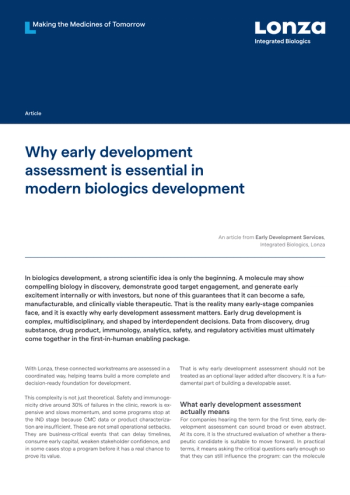
See how early supply chain engagement and continuous improvement reduce risk, accelerate tech transfer and time-to-market, and ensure reliable supply for customers and patients—download the white paper to learn more.

See how early supply chain engagement and continuous improvement reduce risk, accelerate tech transfer and time-to-market, and ensure reliable supply for customers and patients—download the white paper to learn more.

See how early supply chain engagement and continuous improvement reduce risk, accelerate tech transfer and time-to-market, and ensure reliable supply for customers and patients—download the white paper to learn more.

Biologics manufacturing is shifting toward integrated ecosystems that align clinical and commercial needs within a unified operational model. Learn how to deliver speed, flexibility, and lifecycle efficiency from early clinical supply to high-volume commercial production.

MaxiPure® Polysorbate 80 is a highly pure excipient designed for high-value injectable applications where control of particles, oxidative stress, and biological compatibility is essential. Fully compliant with Ph. Eur., USP-NF, JP and CP monographs, this non-ionic surfactant is characterized by an oleic acid content above 98%, exceptionally low impurity levels, and outstanding clarity. By combining regulatory excellence with functional performance, MaxiPure® Polysorbate 80 supports the development of stable and safe protein-based therapeutics, and ensures formulation reliability across the drug development lifecycle.

Scaling up a lyophilization process is one of the most technically demanding challenges in biomanufacturing, and even the smallest mistakes can lead to failed batches, delays, and extra costs. This white paper from Jubilant HollisterStier (JHS) shows how choosing the right partner can reduce risk, guarantee quality, and accelerate timelines and features a real-world case study of how JHS lead a successful Phase 3 oncology drug scale-up.


The biopharmaceutical landscape is undergoing a structural shift toward greater molecular complexity and formulation concentrations exceeding 100 mg/mL. High-concentration formulations, particularly those intended for subcutaneous administration, present a distinct set of technical challenges that conventional development approaches were not designed to address. Samsung Biologics’ proprietary S-HiCon™ platform provides an integrated, data-driven framework for navigating these challenges, encompassing early material generation, structured excipient screening, and advanced analytical characterization.


Sponsored Content
This practical guide sheds light on often underestimated risks in ADC fluid and cold chain management – including cytotoxic exposure, operator safety, precision filling, freeze thaw stress, bioprocess container breakages, and costs. It outlines how closed, automated, and controlled single use systems help reduce risk, improve process reliability, and preserve ADC quality across fluid handling and cold chain operations.


The October 2025 FDA draft guidance for biosimilars marks a major shift toward greater reliance on analytical data. Most notably, it signals a move to reduce or even eliminate comparative efficacy studies when robust analytics can provide equivalent insight, detecting subtle differences that clinical studies often miss. Biosimilar development will continue to require comprehensive analytical packages, with emphasis on orthogonal techniques. This session features Colette Quinn from Waters Corporation, who discusses how analytics support biosimilar development and help meet the FDA’s “totality-of-evidence” expectations.

Sponsored Content
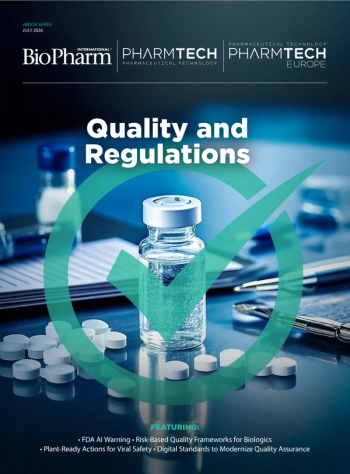
Shifting from reactive problem-solving to proactive quality management can be a critical differentiator in highly regulated industries such as biopharmaceuticals. This eBook offers practical guidance on strengthening customer–supplier collaboration, reducing particulate contamination risk, and building resilient supplier quality management systems to support product safety and regulatory compliance.

Sponsored Content

Sponsored Content

Sponsored Content

Sponsored Content

Sponsored Content
Advanced chromatographic and analytical approaches can help overcome the complex downstream purification challenges of therapeutic nucleic acids; these innovations include on-column DMT cleavage and real-time anion-exchange chromatography coupled with multi-angle light scattering (AEX MALS) integration. By exploring next-generation resin technologies and sustainable, solvent-free workflows, this article highlights how process scientists can enhance purity, yield, and scalability for complex drug manufacturing.

Sponsored Content

Sponsored Content
Pharmaceutical and biopharmaceutical companies are navigating tightening regulations, rising R&D costs, and intensifying competition, prompting a comprehensive reassessment of their production systems. By leveraging advanced analytics and modern technologies across the product lifecycle—from discovery through approval—organizations can enhance efficiency, strengthen quality and consistency, and enable more agile, data-driven manufacturing. This eBook examines how advanced analytical tools complement traditional methods to support faster, more confident decision-making within increasingly complex development and manufacturing environments.

Sponsored Content
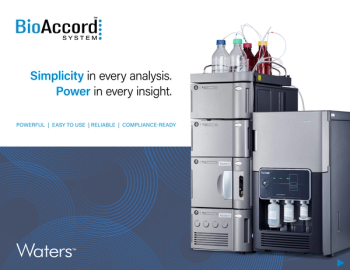
Overcome common HPLC challenges. This eBook offers solutions to simplify routines, ensure reliable results, make smart investments, and create a sustainable lab.

Sponsored Content
Discover our comprehensive portfolio of analytical HPLC solutions, featuring the latest Agilent Infinity III LC Series, applications, and a selection guide.

Sponsored Content
Streamline your workflow with smart automation

Sponsored Content
How lab managers and analytical scientists can maximize ROI, minimize hidden costs, and drive sustainable profitability with smarter LC decisions

Sponsored Content
Explore key findings from LCGC user surveys on liquid chromatography—covering cost-performance, reliability, and evolving LC technology trends.

Sponsored Content

Sponsored Content
China is a key player in global clinical trials, yet its intricate regulatory environment and logistical challenges demand meticulous supply chain management. Catalent provides tailored services such as Free Trade Zones, temperature-controlled shipping, and local comparator sourcing to support sponsors in executing trials effectively and in compliance with regulations.

Sponsored Content
When a CRO is bidding on a project where clinical supplies will be one of the aspects to manage on behalf of the client via a partner, leveraging the expertise of a chosen clinical supply partner can be a valuable resource in demonstrating the CRO’s understanding of and ability to deliver upon critical drug-supply related aspects of the project, and ability to hit key milestones such as FPI for their client. Additionally, once the CRO has been awarded the project and now must create an executable plan for managing the study’s complex clinical supply needs, there are one or more key decision influencers who are critical to engage early on during the planning and project set up stage and several proactive steps to take to build a solid clinical supply plan.

Sponsored Content
Discover how pharmacy-led models in direct-to-patient clinical supply are pivotal in modernizing clinical trials, offering scalable, patient-centric solutions that align with regulatory guidance and industry trends. Strategic collaboration with pharmacy providers is the key to unlocking the full potential and benefits of decentralized clinical trials (DCTs).

Sponsored Content
In the era of seamless drug development, reducing time to the clinic and getting rapid regulatory approval has become the goal of nearly every early drug development sponsor. Handling drug development, manufacturing, and clinical supply efficiently can help sponsors save costs and provide maximum benefit for patients. To improve the efficiency of the drug development continuum, integrated solutions have become an effective option for sponsor companies to streamline the transition from early development to the clinic, in addition to providing timely clinical supplies to help keep study timelines and budgets on track. Along with a discussion, examples of real-life tactical and operational decisions involved in the integrated approach to drug development will be presented.

Sponsored Content
As biopharmaceutical pipelines diversify, laboratories must deliver reliable, high-quality data across increasingly complex sample types. Download this eBook to explore how next-generation liquid chromatography (LC) systems are enabling robust, flexible bioanalysis through real-world QC applications.