As the demand for monoclonal antibodies (mAbs) continues to grow across therapeutic, diagnostic, and industrial applications, biomanufacturers face mounting pressure to achieve higher productivity, increased process robustness, and improved scalability. Upstream and downstream operations, particularly media and buffer preparation, ingredient dissolution, and process homogeneity, play a critical role in ensuring consistent performance and maximizing overall yield. However, traditional mixing technologies often struggle to meet the evolving needs of intensified and flexible bioprocessing strategies while keeping operators safe and protecting the products from contamination risks.
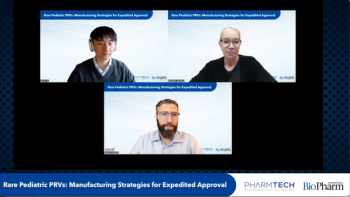
Nathan Edwards of Arya Consulting moderates a discussion with Elisabeth Gardiner of Tevard Biosciences and Donny Xu of the RTW Institute about rare disease treatment development and navigating the FDA’s Rare Pediatric Disease Priority Review Voucher Program.
The FDA launches a new rare disease development initiative, BioNTech’s BNT113 misses a progression-free survival endpoint, and Viking Therapeutics begins Phase III trials of its oral obesity candidate.
As ArsenalBio, TScan, Bristol Myers Squibb, and others abandon ex vivo programs for in vivo engineering, early clinical data and platform differences point to both the promise and the unresolved safety, manufacturing, and regulatory questions of generating CAR-T cells inside the body.
Viking Therapeutics has started two Phase 3 trials of once-daily oral VK2735, a dual GLP-1/GIP receptor agonist, in adults with obesity, with and without type 2 diabetes.
The FDA has accepted Pierre Fabre Pharmaceuticals’ resubmitted BLA for tabelecleucel, an allogeneic T-cell immunotherapy for EBV+ post-transplant lymphoproliferative disease. The FDA’s target action date is March 31, 2027.