


Regulators and industry organizations explain policies and standards to manufacturers and authorities in all regions.
Regulators and industry organizations explain policies and standards to manufacturers and authorities in all regions.

Experts give insight on method transfer, QbD, and regulations for analytical method development and validation for biopharmaceuticals.

FDA and EMA release a draft joint proposal on the development of new drugs to treat Gaucher disease in children.
USP releases new and revised standards for organic impurities in medicines for public comment.
USP evaluates raw materials used in the chemical synthesis of peptides.
Agencies extend successful pilot program to further harmonization of QbD topics.
USP evaluates quality attributes for synthetic peptides.
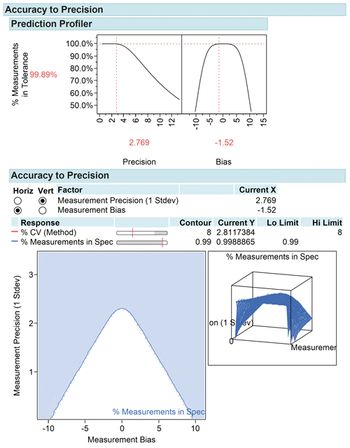
Design of experiment is a powerful development tool for method characterization and method validation.
FDA provides recommendations for submitting analytical procedures and methods validation data.
FDA plans to issue a number of new guidances in 2014 that will address drug development and manufacturing practices.
NIH, 10 biopharmaceutical companies, and several nonprofit organizations form a partnership to develop new treatments earlier for Alzheimer's, type 2 diabetes, and autoimmune disorders.

ISPE and PDA take on the challenge of recommending quality metrics.
FDA adds Ranbaxy's Toansa, India facility to existing consent decree, prohibiting distribution of APIs from that location
USP opens expanded Shanghai facility to enhance quality standards for medicines and food ingredients.
Abrams Royal Pharmacy is recalling all unexpired lots of sterile products dispensed in the US.
Genzyme plans to appeal FDA?s decision that the multiple-sclerosis treatment is not ready for approval.
Baxter International recalls dextrose injection and four sodium chloride injections.
NPS Pharmaceuticals uses its expertise in development, regulatory compliance, and commercialization to bring to market products with orphan drug status.
FDA details efforts to evaluate potential risks from use of nanomaterials in drug products and discuss analytical considerations, impact on stability, safety, and toxicology effects.
The international “Fight the Fakes” campaign will raise awareness about the dangers of counterfeit medicines.
USP issues call for candidates for its 2015-2020 Council of Experts.

Using closed systems opens up many new possibilities for how facilities are designed and operated and may also present lower risk to the operation and, ultimately, the product.

Regulators hope new standards will stop illegal drug imports, but manufacturers fear they may stifle innovation.
Zhoydro ER is the first drug to have updated labeling now required for all ER/LA opioid analgesics.
FDA is seeking a permanent injunction against a dietary supplement manufacturer following the company?s repeated distribution of unapproved drugs and adulterated dietary supplements.