

The company’s Custom Single Run product line now has available bioreactors with working volumes of up to 6000 L.
The company’s Custom Single Run product line now has available bioreactors with working volumes of up to 6000 L.
Bayer will use ProBioGen’s GlymaxX technology to maximize the potency of its antibody drug candidate in development for oncological indications.
The new antibody, Citryll’s CIT-013, could offer new treatment options for various human diseases including lupus, vasculitis, pulmonary fibrosis, and organ damage due to sepsis.
The new facility, located in Ness Ziona, Israel, will support clinical phage manufacturing and can be expanded in the future to support commercial-scale manufacturing.
The joint venture, named BacThera, will operate out of headquarters in Basel, Switzerland and will serve pre-clinical to Phase II projects, with the ability to expand to Phase III and commercial manufacturing in the future.
In an effort to secure a continuous, sustainable supply of an important vaccine ingredient, Agenus is turning to a plant cell-based cell culture method for production.

Innovation in manufacturing technologies must occur to ensure the availability of gene and cell therapies.

The evolution of cell-culture technology is driving the need for improvements in modeling solutions.
A collaboration between Insilico Biotechnology and IFAT aims to develop a manufacturing, planning, and control system for the production of monoclonal antibodies.
The partners will collaborate to identify the bioactive components in hydrolysates, which have long been used as additives in cell culture media and feed formulation in the biopharma industry.
Pfizer is investing $500 million for the construction of a state-of-the-art gene therapy manufacturing facility in Sanford, NC.
BioPharm International spoke with Cindy Reiss-Clark, vice president, general manager, Biologics at West Pharmaceutical Services Inc., about the growing biologics market, specifically gene therapies, and how West is helping their clients prepare for these new trends.
The companies have entered into a manufacturing agreement for the production of Phase III clinical trial material.
The acquisition strengthens BioLife’s position as a supplier of disruptive, enabling solutions used for manufacturing, storage, and distribution of cell and gene therapies.
The acquisition expands Eurofins Genomics’ gene portfolio while bolstering Blue Heron’s production capabilities.
The new facility will manufacture biopharmaceutical products under cGMP conditions.
The facility will support gene therapy production and continued development of PTC’s pipeline of investigational medicines.
The company has launched new services for mammalian cell bank manufacturing under GMP conditions.

Successful process intensification with inline dilution requires effective monitoring and control.

Higher cell densities are driving innovations in harvesting, including closed systems for intensified processes.
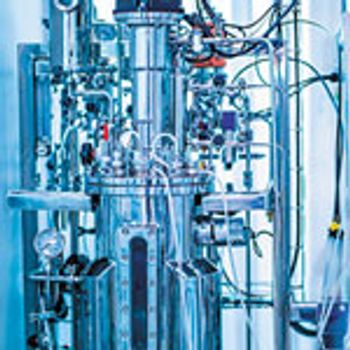
Despite the growing popularity of single-use technologies in biomanufacturing, there are still instances where stainless steel is the better option.
Personalized medicine and direct-to-patient trial models have made the difficult even more challenging.

Now that the first genetically modified cell therapies are being manufactured, the industry must move beyond “whatever works” to meet growing demand.
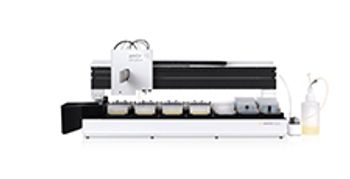
Sartorius Stedim Biotech’s Generation 2 ambr 15 cell culture microbioreactor system offers increased flexibility and expanded capability for clone selection, media and feed optimization, and early process development work.
NIIMBL announced it is partnering with FDA through the University of Delaware to improve biopharmaceutical manufacturing.