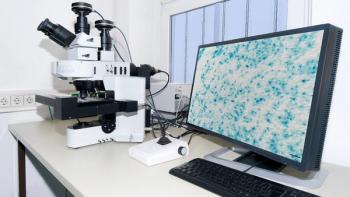



Adventitious agent testing is transitioning toward testing methods that use next-generation sequencing.

Adventitious agent testing is transitioning toward testing methods that use next-generation sequencing.

Advanced analytical tools generate more data in today’s labs than ever before.

Analytical characterization of biosimilars plays a crucial role in a successful path to regulatory approval.

In this article, a simple chromatographic model is proposed that is capable of predicting the impact of pH and ionic strength on HIC chromatograms.

As the therapeutic landscape grows more complex, so too must the analytical techniques for cleaning validation to ensure the utmost cleanliness is achieved.

Under a new partnership, Invitae and Deerfield Management will harness genetic and clinical testing data from patients to discover potential novel therapeutics for treating rare diseases.

A phase-appropriate analytical development strategy is crucial, especially for complex (formulated) drug substances.

Considerable efforts have been made over the years to resolve the key issues of stability and delivery of RNA-based therapeutics.

Big data is a natural for pharmaceutical industry players that have not already embraced it.

Advanced LC technologies can streamline the review process for LC equipment maintenance.

Affinity chromatography resins must perform well under mild elution conditions yet withstand robust cleaning and sanitization protocols.

Biologic drug development requires relevant bioassays to measure and help predict cellular response.

The launch of Discovery Life Sciences’ new Proteomic Services Division offers a single source for large-scale population studies, biobank characterization, and multi-omic biomarker analysis.

The design of viral clearance studies must keep pace with the quickly evolving biologic drugs industry.

Biotech startup, Cradle, has raised $5.4 million in seed funding with an AI-enabled design platform that allows for the synthetic building of cell factories to produce proteins.

An orthogonal approach to lipid nanoparticle analysis is recommended to optimize drug development success.

Using a minimum valuable product and process approach would make it is possible to discipline and structure the development of biopharmaceuticals in the fastest way possible.

Using an orthogonal approach to lipid nanoparticle analysis can increase the odds of project success.

It is important to understand regulatory requirements and study challenges to develop and validate the appropriate methods for a bioanalytical study program at the clinical stage.

Preclinical testing is better able to evaluate complex drug candidates thanks to innovations in animal model approaches.

The business impact of modeling and simulation tools is not well understood and requires clarification of their benefits to drug development.

By understanding potential material change, the impact on patient safety can be understood and mitigated.

Bio-Rad’s SEQuoia Express Stranded RNA Library Prep Kit is designed to construct efficient RNA sequencing workflows.

One get obtain a clearer assessment of gene-editing outcomes through more exacting analytical tools.

One can use modeling methods to generate data and shorten development timelines in preclinical studies.