




Andrew Carnegie of Inaphaea BioLabs explains the role of a translational CRO and of PDC models in drug discovery.
Andrew Carnegie of Inaphaea BioLabs explains the role of a translational CRO and of PDC models in drug discovery.

Determining E&L risk from single-use components can be used to build the level of extractable profiling and PERLs.
Chemify founder and CEO, Lee Cronin gives insight into the combination of digital chemistry, robotics, and AI in the drug discovery process.
Biosimilar analytical assessments focus on demonstrating biosimilarity and interchangeability with the reference biologic.
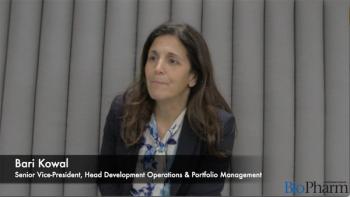
Regeneron’s Bari Kowal, senior vice-president, head Development Operations & Portfolio Management, gave insight into how the biopharma industry views the application of AI in R&D.

Studies conducted by a team at Oxford Biomedica demonstrated that HIC can be used to effectively separate non-deamidated capsids from deamidated capsids.

Digital transformation is allowing for better handling, analysis, and protection of vast data collection.
NGS abbreviates drug discovery timelines.

In a non-exclusive licensing agreement, Ricoh will have access to ERS Genomics’ CRISPR/Cas9 genome editing technology to create novel disease models.
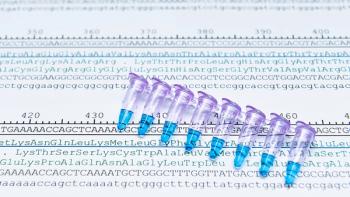
There is a great need for sensitive, precise, and easily accessible analytical detection techniques for protein sequencing.
The addition of another amino acid recognizer as well as improvements in surface chemistry, reagents, and software expand the proteome coverage of Quantum-Si’s Platinum sequencing platform.
Under a new collaboration, Lonza and Oxford Nanopore aim to commercialize a CGMP-validated test for advanced analysis of mRNA products.
Strategizing a PK/PD study approach in early phase development facilitates a successful clinical progression.
Roche will acquire select parts of the LumiraDx group related to that company’s point-of-care technology, which integrates multiple tests on a single instrument.

Developing cell-based potency assays for cell therapies requires meticulous coordination.
Tome Bioscience is facilitating the transition in biology from the editing phase to the cut-and-paste phase.
A single protein or gene expression product can exist in multiple proteoforms due to alternative splicing, point mutations, post translational modifications and endogenous proteolysis.
This collaboration will combine BigHat Biosciences’ AI/ML-guided Milliner platform with AbbVie's expertise in oncology and neuroscience to develop next-generation antibodies.
MilliporeSigma’s new platform combines generative AI, machine learning, and computer-aided drug-design aimed at increasing the success rate of new drugs and therapies.

Sufficient stability studies show a drug product meets regulatory requirements, therefore ensuring the drug reaches the patients who rely on it.
TAU Systems plans to establish TAU Labs, a new next-generation, laser-driven plasma accelerator laboratory, in Carlsbad, Calif.
Under this multi-year collaboration, Genentech and NVIDIA will use AI to optimize and accelerate each company’s platforms to discover and develop innovative therapeutics.
Twist Bioscience now offers its Express Genes rapid gene synthesis service at its Wilsonville, Ore., manufacturing facility.
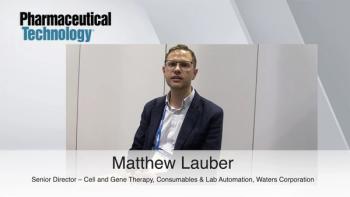
Matthew Lauber, senior director—Cell and Gene Therapy, Consumables & Lab Automation, at Waters Corporation highlights the company’s motivation behind their new bioanalysis kit for oligonucleotides.
Matthew Lauber, senior director—Cell and Gene Therapy, Consumables & Lab Automation, at Waters Corporation discusses the analytical and downstream purification challenges of oligonucleotides.