





In an interview with BioPharm International® during the US Pharma and Biotech Summit, Ken Keller, president and CEO, Daiichi Sankyo, discusses what makes a good foundation for partnerships in the bio/pharmaceutical industry.
In an interview with BioPharm International® during the US Pharma and Biotech Summit, Ken Keller, president and CEO, Daiichi Sankyo, discusses what makes a good foundation for partnerships in the bio/pharmaceutical industry.

The new drug delivery site will serve to increase Cresset's reach in the region, answering growing demands from its Asia-Pacific consumers.

The company presented results from its programs for Duchenne muscular dystrophy and facioscapulohumeral muscular dystrophy.
One of the first planned areas of focus is the field of preterm birth-associated early onset respiratory disease.

Studies conducted by a team at Oxford Biomedica demonstrated that HIC can be used to effectively separate non-deamidated capsids from deamidated capsids.
Regeneron’s work in CAR-T cell therapy development includes engineering receptor architecture to improve CAR-T cell sensitivity and improve immune response.
Sven Moller-Tank, PhD, director of Viral Delivery Technologies, Regeneron Genetic Medicines, Regeneron spoke about the use of bispecific antibodies to retarget AAV specificity.
Broken String Biosciences and the Francis Crick Institute will collaborate on research into how genome stability impacts ALS.
The company’s presentation at ASGCT includes preliminary data results for a child who received the gene therapy.
The company is presenting preclinical data at the American Society of Gene & Cell Therapy annual meeting that supports the potential of the company’s CAP-002 gene therapy for correcting neurological phenotypes associated with genetic epilepsy due to syntaxin-binding protein 1 (STXBP1) mutations.
Experiments conducted by the downstream technology team at Spark Therapeutics involving metal ion-containing additives showed improved capsid clearance in AAV production.
Under a partnership, ProPharm and PBL have launched the Cell Factory Box, an enclosed and fully automated cell factory manufacturing device.
The collaboration will target solid tumors using Poseida’s allogeneic CAR-T platform to develop convertibleCAR programs.

Mariana’s portfolio of radioligand therapies will strengthen Novartis’ radioligand therapy pipeline.
A new draft guidance issued by FDA covers human- and animal-derived materials used in the manufacture of advanced therapy medicinal products.
Global product manager at Cytiva, Eric Corti, discusses the challenges with designing a new single-use mixing system that ensures leak-free fluid handling operations at INTERPHEX 2024.
Key areas to invest include manufacturing process improvements, quality management, and AI.
The new draft guidance from FDA provides recommendations for sponsor companies on cell safety testing of human-origin allogeneic cells.
Shanghai Henlius Biotech’s first biosimilar has previously received approvals by the European Commission and National Medical Products Administration.
Beqvez (fidanacogene elaparvovec-dzkt), a one-time gene therapy, helps adults with hemophilia B produce factor IX themselves instead of receiving regular intravenous infusions.
The collaboration aims to scale-up TreeFrog’s process to produce and amplify cells for Vertex’s type 1 diabetes cell therapies.
Contract manufacturer SK pharmteco will manufacture as well as conduct testing and release of Ferring Pharmaceuticals’ Adstiladrin (nadofaragene firadenovec-vncg), a gene therapy for bladder cancer.
The approval, given across three indications, follows a previous approval for second-line use in esophageal squamous cell carcinoma.
GSK’s supplemental Biologics License Application for its PD-1-blocking antibody therapy has been accepted for review by FDA.
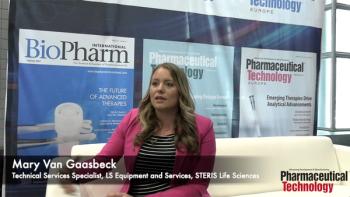
At INTERPHEX 2024, BioPharm International spoke with Mary Van Gaasbeck, technical services specialist, LS Equipment and Services, at STERIS Life Sciences, about how to effectively conduct sterile powder transfer during the fill/finish step in parenteral drug product manufacturing.
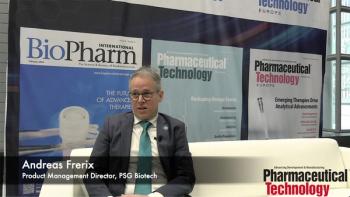
Current trends, such as single-use technologies, presen advantages and new challenges for pumping systems, according to Andreas Frerix, product management director for Quattroflow at PSG Biotech.
As the industry adjusts to new regulations, including Annex 1, bio/pharma manufacturers must rethink facility designs to remain in compliance.
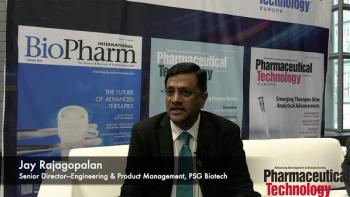
At INTERPHEX 2024, Jay Rajagopalan, senior director—Engineering & Product Management for Malema at PSG Biotech, discussed how the advancement of sensor technologies are being shaped by current industry trends.
The BioMaP-Consortium includes members of the biopharmaceutical industry and supports BARDA.
Under the agreement, Bristol Myers Squibb will have access to Cellares’ fully automated cell therapy manufacturing platform, Cell Shuttle, to manufacture select CAR-T cell therapies.