





The investment will allow Sanofi to strengthen antibody bioproduction at its Lyon Gerland site in France.
The investment will allow Sanofi to strengthen antibody bioproduction at its Lyon Gerland site in France.

Under the collaboration, the companies will create and test circVec DNA–LNP formulations with an eye toward potential therapeutic applications.
The new European facilities located in German, Italy, and Lithuania will specialize in drug discovery and R&D services.
Under a £15.7 million (US$20.7 million) investment, SEKISUI has expanded its UK site for clinical-grade drug substance manufacturing.
With financing led by OrbiMed, Novo Holdings, and Jeito Capital, Alentis Therapeutics will develop a pipeline of Claudin-1-targeted ADCs to treat solid tumors.

The approval of eladocagene exuparvovec-tneq (Kebilidi) marks the first FDA approval for a gene therapy to treat AADC deficiency.
Empowered by a $1.5 billion commitment from a major investor, Frontier Scientific Solutions has unveiled its plans for establishing a global free trade zone gateway intended for facilitating the life sciences supply chain using Wilmington International Airport in North Carolina.
Eisai Europe and Biogen have received a positive opinion for the monoclonal antibody therapy to be used as a treatment of adult patients with early Alzheimer’s disease.
Avantor has launched its new, expanded Innovation Center in Bridgewater, NJ, with integrated workflows under one roof and purpose-built collaboration spaces.
Avantor executives discuss the future of the biopharmaceutical industry and the impact that a wave of next-generation biotherapeutics will bring.
Ginkgo Bioworks has achieved the first milestone in an ongoing partnership with Merck, known as MSD outside of the United States and Canada, aimed at improving biologics production.
TrakCel's OCELLOS, an IT platform, has been selected to orchestrate the administration of five out of seven autologous or matched allogenic cell therapy products approved or expected to be approved in 2024.
With the launch of the Institute for Cell Therapy Discovery and Innovation, the MD Anderson Cancer Center will bring together expertise in developing cell therapies for cancer, autoimmune diseases, and infections.
Chancellor of the Exchequer, Rachel Reeves, has announced a £520 million (US$675 million) investment for manufacturing capacity in the United Kingdom, prompting academic and industry leaders to point out that funds should be used to train personnel.
Under an agreement, Leads Biolabs has granted the new company, Oblenio Bio, an exclusive option to license LBL-051, a tri-specific T-cell engager antibody.
Lonza’s Synnafix has licensed its ADC technology to BigHat Biosciences, which will combine it with its ML design platform to generate newly designed ADCs.
The expanded offices in Griesheim, Germany, feature a demonstration and training area.
The Novo Nordisk Foundation has committed DKK 600 million (US$87.4 million) towards the initial costs of the center housing the new supercomputer, which has the potential to accelerate drug discovery innovation.
The collaboration aims to develop precision genetic medicines using ViaNautis’ proprietary polyNaut technology platform.
The company is investing $76 million to increase ADC manufacturing capacity at its St. Louis, Mo. facility.

The companies expect to accelerate the clinical development of MRT-6160, a Phase I drug candidate, as well as explore further therapeutic opportunities across multiple indications.
Merck is acquiring the Yale-spinout, which develops direct DNA modification-enabled cancer treatments.
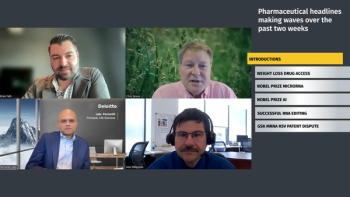
Laks Pernenkil, Brian Feth, and Alex Philippidis go behind the headlines to discuss the impact of recent news, including FDA’s drug shortage list update, Nobel prize winners in microRNA and AI, and a big-potential research win for RNA editing.
Pfizer’s bivalent RSV prefusion F vaccine has been approved by FDA to prevent lower respiratory tract disease resulting from the respiratory syncytial virus in adults 18 to 59 years of age who are at increased risk.

The Cambridge-GSK Translational Immunology Collaboration builds on an existing scientific relationship between the biopharma company and the university, with the aim of improving outcomes for patients.
As many as 30% of people living with severe hemophilia A develop inhibitors such as TFPI, which can be produced by the body’s immune response to clotting factors in replacement therapy, often limiting the effectiveness of that therapy.
The merger will create a specialty company, REGiMMUNE/Kiji TX, for regulatory T cells.
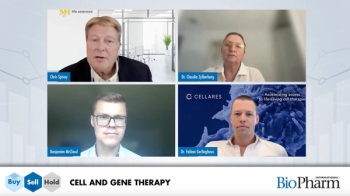
Cell and gene therapy experts Fabian Gerlinghaus, Dr. Claudia Zylberberg, and Benjamin McLeod weigh in on hot topics in CGT.
Cell and gene therapy experts Fabian Gerlinghaus, Dr. Claudia Zylberberg, and Benjamin McLeod weigh in on hot topics in CGT.
Cell and gene therapy experts Fabian Gerlinghaus, Dr. Claudia Zylberberg, and Benjamin McLeod weigh in on hot topics in CGT.