




FDA staff have questioned RP1's melanoma trial data ahead of a July 30, 2026 advisory committee vote, causing Replimune shares to fall 30%.
FDA staff have questioned RP1's melanoma trial data ahead of a July 30, 2026 advisory committee vote, causing Replimune shares to fall 30%.

Carrie Bracco, head of business development, US, Novartis Contract Manufacturing, explains why manufacturing flexibility is becoming as important as capacity for emerging biotechnology companies navigating biopharmaceutical development and contract manufacturing decisions.

Paul Romness, chair, chief executive officer, and president of OS Therapies, discusses how advances in linker chemistry, payload design, and evolving regulatory approaches could shape the next generation of antibody–drug conjugates for oncology.

Ahead of a July 29 FDA advisory committee meeting, the FDA released briefing documents disputing Capricor Therapeutics' claim that its Phase 3 HOPE-3 trial of deramiocel, a cell therapy for Duchenne muscular dystrophy cardiomyopathy, met its primary and secondary efficacy endpoints, a disagreement centered on which version of the trial's statistical analysis plan should govern the results.
AbelZeta has received FDA RMAT clearance for a registrational phase 2 trial of its bispecific CAR-T therapy, C-CAR168, in refractory lupus nephritis.

GSK will invest £400 million (US$532 million) in a new Cambridge, UK, R&D center, relocating from Stevenage amid second quarter earnings and a cost-savings plan.

Today's podcast episode highlights three stories shaping the future of antibody therapeutics, from a next-generation bispecific ADC advancing toward the clinic, to a new biologics innovation consortium in China, to a major acquisition expanding an autoimmune pipeline.
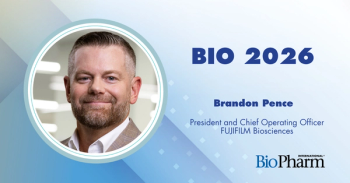
Brandon Pence, FUJIFILM Biosciences' president and chief operating officer, identifies cell consistency and viral vector capsid fill ratios as the 2 most critical unresolved hurdles in CGT manufacturing scale-up.

Veraxa Biotech has advanced its bispecific antibody-drug conjugate program VXA-222 into its next development phase after OmniAb completed discovery work under their May 2025 collaboration, creating a dual-antigen "AND-gate" candidate designed to improve precision in solid tumor treatment.

Harbour BioMed and Sinopharm have formed a strategic Innovation Consortium to co-develop biologics in oncology and immune-mediated inflammatory disease.

argenx will acquire Forte Biosciences for $2.2 billion, which will add first-in-class anti-CD122 antibody, FB102, to its immunology pipeline.

As biopharmaceutical manufacturing becomes increasingly automated, real-time analytical data is poised to transform how manufacturers monitor processes, make decisions, and optimize production. Bryan Hassell, founder and CEO of Nirrin Technologies, discusses why trusted, continuous measurements will be essential to the next generation of digital biomanufacturing.
Arrowhead's plozasiran cut triglycerides up to 81% and pancreatitis events up to 100% in phase 3 trials, Greenwich LifeSciences expanded its GP2 breast cancer vaccine trial into the UK, and Ipsen completed its acquisition of Memo Therapeutics to add the first-in-class antibody potravitug to its rare disease pipeline.
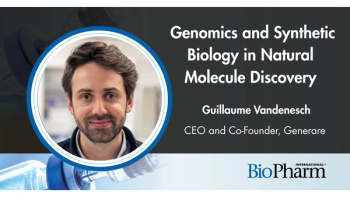
Generare CEO Guillaume Vandenesch explains that genomics and synthetic biology are positioning natural molecule discovery as a leading small molecule modality for the 21st century.

Johnson & Johnson reported that phase 3 MonumenTAL-6 data show Tecvayli plus Talvey cut the risk of progression or death by 89% in relapsed/refractory multiple myeloma.

A Phase 1 trial of DYP688, a first-in-class antibody-drug conjugate targeting the Gq/11 pathway, showed disease control in more than 80% of patients with metastatic uveal melanoma and was well tolerated, according to findings published in Nature Medicine, even after Novartis halted the drug's development.
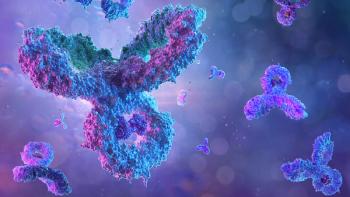
A new peer-reviewed publication in Clinical Cancer Research details preclinical data for Pheast Therapeutics' PHST001, an anti-CD24 monoclonal antibody, showing anti-tumor activity across six solid tumor types and enhanced effects when combined with chemotherapy, radiotherapy, and antibody-drug conjugates.

Sanofi announced it has discontinued amlitelimab in atopic dermatitis, forgoing global regulatory submissions despite positive long-term phase 3 data.

Repligen will acquire BioLife Solutions for $1.5 billion, adding CryoStor biopreservation media to its cell therapy portfolio.

HCW Biologics has requested an FDA meeting for HCW11-018b, its tetravalent T-cell engager for solid tumors, targeting trials in the first half o 2027.

The European Medicines Agency has granted orphan designation to Atsena Therapeutics' ATSN-101 and ATSN-201, AAV gene therapies for Leber congenital amaurosis 1 and X-linked retinoschisis, as both programs advance toward pivotal Phase 3 trials.
Arrowhead's plozasiran cut triglycerides up to 81% and pancreatitis events up to 100% in phase 3 trials, Greenwich LifeSciences expanded its GP2 breast cancer vaccine trial into the UK, and Ipsen completed its acquisition of Memo Therapeutics to add the first-in-class antibody potravitug to its rare disease pipeline.

Ipsen has completed its acquisition of Memo Therapeutics, which adds potravitug, an anti-BKPyV antibody, to its rare disease pipeline.

Phase 3 SHASTA-3/4 trials show plozasiran cut triglycerides up to 81% and reduced pancreatitis events up to 100% in high-risk sHTG patients.

Greenwich LifeSciences has received UK regulatory approval to expand its Phase III FLAMINGO-01 trial of GLSI-100, a HER2-derived peptide cancer vaccine designed to prevent breast cancer recurrence, adding up to 10 new UK sites through a collaboration with The Royal Marsden.

Liquid chromatography and single-use chromatography platforms are reshaping biologics purification as the Asia-Pacific region challenges the dominance of North America and Europe.
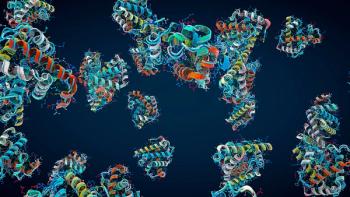
Propanc Biopharma has reported peer-reviewed data on scalable recombinant production of trypsinogen and chymotrypsinogen, supporting a synthetic backup to its lead cancer candidate, PRP.

Imunon has reported positive preliminary data from its phase 2 minimal residual disease study of IMNN-001, a DNA-based IL-12 gene immunotherapy, showing a lower MRD-positive rate, higher ctDNA clearance, and more patients reaching no evidence of disease compared to standard chemotherapy alone in frontline advanced ovarian cancer.

Under the deal, Lonza will grant Engitix a single-target ADC license for SYNtecan E, GlycoConnect, and HydraSpace to advance ECM-targeted fibrosis and cancer therapies.

MilliporeSigma's Sebastián Arana outlines why flexible, platform-based manufacturing and workforce training are now table stakes for competitive biomanufacturers.