Pharmaceutical and health economist Dr. Nadine Zawadzki, Senior Director, FTI Consulting joins the Ron Lanton Report to discuss how value is defined and measured across healthcare.
Pharmaceutical and health economist Dr. Nadine Zawadzki, Senior Director, FTI Consulting joins the Ron Lanton Report to discuss how value is defined and measured across healthcare.

FDA's Francis R.W. Godwin (CDER) and Kathleen Jones, PhD (CBER) detail a record pace of drug warning letters and the CGMP deficiencies most commonly cited in biologics facility inspections.
Melanie Whittington, managing director and head of the Leerink Center for Pharmacoeconomics, joins Ron Lanton to argue that biopharmaceutical policy only makes sense when traced back to its purpose.

Carrie Bracco, head of business development, US, Novartis Contract Manufacturing, explains why manufacturing flexibility is becoming as important as capacity for emerging biotechnology companies navigating biopharmaceutical development and contract manufacturing decisions.
In this episode, Ron Lanton argues that healthcare's next constraint isn't capital or technology but rather people.
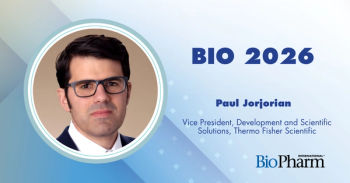
At BIO 2026, Thermo Fisher Scientific's Paul Jorjorian highlighted late-stage raw material switches as being among the most disruptive and underestimated risks in biopharma development.
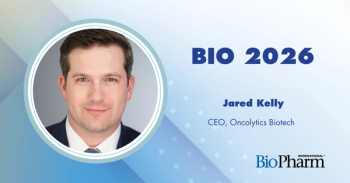
Oncolytics Biotech CEO Jared Kelly warns that investor demand for near-term tumor response data is blocking funding for trials with proven overall survival benefits.
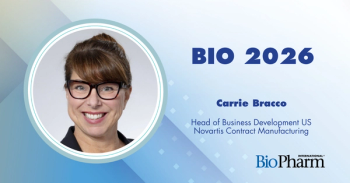
Speaking at BIO 2026, Novartis Contract Manufacturing's Carrie Bracco explains how capacity pressures and biotech flexibility needs are reshaping CMO partnerships.
As part of BioPharm International's continuing coverage from the BIO International Convention 2026, Sara Jane Demy, CEO of Demy-Colton, discusses how artificial intelligence, global collaboration, and renewed investment could help improve drug development success rates and accelerate innovation.
Speaking at BIO 2026, Kasper Øland, Samsung Biologics' vice president of sales execution, emphasizes how complex molecules now exceed 55% of the company’s pipeline as biotechs demand faster, more flexible CDMO partnerships.
At BIO International Convention 2026, Sara-Jane Demy discusses improving biotech investment, renewed NIH support for emerging companies, and why capital access remains one of the industry's biggest priorities.
At BIO 2026, Baker McKenzie's Oren Livne explains how MFN pricing, tariffs, and geopolitical risk are driving demand for flexible deal structures in biopharma licensing.
Crystalys Therapeutics CEO Dr James Mackay explains at BIO 2026 that gout remains an underserved therapeutic are and represents a compelling drug development target due to its unmet need and simple biology.

Speaking from the show floor at BIO 2026, Dr Anil Kane, Thermo Fisher Scientific's global head of technical and scientific affairs, details how AI partnerships are accelerating drug development decisions across the CDMO continuum.
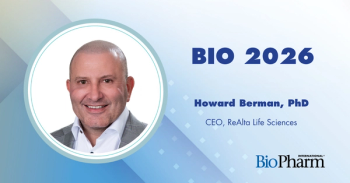
At BIO 2026, Dr Howard Berman, ReAlta Life Sciences’ CEO, explains how an astrovirus-derived anti-inflammatory peptide targets multiple pathways that drive neonatal hypoxic-ischemic encephalopathy (HIE).
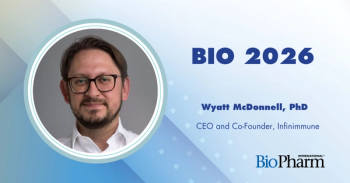
Dr Wyatt McDonnell, Infinimune CEO and co-founder, posits that translatable, decision-linked single-cell data, and not data volume, are what drive effective therapeutic antibody development in this second segment of an interview at BIO 2026.
Speaking at BIO 2026, Infinimune's Dr Wyatt McDonnell explains how the company’s human-derived antibody platform enables multi-objective optimization that AI alone and transgenic models cannot replicate.
In this episode, Ron Lanton draws on insights from the JP Morgan Healthcare Conference to explain how healthcare investment is shifting from backing novel ideas to funding organizations that can scale, survive regulatory and reimbursement pressure, and embed technology into the operational infrastructure of care delivery.
In this episode, Ron Lanton examines how geography is becoming a central strategic variable in healthcare, as policy, trade dynamics, and infrastructure increasingly dictate where innovation is developed, manufactured, and commercialized.

BioNTech’s decision to close its Singapore manufacturing facility reflects mounting financial pressure, ongoing restructuring efforts, and uncertainty around the pace at which next-generation mRNA therapies will scale.
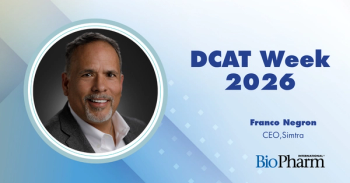
In the final part of the interview, Franco Negron, CEO, Simtra BioPharma Solutions notes the question frequently heard from sponsors and predicts where the CDMO market is heading.
In the second part of the interview, Franco Negron, CEO, Simtra BioPharma Solutions discusses the decision between insourcing manufacturing or partnering with a CDMO.
Franco Negron, CEO, Simtra BioPharma Solutions touches on rising demand for biologics and high-potency therapies and how driving early, large-scale investment in injectable manufacturing capacity keeps pace with market growth.
The episode explores how regulatory signals across drug approvals, trade policy, AI governance, and drug pricing shape business strategy and investor decisions before formal rules are ever finalized.

The current Middle East conflict is disrupting Gulf air and sea hubs, forcing bio/pharma firms to reroute cold-chain drug shipments and raising risks of oncology medicine shortages.

Merck & Co. reported Phase III data showing that Keytruda plus Welireg significantly improved disease-free survival in high-risk clear cell renal cell carcinoma following surgery.

FDA approves a supplemental BLA for BioMarin Pharmaceutical Inc.’s Palynziq, expanding its use to adolescents 12 and older with PKU.

FDA expands approval of Novo Nordisk’s once-weekly Sogroya to include three new pediatric growth disorder indications, offering children as young as 2.5 an alternative to daily growth hormone injections backed by Phase III non-inferiority data.
The episode will explore structural implications for supply chains, distribution models, and international strategy—not a political discussion, but a forward-looking planning lens.

Johnson & Johnson reports encouraging Phase 1b data for its bispecific antibody pasritamig in combination with docetaxel in metastatic castration-resistant prostate cancer, showing strong PSA responses and manageable safety

February 19th 2026