





Vaccine Development and Manufacturing
Latest News
Advertisement
Latest Videos





Shorts

0:56
Manufacturing Vaccines Takes Decades of Expertise
a year ago
by
Susan Haigney
Advertisement
More News

Evaxion has added EVX-05, an AI-designed, off-the-shelf therapeutic vaccine targeting glioblastoma, to its pipeline, discontinuing the EVX-03 program as part of a broader R&D refocus while maintaining its cash runway into the second half of 2027.

The European Medicines Agency has validated the Marketing Authorization Application for PF-07307405, Pfizer and Valneva's six-valent OspA-based Lyme disease vaccine candidate, beginning formal review of what could become the first Lyme disease vaccine available in Europe.
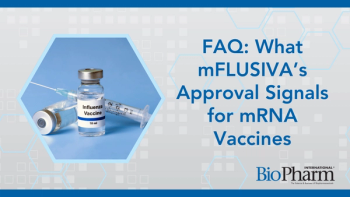
Moderna's mFLUSIVA approval offers a regulatory case study for mRNA vaccine sponsors, covering comparator selection lessons from the FDA's reversed refusal-to-file, competitive implications for Pfizer and Sanofi's mRNA flu programs, and what the accelerated approval pathway means for long-term regulatory risk.

The European Commission has approved an expanded indication for Bavarian Nordic's IMVANEX (MVA-BN) mpox and smallpox vaccine, extending eligibility down to children 2 to less than 12 years old, based on phase 2 data showing an immune response and safety profile comparable to adults.

Greenwich LifeSciences has received UK regulatory approval to expand its Phase III FLAMINGO-01 trial of GLSI-100, a HER2-derived peptide cancer vaccine designed to prevent breast cancer recurrence, adding up to 10 new UK sites through a collaboration with The Royal Marsden.

A phase 1 trial of mKRAS-VAX, an off-the-shelf synthetic peptide vaccine targeting mutant KRAS, safely stimulated durable, tumor-specific T-cell responses in 90% of high-risk individuals, with none of the 20 participants developing pancreatic cancer after a median follow-up of 16.5 months.

A phase 2 controlled human infection trial has found that two doses of WRSs2, a live-attenuated oral vaccine candidate against Shigella sonnei, achieved 89% protection — the highest efficacy reported for any Shigella vaccine candidate — with no serious adverse events, advancing a century-long quest for a licensed vaccine against the diarrheal pathogen.
The supplemental approval is based on immunogenicity data from the STRIDE-13 phase 3 trial and, according to Merck, makes the vaccine the only one of its type specifically indicated for this at-risk pediatric population in the United States.
The company reported that phase I data show approximately 40% of patients remained cancer-free at 10 years, while 2 phase 2 trials are ongoing.

NeoVac first-in-human data suggest that optimized lipid nanoparticles may improve mRNA tolerability, enabling repeat dosing and broader therapeutic use.

The European Commission’s approval of GSK’s Arexvy for adults 18 years and older expands the respiratory syncytial virus vaccine market and signals broader adoption of adult immunization strategies.

The CDC has narrowed pediatric vaccine guidance, resetting evidence expectations and signaling potential shifts in vaccine uptake and market demand.
FDA’s internal findings raise new concerns over pediatric vaccine safety and signal potential regulatory shifts affecting future COVID-19 vaccine development.
Progress in vaccine development is closely tied to advancements in biopharmaceutical technologies, regulatory landscapes, and quality assurance methodologies.
Regulators and manufacturers face new uncertainty as shifting CDC vaccine language raises concerns for evidence-based oversight and biopharma compliance.

Cellevate’s nanofiber technology enables higher viral vaccine titers in adherent cell cultures, advancing efficiency in large-scale biomanufacturing.

Naobios and Olon France create custom HCP ELISA to advance vaccine trials and strengthen global biopharmaceutical manufacturing capacity.

ACIP votes to separate MMR and varicella vaccines (MMRV) for children to cut febrile seizure rates.
Moderna’s updated Spikevax and mNEXSPIKE COVID-19 vaccines target the LP.8.1 variant of SARS-CoV-2 for high-risk groups and older adults.

FDA will review GSK’s application to expand the use of its respiratory syncytial virus vaccine, Arexvy, to adults aged 18–49 who are at increased risk.
The next-generation monoclonal antibody could potentially be used to prevent and treat active COVID-19 infections, according to its developer, providing a non-vaccine option.

The spray-dried formulations for Ethris’ mRNA vaccine candidates will be developed at Lonza’s Bend, Ore., Center of Excellence in accordance with GMP standards.
The partnership will advance the accessibility, scalability, and affordability of RNA-based vaccines.

Pointing to the continued circulation and evolution of COVID-19, WHO published a statement on the COVID-19 vaccine antigen composition to respond to variants of the virus.
Using Orexo’s powder-based drug delivery technology, the companies will develop mucosal vaccines in an inhaled formulation.
Advertisement
Advertisement
Trending on BioPharm International
1
Adalvo Acquires Enzene’s Romiplostim Biosimilar Program for ITP
2
Genmab’s Petosemtamab Plus Pembrolizumab Cuts Risk of Death by 50% in Phase 3 Head and Neck Cancer Trial
3
How Lipid-Based Softgels Protect Oral Peptides from Degradation
4
Immatics’ PRAME-Targeted TCR Bispecific IMA402 Shows 32% Response Rate in PRAME-High Tumors
5