
"We need to identify best practices for manufacturing. We need to identify very speedy ways of manufacturing very low-cost alternatives."
News|Videos|August 20, 2026
Why Manufacturing, Not Biology, May Be the Biggest Bottleneck for Personalized Cancer Vaccines
Dr Eric von Hofe of CellxLife and Dr Keith L. Knutson of Mayo Clinic explain why manufacturing speed and cost will determine the scalability of personalized cancer vaccines.
Advertisement
Continuing the discussion,
First, Dr von Hofe explains that
"That [lysate] then can be pulsed onto dendritic cells, reintroduced to the patient, and, thereby, you're activating the immune system to all those neoantigens," Dr von Hofe says, describing how tumor lysate-based vaccines translate neoantigen discovery into clinical application.
Why will manufacturing capability determine the scalability of personalized cancer vaccines?
Next, Dr Knutson points out that vaccine development hinges on 2 fundamental questions: what to target and what part of the immune system to activate. Both questions depend heavily on manufacturing capability. He stresses that researchers must be able to identify an individual's tumor-specific proteins and manufacture them rapidly into a usable vaccine, along with manufacturing the tools needed to direct the correct immune response, such as tuned dendritic cells.
"We need to identify best practices for manufacturing,” Dr Knutson emphasizes. “We need to identify very speedy ways of manufacturing very low-cost alternatives."
Dr Knutson also notes that identifying biomarkers of tumor rejection within patient subgroups, such as certain ovarian or breast cancer populations, could enable off-the-shelf vaccine components, but adds that a personalized manufacturing component will likely remain necessary.
Get more insight in
About the speakers
Keith L. Knutson, PhD, Professor of Immunology, Mayo Clinic
Dr Knutson is a consultant in the Department of Immunology, Mayo Clinic in Florida, with a joint appointment in the Department of Cancer Biology.He serves as the director of the Mayo Clinic in Florida Cell Analysis and Cell Imaging Core.He is also co-director of the Mayo Clinic Enterprise Cancer Center’s Cancer Immunology and Immunotherapy Program and vice chair of the Mayo Clinic Enterprise Research Personnel Committee. Dr. Knutson joined the staff of Mayo Clinic in 2005 andholds the academic rank of Professor of Immunology, Mayo Clinic College of Medicine and Science. He is recognized with the distinction of the Andrew A. and Mary S. Sugg Professor of Cancer Research. He received his Bachelor of Science in Microbiology at the University of Washington and earned his PhD in Physiology and Pharmacology from the University of Georgia.
Eric von Hofe, PhD, CEO, CellxLife
Dr Hofe has more than 30 years of experience in managing and overseeing novel biotechnology approaches to cancer immunotherapy and technology development. Prior to becoming CEO of CellxLIfe, he led development efforts at AffyImmune Therapeutics raising over $20 million and advancing a novel CAR T cell therapeutic into the clinic against refractory thyroid cancer. Previously he led the development of an immunotherapeutic vaccine for breast and prostate cancer at Antigen Express, resulting in a collaboration with Merck. Prior to that he held positions at Millennium Pharmaceuticals overseeing the advancement of internal technology development projects and personalized medicine.
Advertisement
Related to this article

Nuravax will test AV-1959R in a 160-adult phase 2 trial to see whether the amyloid vaccine can prevent Alzheimer disease before symptoms begin.
Insilica's Dr Thomas Luechtefeld argues process traceability, not benchmark accuracy alone, determines whether AI toxicology decisions can be trusted.

Zylidac will test whether optogenetic cell lines that hit 21 g/L in small-scale CHO runs can deliver higher-yield complex biologics at GMP scale.

Revakinagene taroretcel (Encelto), the only FDA-approved MacTel therapy, slowed photoreceptor loss by up to 54.8% vs sham in phase 3 trials.
At PharmSci 360, Insilica CEO Thomas Luechtefeld will present on auditable agentic AI systems and how they are expanding computational toxicology beyond single predictive models.

Backed by €400 million (US$449 million) in EU-cleared German aid, the new Frankfurt facility is designed to secure insulin supply for people with diabetes from 2032.

EA2251, the 7th registrational trial of ivonescimab, will test it plus chemotherapy vs pembrolizumab or durvalumab regimens in first-line BTC.
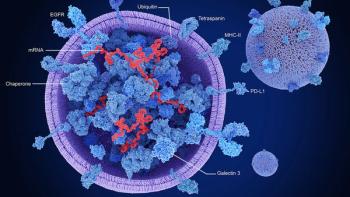
Inhaled EXO-CD24 kept 85% of patients with ARDS free of respiratory failure at day 7 vs 33.3% with placebo in a 90-patient phase 2b trial.
Advertisement
Advertisement
Trending on BioPharm International
1
Treasury Proposes Adding Biotech to Outbound Investment Restrictions Under COINS Act
2
BioNTech, BMS to Pair Pumitamig With Trodelvy in Phase 3 First-Line TNBC Trial
3
TaiMed’s Anti-CD4 Antibody TMB-365 Reduces HIV Viral Load in Phase 1, Supporting Long-Acting Combination Regimens
4
FDA Grants Accelerated Approval to Ultomiris as First C5 Inhibitor for IgA Nephropathy
5