"This study represents an important step forward in developing a safe and effective vaccine against Shigella. With continued research, we have the potential to significantly reduce the global burden of this disease, particularly among children."
— Robert Frenck, MD, Professor, Division of Infectious Diseases, Cincinnati Children's Hospital Medical Center
The phase 2 randomized, double-blind, placebo-controlled trial enrolled 108 healthy adults aged 18 to 49 years between October 2022 and January 2024 (NCT04242264).⁶ Seventy-three participants completed the controlled infection challenge phase, in which vaccinated and placebo recipients were deliberately exposed to a virulent S. sonnei challenge strain to test vaccine protection.
Two doses of WRSs2 provided 89% protection against Shigella sonnei infection compared with placebo — substantially exceeding efficacy levels reported in prior Shigella vaccine trials.¹ Vaccinated participants also experienced significantly less severe symptoms and lower levels of bacterial shedding in stool, suggesting the vaccine may also reduce onward transmission — a meaningful secondary benefit given Shigella's low infectious dose and high transmissibility.¹ No vaccine-related serious adverse events were reported, and a small number of participants who experienced temporary side effects prompted dosing adjustments during the trial.¹
"This study represents an important step forward in developing a safe and effective vaccine against Shigella," said Robert Frenck, MD, professor in the Division of Infectious Diseases at Cincinnati Children's Hospital Medical Center and joint senior author of the study. "With continued research, we have the potential to significantly reduce the global burden of this disease, particularly among children."¹
What comes next for WRSs2?
The researchers emphasize that further optimization is needed before WRSs2 advances to licensure. Current priorities include confirming long-term durability of protection, identifying the optimal dosing regimen, and expanding evaluation to broader Shigella strain coverage — S. sonnei is most prevalent in higher-income countries, with outbreaks tied to travel, military deployments, and childcare settings, while S. flexneri dominates in lower-income endemic regions where pediatric mortality is highest.¹
WRSs2 is not yet commercially manufactured. Development has proceeded through a government-academic consortium involving WRAIR, NIAID, the Naval Medical Research Command, Emory University's Hope Clinic, the Emmes Company, and Cincinnati Children's — reflecting a public health-driven model common to enteric disease vaccine development, where commercial market incentives alone have historically been insufficient to drive licensure.¹
The data support advancing WRSs2 into larger efficacy trials in high-risk populations, including children in endemic settings, which would be required to support a regulatory submission.¹ Given the intersection with antimicrobial resistance and the global vaccine development agenda, new enteric vaccine candidates — particularly those with clean safety profiles — will face careful regulatory and public health scrutiny in the current environment.
Why does the challenge model matter for vaccine evaluation?
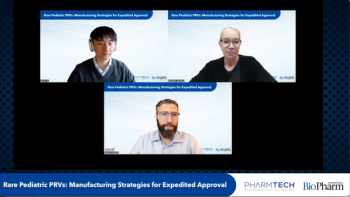
The controlled human infection model used in this trial — in which healthy volunteers are intentionally exposed to a pathogen under clinical supervision after vaccination — is an increasingly recognized tool for accelerating enteric vaccine development, particularly for diseases where field efficacy trials in endemic populations are logistically demanding. The model allows efficacy signals to be detected with relatively small sample sizes and compressed timelines, with challenge outcomes serving as a regulatory-accepted early indicator of vaccine performance. As noted in a recent BioPharm International panel on lessons from vaccine development, accelerated evaluation pathways are increasingly essential as the pipeline for vaccines against neglected and antibiotic-resistant pathogens grows.
References
- Clinical Trial of Shigella Vaccine Shows 89% Protection. (2026 Jul 1). PR Newswire. https://www.prnewswire.com/news-releases/clinical-trial-of-shigella-vaccine-shows-89-protection-302816022.html
- Rouphael N., Baqar S., Dickey M. et al. (2026 Mar 2). Efficacy of WRSs2, a Live-Attenuated Shigella sonnei Vaccine, Against Shigellosis in a Controlled Human Infection Model: A Double-Blind, Randomized Trial. The Lancet. https://ssrn.com/abstract=6311850
- Livio S, Strockbine NA, Panchalingam S, et al. (2014 Oct). Shigella isolates from the Global Enteric Multicenter Study inform vaccine development. Clin Infect Dis. https://pubmed.ncbi.nlm.nih.gov/24958238/
- Kotloff KL, Riddle MS, Platts-Mills JA, Pavlinac P, Zaidi AKM. Shigellosis. The Lancet. https://pubmed.ncbi.nlm.nih.gov/29254859/
- Frenck RW Jr, Dickey M, Quigley C, et al. (2018 Jul 2). A Phase I trial to evaluate the safety and immunogenicity of WRSs2 and WRSs3; two live oral candidate vaccines against Shigella sonnei. Vaccine. https://pubmed.ncbi.nlm.nih.gov/30037478/
- Phase 2 Shigella Vaccine and Challenge. ClinicalTrials.gov. NCT04242264. https://clinicaltrials.gov/study/NCT04242264