

Drug manufacturers can improve use of quality agreements in contract manufacturing.
Drug manufacturers can improve use of quality agreements in contract manufacturing.
Contract testing organizations can provide bio/pharma companies with a cost-effective way to adapt to new technologies and regulations.

Process validation is an extension of biologics development processes.

Revisions to chapters on glass containers and elastomeric closures were canceled following review of comments.
In-house experts can help select the right systems and suppliers, making validation and compliance easy, says Siegfried Schmitt, principal consultant at PAREXEL.
FDA enforcement efforts and drug approvals trend upward.
The agency released draft guidance on the format for electronic submissions of NDA and BLA content regarding the planning of bioresearch monitoring inspections.
The agency has approved a new treatment for a certain type of prostate cancer using novel clinical trial endpoint.
FDA Commissioner Scott Gottlieb issued a statement that FDA will be modernizing regulatory programs in order to advance novel treatments.
FDA sent a warning letter to Celltrion detailing CGMP violations, including poor microbial contamination control.
The guidance addresses the development, analysis, and presentation of microbiology data during antibacterial drug development.
Federal agencies have partnered to develop a roadmap that offers a new framework for the safety testing of drugs and chemicals without the use of animals.

This article explores lab data integrity violation trends, as well as a sampling of the latest technologies that can help avoid them.
Steve Hayward, product marketing manager at BIOVIA, Dassault Systèmes, discusses the importance of both technology and people in the modern laboratory.
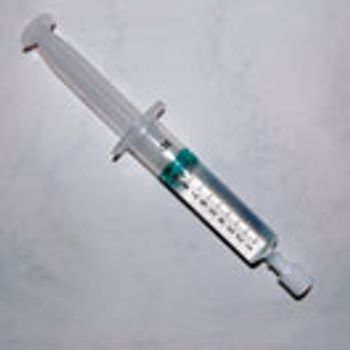
As closure integrity testing moves from a probabilistic to a deterministic basis, designs are promoting improved control and reduced operator contact.
Regardless of the phase of development and the level of GMPs being applied, there should be adequate controls and knowledge to assure patient safety, according to Susan Schniepp, fellow at Regulatory Compliance Associates.

The approaches for sample preparation of preclinical evaluation of safety and efficacy are addressed taking into consideration the shortcoming with the contemporary approaches.

CRLs put the brakes on drug development and damage corporate reputation and stock prices. Upfront investment and better sponsor oversight are ways to prevent them.
FDA and industry weigh broader use of prior knowledge in biotechnology testing and production.
The Fluent Gx Automation Workstation from Tecan is suited for a variety of clinical and regulated laboratory applications.
The latest continuing resolution funds the government for three weeks.
The FDA center released its list of planned guidance documents for the rest of the year.
Non-essential activities and new regulatory submissions are on hold until a federal government funding agreement is reached.
The agency is requiring safety label changes to limit the use of prescription opioid cough and cold medicines in children younger than 18 years old.
FDA noted in a recent inspection that American CryoStem was receiving and processing adipose tissue into a product called Atcell, and then marketing the product without agency approval.