
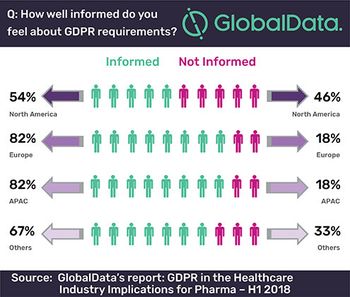
Only 54% of North Americans feel informed about the requirements of the general data protection regulation (GDPR), according to a report by GlobalData.

Only 54% of North Americans feel informed about the requirements of the general data protection regulation (GDPR), according to a report by GlobalData.
The type of product, the packaging materials being used, and the process and materials used to manufacture the product will determine when E&L data should be submitted to regulators, says Susan J. Schniepp, executive vice-president, Post-approval Pharmaceuticals and distinguished fellow at Regulatory Compliance Associates.
The recommended drugs include two orphan medicines and three biosimilars.
Managing data at the different stages of the lifecycle, linking disparate systems together, and making the right data available to those who need it is problematic and time consuming.
Commissioner Gottlieb is reorganizing FDA in the hopes of streamlining policymaking.
Rising pressure to do more to control drug prices is prompting Trump administration officials to explore where more flexible import policies may help ensure access to safe, effective, and more affordable medicines.
The agency announced two research collaborations on bulk lists, updates to categories of bulk drug substances, and issued a warning about a bulk drug substance used in compounding.
FDA and ICH seek comment on new exposure levels for cadmium in drug products.
Inspectors found quality issues at bB BioChem Laboratories Inc, a California-based manufacturer of over-the-counter drug products.
FDA Commissioner, Scott Gottlieb, announced formation of a new, drug shortages task force and efforts to advance long-term solutions to prevent shortages.
The agency is asking firms to discuss internal quality metrics efforts as part of the approval process for new medical products.
Legislators look to widen access to medications for addiction treatment and overdose emergencies.
Knowing and addressing regulatory expectations early on can avoid unexpected delays later, says Siegfried Schmitt, principal consultant at PAREXEL.

FDA seeks more efficient testing to spur development of less costly biotech therapies.

Quality experts share insights on what the future may hold regarding regulatory quality requirements for biopharmaceuticals.
BioPharm International asked an FDA spokesperson how the agency plans on handling these issues in the future.
FDA sent a warning letter to Henan Lihua Pharmaceutical Co. Ltd. after inspectors found the company failed to ensure the accuracy of its data.
The agency published guidance about requests for Prescription Drug User Fee Act waivers, refunds, and reductions in user fees.
The agency launched a secure online portal for orphan drug designation applications.
FDA, EMA, and senior officials from the European Commission met to discuss the EU-US mutual recognition agreement for inspections, the development of advanced therapies, the requirements for approving generic drugs, and Real-World Evidence used for post-authorization monitoring.
The contract development and manufacturing company has received an additional approval from Health Canada to manufacture monoclonal antibody drug substance at its first plant in Icheon, South Korea.
Legislators have requested that FDA do more to prevent drug shortages.

An understanding of the unique nature of single-use systems, and how they interact with each biomanufacturing process, is important when qualifying single-use systems.

Industry experts discuss how to address extractables and leachables in single-use systems and the challenges in qualifying equipment.
Regulatory authorities have published draft guidance on strategies to facilitate pharmaceutical lifecycle management.