

FDA issues a Warning Letter to Cadila Healthcare Limited for cGMP violations.
The digital transformation of quality-by-design assessment workflows can improve efficiency, reduce human errors, and facilitate integration within a much broader digital ecosystem.

The authors discuss subjectivity in the ICH Q9 (R1) guidance document.

Understanding how to apply phase-appropriate GMPs is crucial for achieving successful regulatory approval.

FDA issues a Warning Letter to Cadila Healthcare Limited for cGMP violations.
Ionis Pharmaceuticals receives orphan drug designation for HTTRx for the treatment of Huntington’s disease.
More “me-betters” and more focused breakthroughs could enhance new drug development.

mstay/Getty ImagesBiopharmaceutical manufacturing involves a series of complex unit operations linked together to provide high-purity, biologic actives with specifi

The bio/pharmaceutical industry will face increased scrutiny of product quality and cost drivers.

Traceability and transparency will remain elusive if manufacturers continue to approach serialization projects on a case-by-case basis.

The results of an industry workgroup’s examination of EMA’s guide on shared facilities are presented.
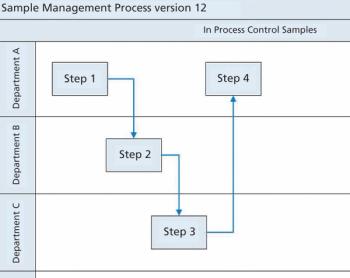
Siegfried Schmitt, principal consultant, PAREXEL, discusses how to streamline the document management process during market expansion.
The agency has published draft guidance on safety assessment for investigational new drug application safety reporting.
The agency has launched a new web platform to foster scientific innovation.
FDA warns the industry of possible contamination in the API baclofen from Taizhou Xinyou Pharmaceutical & Chemical Co., Limited.
EMA Executive Director Guido Rasi outlines his plan for the agency, including a focus on R&D.
Changes in China’s Food and Drug Administration (cFDA) drug development and commercialization policies make it easier for multinationals and CMOs to manufacture in China for in-country use, reports CMO and consultant PaizaBio.
The United States Pharmacopeial Convention announced the recipients of the 2015–2016 Global Fellowship Awards.
FDA approves Kanuma, the first treatment for patients with lysosomal acid lipase.
On Dec. 8, 2015, Sandoz, the generic pharmaceutical’s division of Novartis, announced that the European Medicines Agency (EMA) has accepted their marketing authorization application (MAA) for a biosimilar to Enbrel (etanercept), a tumor necrosis factor alpha (TNF-alpha) inhibitor.
While stakeholders generally welcome improvements to quality initiatives, they are concerned with how the new requirements will be implemented for more complicated supply-chain models.
Amgen submitted a market authorization application to EMA for ABP 501, a biosimilar candidate to Humira.
FDA sets a July 2016 deadline for the final version of the rule on labeling changes for approved drugs and biologics.
The agency publishes draft guidance on best practices for communication between FDA and IND sponsors during drug development.
FDA confirmed quality focus while Congress moved to bolster biomedical innovation.

Expectations are high for rapid testing methods, but demonstration of comparability proves challenging.
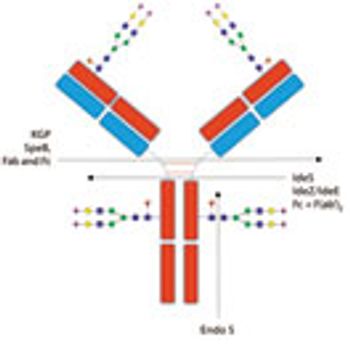
Advances in glycan analysis are enhancing biologics development and quality control processes.
Finalizing GMP requirements and quality standards for the development, manufacture, and clinical testing of ATMPs in the EU is proving to be a complex task.
The agency promotes safer use of drugs and prevention of medication errors through a new webpage and practice guide.